Overweight dogs face real health risks-joint pain, diabetes, heart strain, and shorter lifespans. If your dog is carrying extra weight, exercise isn’t just a nice idea-it’s a medical necessity. But jumping into long walks or vigorous play can hurt more than help. Starting too fast leads to soreness, injury, or giving up altogether. The key? Slow, smart, and steady progress.
First, Get a Vet Check
Before you tie on a leash, schedule a vet visit. Not all weight gain is the same. Some dogs have hypothyroidism, Cushing’s disease, or arthritis that makes exercise painful. A vet can rule out medical causes and give you a target weight based on your dog’s breed, age, and body condition score. They’ll also check for joint issues or heart problems that might limit activity. Don’t skip this step. Many owners start walking their dogs and end up at the emergency room because they didn’t know about an underlying condition.
Your vet might suggest blood work or an X-ray. That’s normal. It’s not about blame-it’s about safety. Once you have the green light, you’ll have a clear starting point. For example, a 7-year-old Labrador weighing 95 pounds (ideal is 70) might begin with 5-minute walks twice a day. That’s not much, but it’s enough to start rebuilding fitness without damage.
Start with Short, Frequent Walks
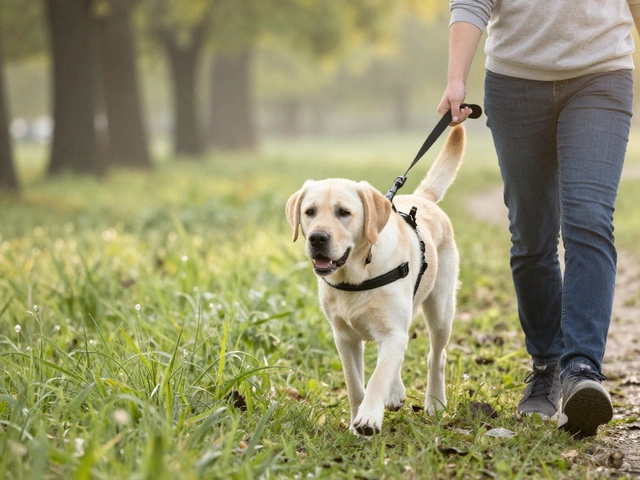
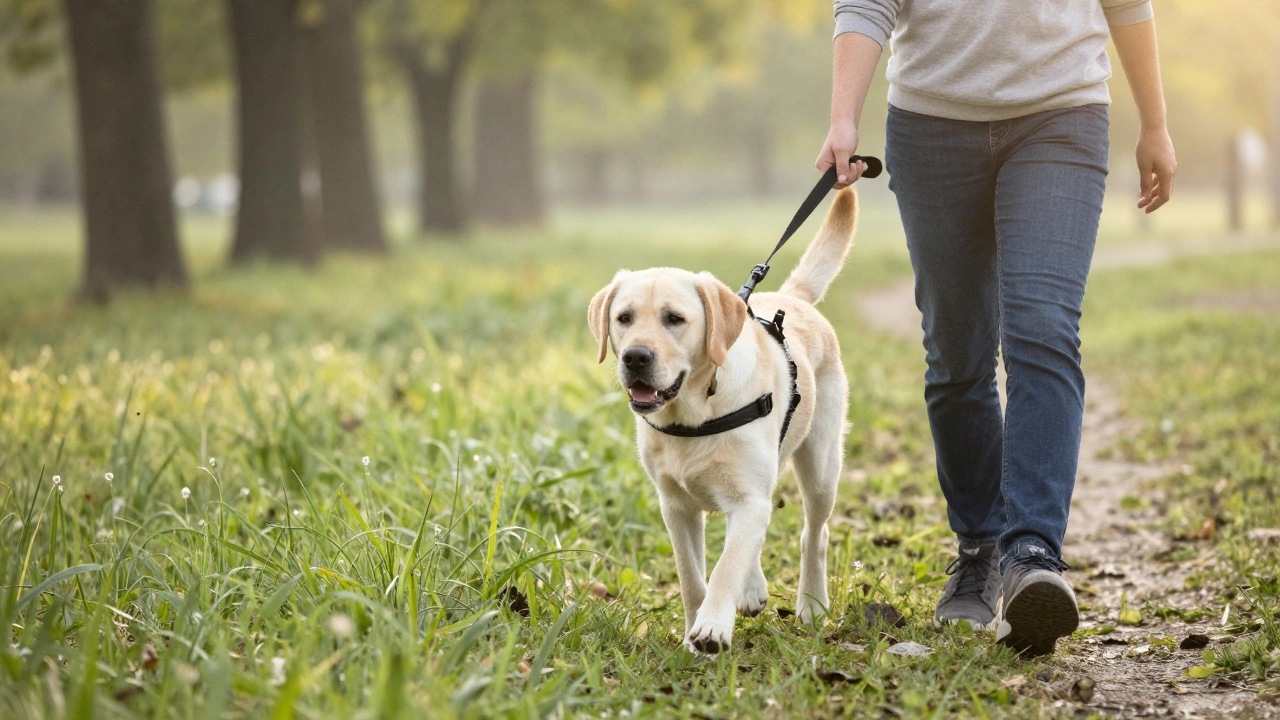
Long walks aren’t the answer for overweight dogs. They tire quickly, their joints ache, and they may refuse to move after just a few blocks. Instead, go short and often. Aim for three to five 5- to 10-minute walks each day. This keeps their body moving without overwhelming it. Think of it like starting a new workout routine-you wouldn’t run a 5K on day one.
Use a harness instead of a collar. It takes pressure off the neck and gives you better control, especially if your dog pulls or gets winded. Keep walks slow. Let your dog set the pace. If they stop to sniff, let them. Sniffing is mental exercise and helps reduce stress. If they lag or pant heavily, it’s time to turn back. You’re not trying to cover miles-you’re trying to build stamina.
Track progress. Write down how long they walked each day. After two weeks, if they’re handling 10 minutes without stopping, add a minute or two. Slow increases prevent burnout. One dog owner in Portland noticed her 80-pound Cocker Spaniel went from 8-minute walks to 20-minute walks in six weeks-not by pushing harder, but by being consistent.
Add Low-Impact Activities
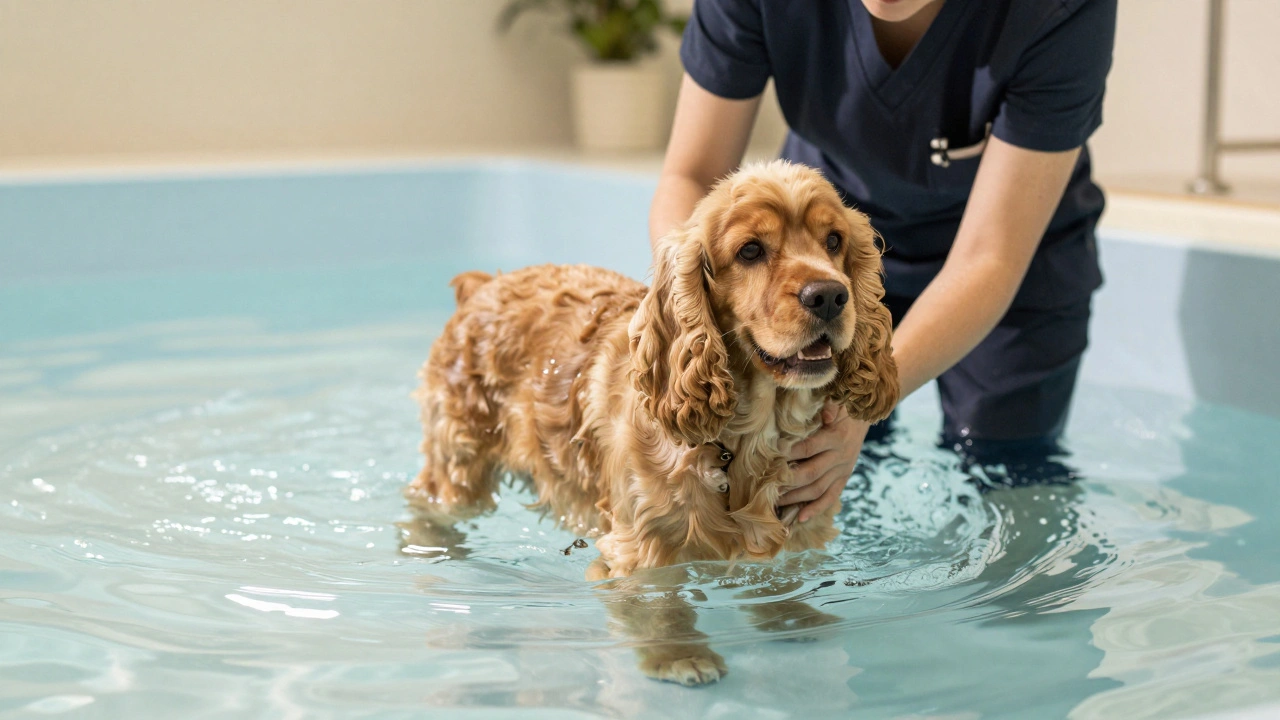
Once your dog can walk comfortably for 15 minutes, it’s time to mix in other activities. Swimming is ideal. It builds muscle without stressing joints. Many veterinary clinics and pet centers offer dog pools. If you have access to a safe, shallow lake or a kiddie pool in your yard, that works too. Start with 5 minutes, twice a week. Watch for signs of fatigue-slowing down, lagging, or trying to climb out.
Walking on soft surfaces helps. Grass, dirt trails, or sand are easier on paws and joints than concrete or asphalt. If you live in an area with snow or mud, use those as natural resistance. Walking through snow forces your dog to lift their legs higher, which strengthens muscles without impact.
Controlled stair climbing is another option. If you have a staircase at home, do 3-5 round trips once a day. It’s great for building hind leg strength. But don’t do this if your dog has hip dysplasia or knee problems-ask your vet first. Always supervise. A misstep on stairs can lead to a serious injury.
Use Food-Driven Play (But Control Portions)
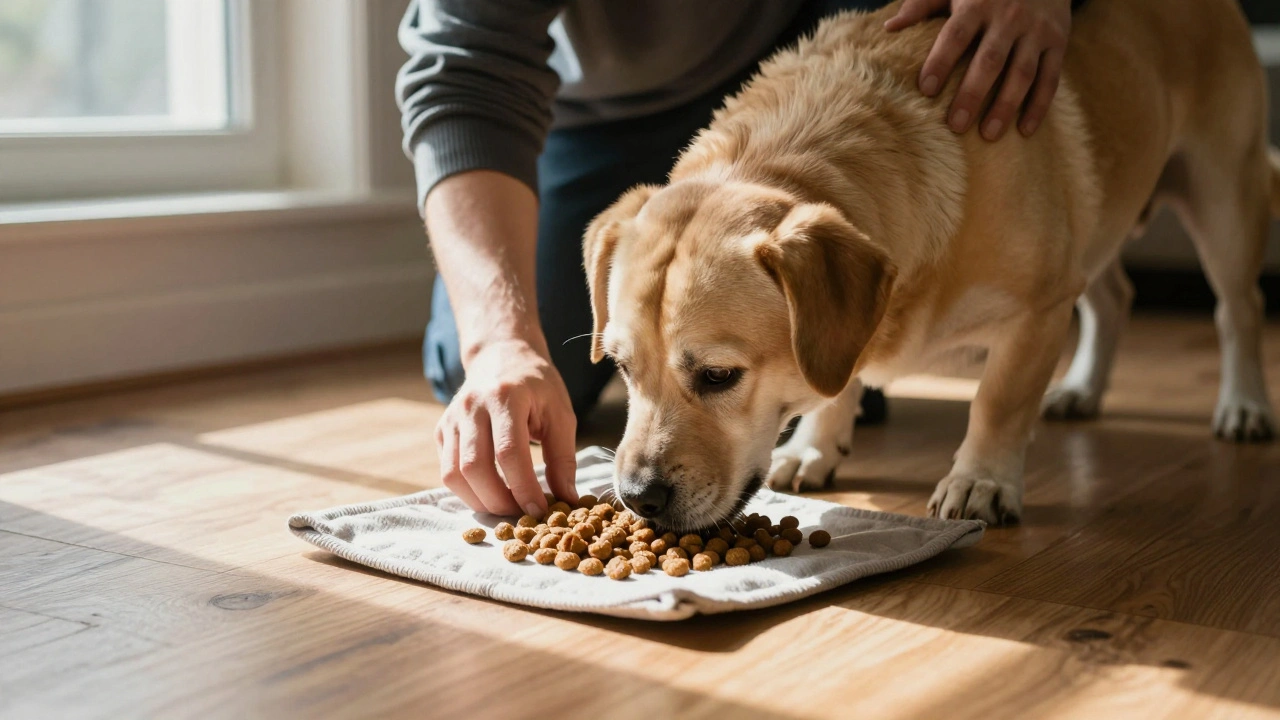
Exercise doesn’t have to mean walking. You can turn mealtime into movement. Use puzzle toys, snuffle mats, or scatter feeding. Hide kibble around the house or yard and let your dog sniff it out. This burns calories and engages their brain. One study showed that dogs using food puzzles for 15 minutes a day burned 20% more energy than those who ate from a bowl.
Try gentle fetch with a lightweight ball or stuffed toy. Don’t throw far. Roll it a few feet and let them walk to retrieve it. Repeat 5-6 times. This builds endurance without explosive movement. Avoid tug-of-war at first-it can strain the spine and neck. Wait until your dog is leaner and stronger.
Remember: no treats during exercise. If you’re using food for mental stimulation, count it in their daily calories. A 10-pound bag of kibble lasts longer than you think when you’re cutting portions. Weigh their food. Don’t guess. Most owners overfeed by 20-30% without realizing it.
What to Avoid
Don’t let your dog run off-leash yet. They may overexert themselves, chase squirrels, or collapse from exhaustion. Keep them on a leash until they’ve lost at least 10% of their body weight.
Avoid stairs, jumping, and high-impact games like agility or frisbee. These put too much stress on joints that aren’t ready. Don’t use choke chains or prong collars-they can damage the neck and make breathing harder.
Never exercise in extreme heat or cold. Overweight dogs overheat faster. Walk early in the morning or after sunset. In winter, use booties if the ground is icy or salted. Their paws are more sensitive when they’re carrying extra weight.
Track Progress and Adjust
Weight loss isn’t linear. Some weeks, your dog might lose a pound. Other weeks, nothing changes. That’s normal. Focus on body condition, not just the scale. You should be able to feel their ribs with light pressure-not see them, but not have to dig for them either. Their waist should tuck in behind the ribs when viewed from above.
Take photos every two weeks. Compare side profiles. You’ll notice changes before the scale moves. Keep a journal: date, walk length, activity type, appetite, energy level. You’ll spot patterns. Maybe they’re more tired after rainy days. Maybe they perk up after swimming.
Most dogs lose 1-2% of their body weight per week safely. That means a 100-pound dog should aim to lose 1-2 pounds weekly. Anything faster risks muscle loss or metabolic issues. Patience is the real workout.
When to Celebrate
When your dog hits 10% weight loss, give them a non-food reward. A new toy. A longer walk in the park. A gentle brush-down. Celebrating builds positive associations. It tells them exercise isn’t punishment-it’s part of feeling better.
After 3-4 months, you’ll likely notice changes beyond weight. They’ll climb onto the couch easier. They’ll play more. They’ll sleep better. Their coat might shine. Their breathing will steady. These are the real wins. The scale is just a number. The joy in their step? That’s the goal.
Exercise for overweight dogs isn’t about speed or distance. It’s about consistency, patience, and listening. Your dog doesn’t need to run a marathon. They just need to move-every day, safely, without pain. That’s how health starts.