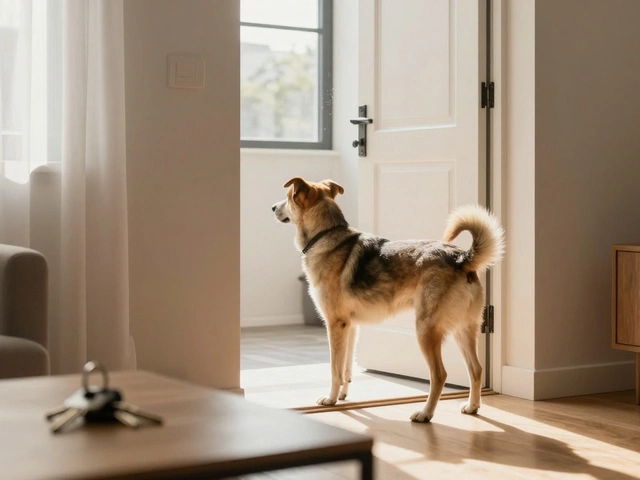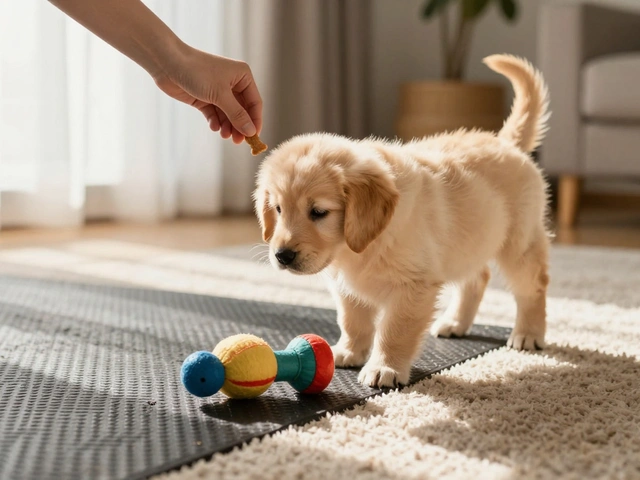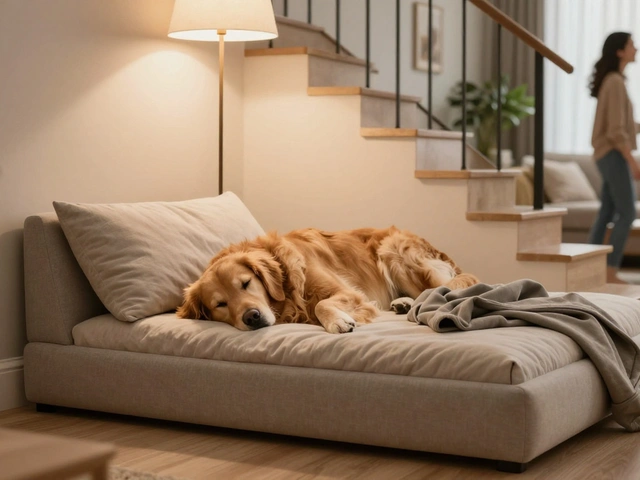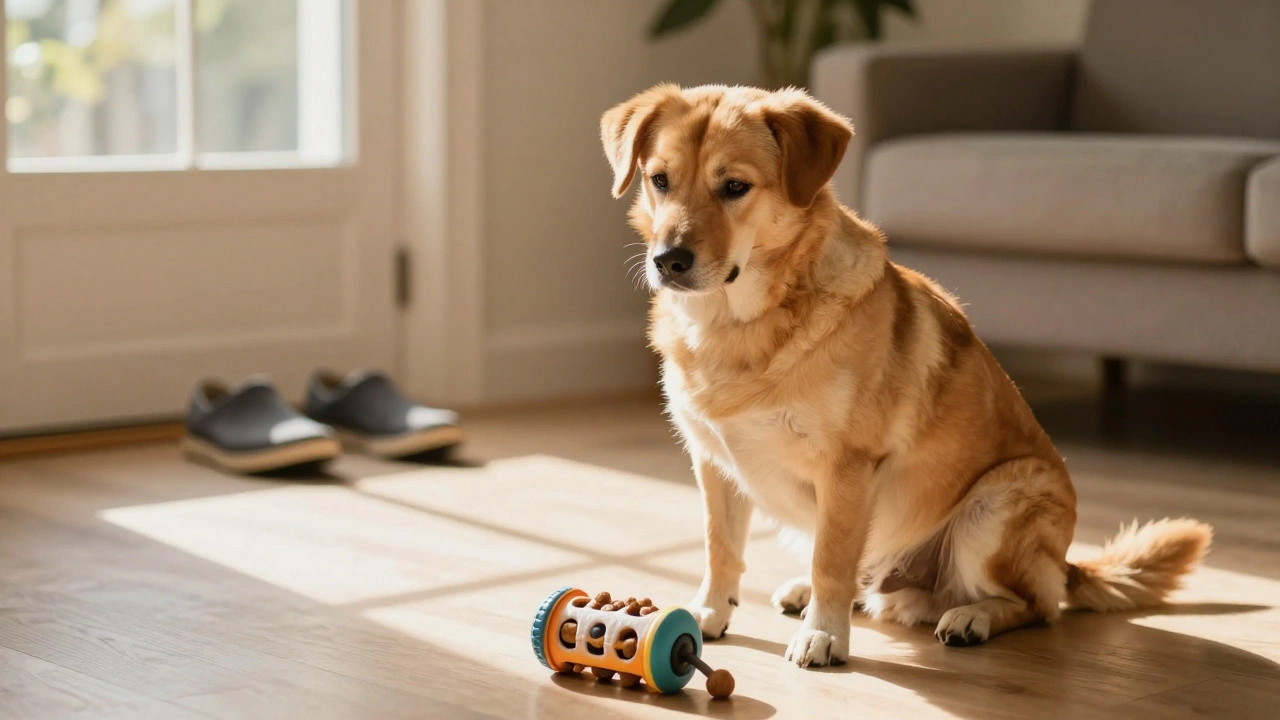
Ever come home to find your dog had shredded the couch, peed on the rug, or was howling like a wolf in a horror movie? You’re not alone. Many dogs-especially those who’ve known love, safety, or trauma-become overly attached. They follow you from room to room. They whine when you step into the bathroom. They panic when you grab your keys. This isn’t bad behavior. It’s separation anxiety. And it’s fixable-not with punishment, but with games.
Why Dogs Become Clingy
Dogs are pack animals. In the wild, being separated from the group means danger. Modern dogs haven’t forgotten that. When a dog bonds deeply with one person-maybe because they were rescued, or because you work from home, or because you’re their only source of comfort-they start to believe that your presence equals survival. When you leave, their body goes into survival mode: heart races, cortisol spikes, panic sets in.
This isn’t about being "needy." It’s biology. And it’s not something they can just "get over." You can’t reason with a dog who’s convinced you’re never coming back. You need to rewire their brain. And the best way to do that? Play.
Game 1: The Vanishing Treat
This game teaches your dog that your absence doesn’t mean disaster-it means rewards.
- Grab a handful of small, high-value treats (chicken, cheese, freeze-dried liver).
- Have your dog sit or lie down in a quiet spot.
- Give them one treat. Then, while they’re eating, take one step back. Wait. Give another treat.
- Slowly increase the distance: two steps, then three. Each time, pause before tossing the next treat.
- Once they’re calm at 5 feet away, turn your back for 3 seconds, then face them again and toss a treat.
- Eventually, walk out of sight for 10 seconds. Come back. Reward.
Do this daily for 5 minutes. No rushing. If your dog gets anxious, go back a step. The goal isn’t to leave for hours-it’s to prove that every time you disappear, something good happens.
Game 2: The Puzzle Box
When dogs are bored or anxious, they fixate on your movements. This game redirects their focus to a task that takes time and effort.
- Get a slow-feeder puzzle toy or make your own: a cardboard box with holes, or a muffin tin with tennis balls covering treats.
- Place 5-10 treats inside, but make it easy at first. Let them see you put them in.
- Place the puzzle in their favorite spot, then walk into another room.
- Wait 1 minute. Come back. Don’t interact. Just watch.
- Gradually increase the time: 3 minutes, then 5, then 10.
- Use this puzzle ONLY when you’re leaving the house. Make it their "departure ritual."
Why this works: Dogs can’t be anxious and focused at the same time. Solving a puzzle uses their brain. It lowers stress hormones. And over time, they’ll start to look forward to your leaving-it means puzzle time.
Game 3: The Hide-and-Seek Routine
This game builds trust that you’ll return. It’s not about hiding forever. It’s about predictable, positive departures.
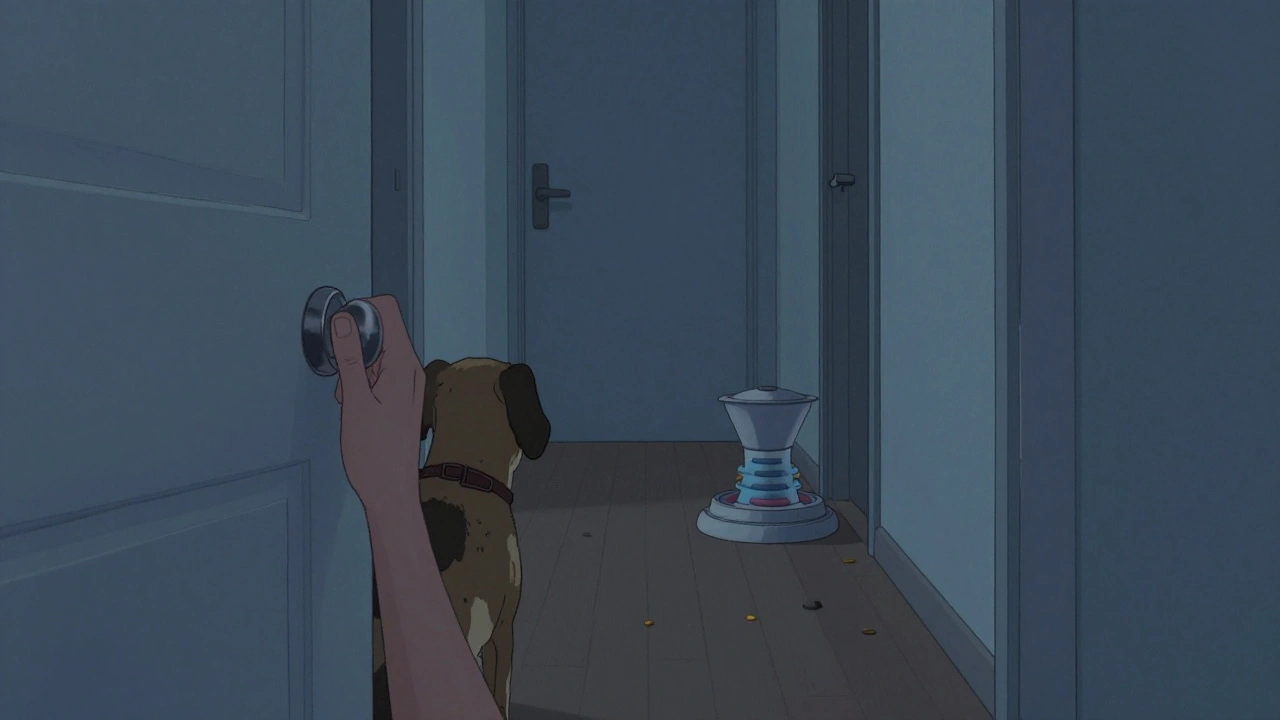
- Have your dog stay in one room. Close the door.
- Go to another room, say "I’ll be right back" in a cheerful voice, and wait 10 seconds.
- Open the door. Reward with a treat and calm praise.
- Next time, wait 20 seconds. Then 30.
- After a week, leave the house for 1 minute. Come back. Reward.
- Then 2 minutes. Then 5.
Key tip: Never say goodbye. Never make a big deal about leaving or returning. Your tone should be boring. Like you’re putting the trash out. Calm. Predictable. No drama.
What Doesn’t Work (And Why)
You’ve probably heard these "solutions":
- Leaving the TV on. Dogs don’t understand TV. The noise might distract them, but it doesn’t reduce anxiety.
- Crating them. If your dog panics in the crate, it’s not a solution-it’s a trap. Crates should be safe spaces, not punishment boxes.
- Getting another dog. A second dog won’t fix separation anxiety. They’ll both get anxious.
- Punishing accidents. Your dog isn’t being spiteful. They’re terrified. Yelling just adds to the fear.
These methods might look like they help. But they don’t change how your dog feels. They just hide the symptoms.
Progress Isn’t Linear
There will be setbacks. One day, they’ll be fine for 20 minutes. The next, they’ll scream when you step outside. That’s normal. Anxiety doesn’t heal in a straight line.
Track progress in a notebook: Day 1: 3 minutes alone. Day 3: 7 minutes. Day 5: 10 minutes. Day 7: 12 minutes, but cried when I picked up keys. Notice patterns. Do they react more when you’re wearing your work coat? When you leave after breakfast? Adjust your routine around those triggers.
Also, don’t try to do everything at once. Pick one game. Stick with it for 7 days. Then add another. You don’t need to fix everything in a week. You need to build confidence, one small win at a time.
When to Get Help
If after 3 weeks of consistent games, your dog is still panicking-barking for over 30 minutes, destroying things, or injuring themselves-you need professional help.
Look for a certified separation anxiety trainer (CSAT) or a veterinary behaviorist. Medication isn’t a shortcut-it’s a tool. For some dogs, a short course of anti-anxiety meds (like fluoxetine) combined with behavior games makes recovery possible. A vet can help you decide if that’s right.
Don’t wait until your dog is exhausted or your home is destroyed. Early intervention saves lives-yours and theirs.
Final Thought: Independence Is a Gift
You love your dog. That’s why this hurts. But your love isn’t helping if it’s tied to fear. The goal isn’t to make your dog ignore you. It’s to help them feel safe even when you’re not there.
When your dog finally curls up on their bed while you’re in the kitchen, calmly eating their puzzle treat… that’s not indifference. That’s peace. And that’s the real win.
Can separation anxiety be cured completely?
Yes, many dogs recover fully with consistent training. Recovery depends on the severity, how long it’s been going on, and how consistently you follow the training plan. Some dogs need a few weeks. Others need months. But with the right games and patience, most dogs learn to feel safe alone.
How long should each training session last?
Keep sessions short-5 to 10 minutes, two times a day. Longer sessions can overwhelm your dog. The goal is to end on a positive note, not to exhaust them. Consistency matters more than duration.
Should I use calming aids like pheromone diffusers?
They can help as a side support, but they won’t fix the root issue. Adaptil diffusers or sprays mimic calming dog pheromones and may reduce stress slightly. But they’re not a substitute for behavior games. Use them alongside training, not instead of it.
Can older dogs learn to be less clingy?
Absolutely. Dogs of any age can learn new behaviors. Older dogs may take longer to adjust, but their brains are still capable of change. The key is patience and consistency. A 10-year-old dog can learn to relax alone just as well as a puppy-if you go at their pace.
What if my dog only gets anxious when I leave for work?
That’s common. Dogs pick up on cues-putting on shoes, grabbing keys, walking to the door. Practice those cues without leaving. Put on your shoes. Sit down. Take them off. Repeat 10 times a day. Then grab your keys. Put them down. Walk to the door. Turn around. Do this for a week before actually leaving. It breaks the link between cues and panic.