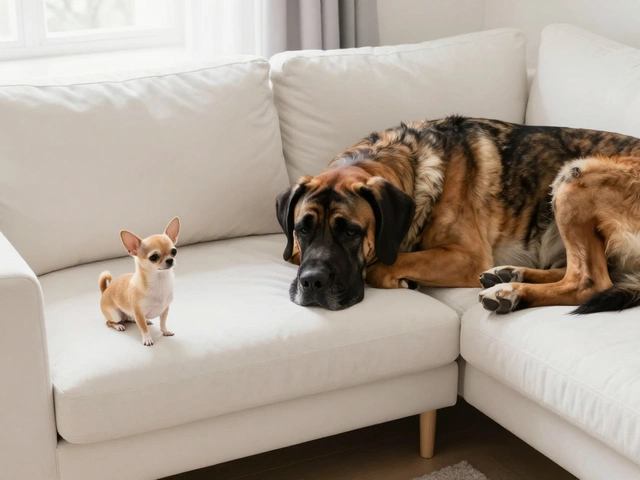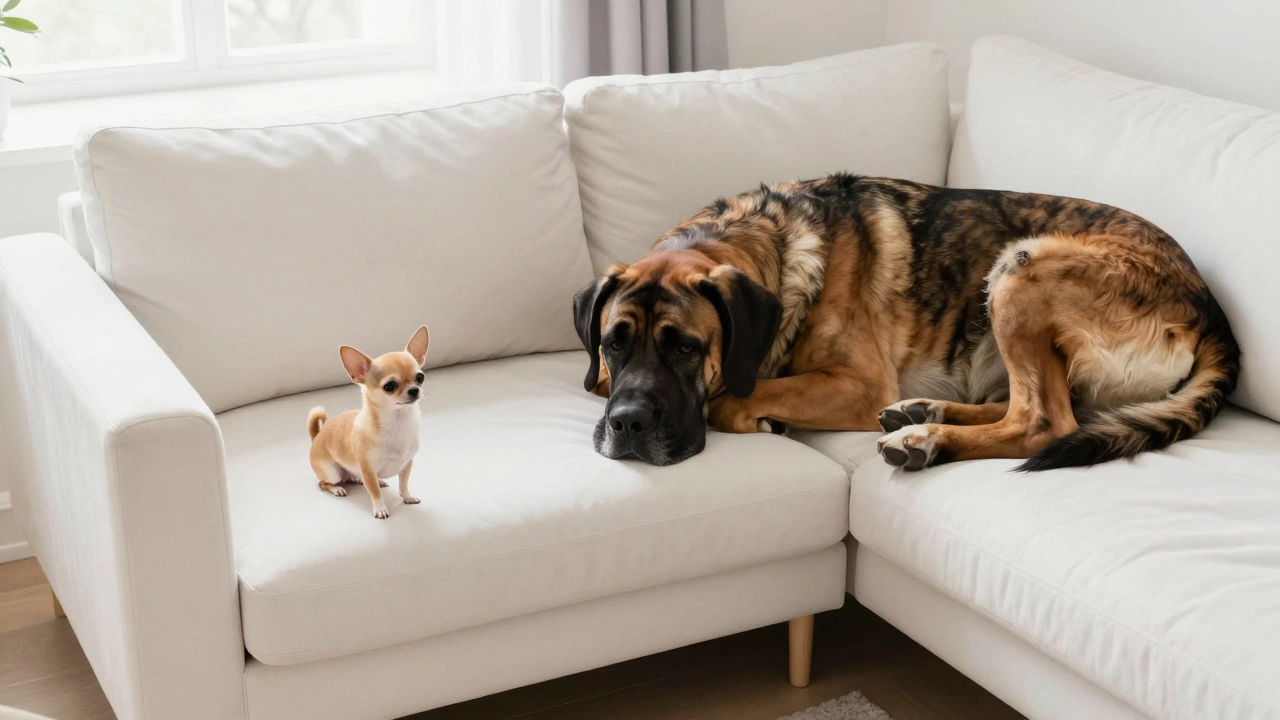
Quick Reality Check: Big vs. Small
- Space: Small dogs thrive in apartments; large dogs need room to stretch without knocking over your coffee table.
- Budget: Bigger dogs eat more, cost more to medicate, and require pricier grooming.
- Lifespan: Smaller breeds generally live significantly longer than giants.
- Travel: Small dogs are easy to transport; large dogs often require specialized crates or full-car commitments.
The Daily Grind: How Size Changes Your Routine
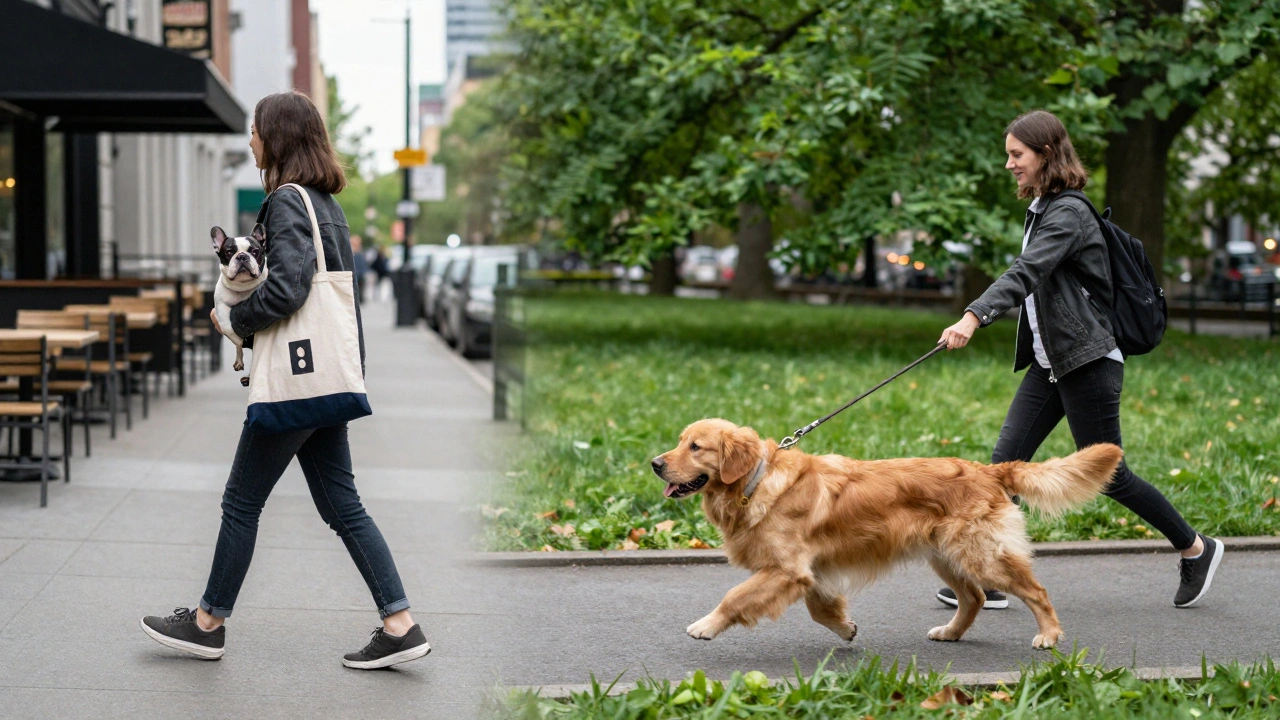
Imagine your morning. If you have a French Bulldog, a quick walk around the block usually does the trick. They're like portable companions. You can take them to a cafe, and they'll likely fit in a bag or under the table. But if you're owning a Golden Retriever, your morning is a full-blown workout. You're talking about long treks, throwing balls for an hour, and managing a dog that might accidentally tackle you in your sleep.
Energy isn't always tied to size, but the impact of that energy is. A hyperactive Pomeranian is a nuisance; a hyperactive Labrador Retriever is a wrecking ball. If you live in a small city apartment, a large breed can feel like fitting a square peg in a round hole. It's not that they can't live there-they can-but you'll spend a lot more time managing their physical footprint.
Breaking Down the Wallet: The True Cost of Ownership
Let's talk money. There is a massive gap in the monthly budget between a 10-pound dog and a 100-pound dog. The most obvious difference is food. A small dog might eat a few cups of kibble a week, while a giant breed can polish off a 30-pound bag in a blink. But it's not just about the volume of food; it's about the quality. Giant breeds often need specific joint-support formulas to prevent hip dysplasia.
Vet bills are where the real shock happens. Most medications, from flea and tick preventatives to heartworm meds, are dosed by weight. If your dog is four times the size of another, you're often paying significantly more per dose. Furthermore, anesthesia for surgery is riskier and more expensive for larger animals. On the flip side, small dogs are prone to their own expensive issues, like dental disease or collapsed tracheas, which can lead to surprising surgical costs.
| Expense | Small Breed (10-20 lbs) | Large Breed (60-90 lbs) |
|---|---|---|
| Food | $30 - $60 | $100 - $200 |
| Preventatives | $15 - $25 | $30 - $50 |
| Grooming | $40 - $70 | $80 - $150 |
| Toys/Treats | $20 - $40 | $40 - $80 |
Health and Longevity: The Genetic Trade-off
There is a bit of a biological irony in the dog world: the bigger the dog, the shorter the life. While a Toy Poodle can easily live 15 to 18 years, a Great Dane might only give you 7 to 10 years. This is largely because large breeds age faster and are more susceptible to systemic failures.
Joint issues are the biggest hurdle for big dogs. Hip Dysplasia is common in German Shepherds and Labs, meaning you'll likely spend more on supplements like glucosamine or even physical therapy. Small dogs have different problems. They are more likely to suffer from luxating patellas (kneecaps that pop out of place) or obesity, which happens much faster in a small frame and can lead to diabetes.

Training and Behavior: Muscle vs. Mind
Training a small dog is often a battle of wills. Because they are small, we tend to let them get away with things-like jumping on the couch or barking at guests-because the consequence is minor. This is why some people find "small dog syndrome" so frustrating. They've become the boss of the house because nobody bothered to correct them.
Training a large dog is a battle of physics. If a Bernese Mountain Dog decides to pull on the leash, it's not a cute tug; it's a full-body yank that can pull you off your feet. You need a level of physical control and consistent boundary setting from day one. However, many larger breeds are naturally more "mellow" once they hit adulthood, whereas some small breeds stay high-strung for their entire lives.
Which One Actually Fits Your Life?
If you're a digital nomad or someone who lives in a walk-up apartment in a busy city, a small dog is a logistical dream. You can carry them into a taxi, they don't take up the whole sofa, and your cleaning bill won't skyrocket from massive amounts of shedding fur. But if you have a backyard, a love for hiking, and a budget that allows for higher vet bills, a large dog provides a presence and a sense of protection that a small dog simply can't.
Think about your "worst-case scenario." If your dog gets sick and needs to be transported to a clinic, can you lift them into the car? If you're traveling for a week, is your pet-sitter comfortable handling a 90-pound animal? These practical questions matter more than the breed's temperament on a piece of paper.
Are small dogs harder to train than large dogs?
Not necessarily, but they are often trained less consistently. Because small dogs are less intimidating, owners often overlook bad behaviors. Large dogs require more physical management, but many are more eager to please, making the actual training process smoother if you have the strength to handle them.
Do large dogs always cost more?
Generally, yes. From the volume of food to the cost of heartworm medication and grooming, everything is scaled by weight. While a small dog can have expensive health issues, the baseline monthly maintenance for a large dog is almost always higher.
Can large dogs live comfortably in small apartments?
Yes, provided they get enough exercise. A dog doesn't care about the square footage of your living room as much as they care about the amount of time they spend outside. If you commit to several long walks a day, a large breed can be perfectly happy in a small space.
Which size breed is better for first-time owners?
It depends on your goals. Small dogs are easier on the wallet and the house, but can be more vocal. Large dogs are often more relaxed but require more physical effort and money. If you're worried about the learning curve, a medium-sized, well-known breed like a Lab often provides a good middle ground.
Do small dogs really live longer?
Statistically, yes. Small breeds typically have a slower aging process and are less prone to the heart and joint failures that plague giant breeds. While a large dog might live 8-12 years, many small breeds regularly reach 15 or more.