It happens faster than you can blink. Your dog is playing in the yard, a branch snaps, or dust blows into their face, and suddenly they are squinting, pawing at one eye, or rubbing it against the carpet. In those critical first few minutes, knowing whether to reach for a bottle of saline solution or hold off until you see a vet can make a huge difference. Using the wrong fluid, or using it too aggressively, can turn a minor irritation into a serious infection.
This guide breaks down exactly when to use eye rinses, what kind to buy, and how to apply them without causing stress or harm. We will also cover the red flags that mean you should skip the home treatment entirely and head straight to the emergency clinic.
Why Saline Is the Gold Standard for Dog Eye Care
Before grabbing any random liquid from your bathroom shelf, you need to understand why plain saline is the safest bet. A dog's eye surface is delicate. The cornea is covered by a thin layer of mucus and tears that protect it from drying out and invading bacteria. If you disrupt this balance with harsh chemicals, you risk chemical burns or increased inflammation.
Sterile Saline Solution is a liquid containing 0.9% sodium chloride in water, matching the salt concentration of natural body fluids. Because it is isotonic (meaning it has the same osmotic pressure as your dog's tissues), it cleans the eye without stinging or pulling moisture away. This makes it ideal for flushing out foreign objects like grass seeds, dust, or small insects.
You might be tempted to use tap water. While better than nothing in a true emergency, tap water contains chlorine, fluoride, and microorganisms that can irritate an already sensitive eye. If you have no other choice, use lukewarm tap water, but switch to sterile saline as soon as possible. Never use hydrogen peroxide, contact lens solution, or human eye drops unless explicitly prescribed by your veterinarian.
When to Use an Eye Rinse at Home
Home treatment with saline is appropriate for specific, mild scenarios. If you recognize these situations, you can safely intervene at home before scheduling a routine check-up with your vet.
- Mild Foreign Body Irritation: You see a small speck of dirt, sand, or a piece of grass stuck in the corner of the eye or on the white part (sclera). The dog is blinking frequently but not in severe pain.
- Dry or Red Eyes: The eyes look slightly pink around the edges (conjunctival injection) due to dry air, allergies, or wind exposure. There is no thick discharge.
- Post-Surgical Cleaning: Your vet has specifically instructed you to flush the eye after a procedure to remove blood clots or debris.
- Allergic Reactions: Mild swelling or tearing caused by pollen or environmental allergens. Saline helps wash away the irritants.
In these cases, the goal is mechanical cleaning. You are physically washing the irritant out. If the problem is purely inflammatory (like a severe allergic reaction) or infectious, saline alone won't cure it; it just keeps the area clean while you wait for medical treatment.
Step-by-Step Guide to Flushing a Dog's Eye
Most dogs hate having things near their faces, so technique matters more than the product itself. Here is how to do it calmly and effectively.
- Prepare the Area: Have towels ready to catch drips. Sit on the floor if possible to lower your center of gravity, which makes you less threatening to the dog.
- Calm the Dog: Speak in a low, soothing voice. Offer a treat if they are willing to take it. Avoid holding their head tightly; instead, gently support their jaw or chest to keep them steady.
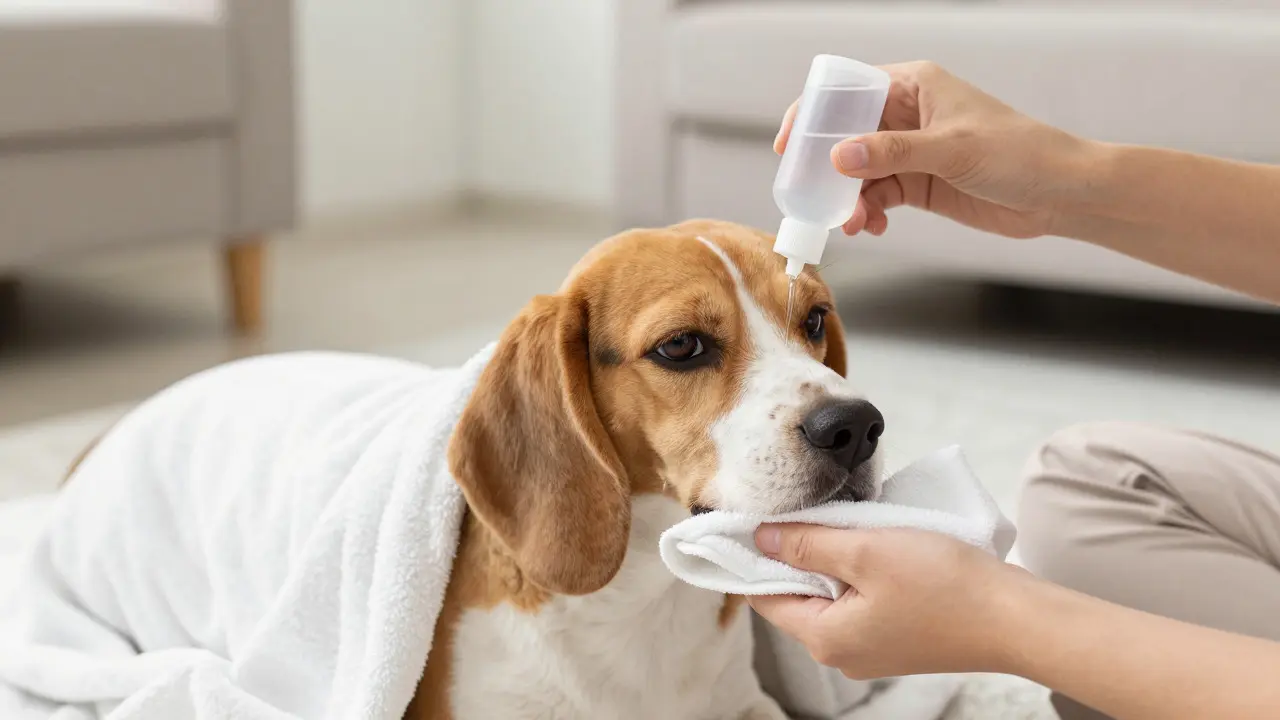
- Position the Bottle: Hold the saline bottle about 1-2 inches from the eye. Do not squeeze hard. Let the fluid drip or flow gently into the inner corner of the eye (near the nose).
- Flush Outward: Aim the stream from the inner corner toward the outer corner. Gravity will help the fluid drain out through the tear duct or over the cheek. Ask someone else to gently wipe away the excess fluid with a soft cloth as it exits.
- Repeat as Needed: For foreign bodies, you may need to repeat this 3-5 times. Check the eye between flushes to see if the object is gone.
If your dog thrashes wildly, stop. Struggling can scratch the cornea. It is often easier to wrap the dog in a towel (leaving only the affected eye exposed) to limit movement. This "burrito" method provides security and prevents accidental scratches.
What NOT to Put in a Dog's Eye
Just because something is in your medicine cabinet doesn't mean it belongs in your dog's eye. Many common household items are toxic or irritating to canine ocular tissue.
| Liquid Type | Safety Level | Reason |
|---|---|---|
| Sterile Saline (0.9%) | Safe | Isotonic, pH balanced, no preservatives |
| Tap Water | Emergency Only | Contains chlorine/microbes; use lukewarm only |
| Contact Lens Solution | Avoid | Preservatives like benzalkonium chloride can damage corneas |
| Hydrogen Peroxide | Harmful | Oxidative damage to eye cells; causes stinging |
| Human Eye Drops | Risky | May contain steroids or vasoconstrictors unsafe for dogs |
Specifically, avoid anything labeled "redness relief" or "asthma relief." These often contain phenylephrine or naphazoline, which constrict blood vessels. In dogs, this can lead to systemic absorption issues or mask underlying problems. Stick to simple, preservative-free saline if possible, though standard sterile saline is acceptable for short-term use.
Red Flags: When to Skip Home Treatment
Knowing when *not* to use saline is just as important as knowing when to use it. If you notice any of the following symptoms, stop trying to flush the eye at home and call your vet immediately. Some conditions require immediate surgical intervention or specific medication that saline cannot provide.
- Visible Corneal Ulcer: If the eye looks cloudy, blue-gray, or has a distinct white spot on the clear front part of the eye, there may be a scratch or ulcer. Rubbing this with a cotton ball or even aggressive flushing can worsen the injury.
- Severe Swelling: If the eyelids are swollen shut or the eye appears to be bulging out of the socket, this could indicate glaucoma or trauma. Pressure needs to be relieved medically.
- Persistent Squinting (Blepharospasm): If the dog has been squinting for more than 24 hours despite gentle flushing, there is likely significant pain or infection.
- Thick Discharge: Green or yellow pus indicates a bacterial infection. Saline cleans but does not kill bacteria. Antibiotics are needed.
- Trauma: If the dog was hit by a car, bitten, or struck by a high-velocity projectile, assume internal damage. Do not press on the eye.
In these cases, saline might still be used by the vet during examination, but doing it yourself risks delaying proper diagnosis. Time is critical for conditions like corneal ulcers; untreated, they can perforate the eyeball within days.
Choosing the Right Product
Not all saline bottles are created equal. When shopping for a dog eye rinse, look for these specifications to ensure safety and effectiveness.
- Concentration: Must be 0.9% sodium chloride. This is the standard isotonic concentration.
- Packaging: Single-use vials are best for hygiene, especially if treating multiple pets or long-term conditions. Multi-dose bottles are convenient but must be discarded 28 days after opening to prevent bacterial growth.
- Preservatives: Preservative-free options are gentler for chronic use, such as post-surgery care. However, for occasional use, standard sterile saline is perfectly fine.
- pH Balance: Ideally, the solution should be close to physiological pH (around 7.0-7.4). Most commercial saline products meet this standard.
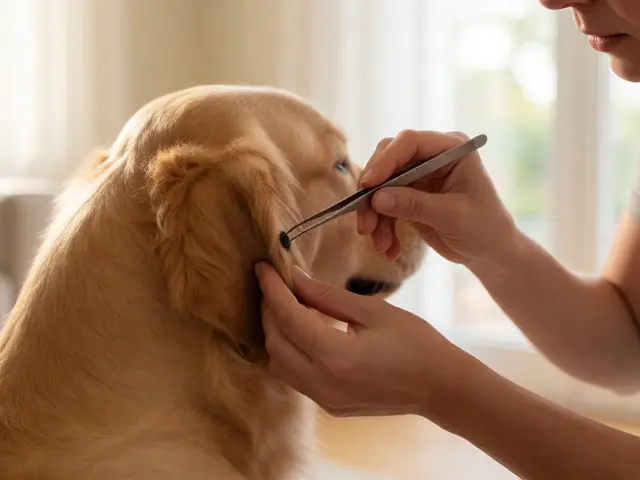
You can find these products at most pet supply stores or pharmacies. They are generally inexpensive and last a long time if stored properly. Keep a small bottle in your dog first aid kit alongside tweezers (for removing ticks or debris from fur, not directly from the eye) and a flashlight.
Frequently Asked Questions
Can I use coconut oil or olive oil to lubricate my dog's dry eyes?
Generally, no. While some vets recommend specific mineral oils for certain conditions, vegetable oils can introduce lipids that may clog the meibomian glands or promote bacterial growth on the eye surface. Unless your vet specifically prescribes an oil-based lubricant, stick to water-based saline or artificial tears designed for animals.
How often can I flush my dog's eye with saline?
For acute irritation, you can flush every 1-2 hours until the symptom subsides. For maintenance or post-surgical care, follow your vet's instructions, which typically range from once daily to four times daily. Over-flushing is rare, but if the eye becomes more irritated, reduce frequency and consult your vet.
My dog has brownish discharge in the corners of their eyes. Should I rinse it?
Brown discharge is usually dried tears mixed with skin oils and dirt, common in brachycephalic breeds like Pugs or Bulldogs. Gentle saline wiping with a soft cloth is safe and helpful. However, if the discharge is thick, green, or accompanied by swelling, it may signal an infection requiring antibiotics.
Is it okay to use a syringe to flush the eye?
Yes, but carefully. Remove the needle from a 10ml or 20ml syringe filled with warm saline. Gently squirt the fluid into the eye. This method is often more effective than bottles for stubborn foreign bodies because you can control the volume and direction better. Just avoid pressing the plunger too hard, which can create back-pressure.
What if the saline feels cold? Will it hurt my dog?
Cold saline can cause a reflex blink or shiver, making the process harder. Run the bottle under warm tap water for a minute before use, or hold it in your hands to bring it closer to room temperature. Warm saline is much more comfortable and encourages the dog to stay still.