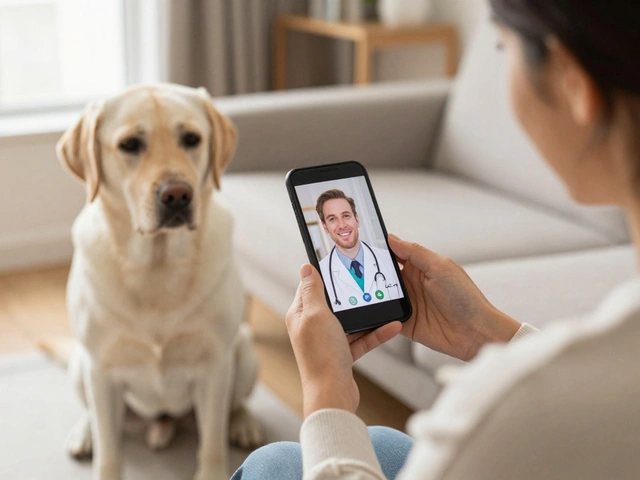
More dog owners are skipping the waiting room and tapping into their phones for vet advice. With telehealth coverage in dog insurance becoming more common, virtual vet visits are no longer a luxury - they’re a standard part of care. But not all policies are the same. If you’re wondering whether your dog insurance covers online vet consultations, here’s what actually happens when you click ‘Start Video Call’.
What Exactly Is a Virtual Vet Visit?
A virtual vet visit is a live video or phone call with a licensed veterinarian, usually through your pet insurance provider’s app or website. It’s not a chatbot. It’s not an AI diagnosis. It’s a real vet, licensed in your state, reviewing your dog’s symptoms in real time. You can show them a limp, describe vomiting patterns, or point out a rash. They’ll ask follow-up questions, review your dog’s medical history, and give you a clear action plan.
These visits work best for non-emergency issues: mild diarrhea, itchy skin, post-surgery check-ins, behavioral concerns like anxiety during thunderstorms, or monitoring chronic conditions like arthritis. They’re not meant to replace in-person exams for broken bones, seizures, or difficulty breathing - but they can prevent unnecessary trips to the ER.
Which Dog Insurance Policies Cover Telehealth?
As of 2026, about 68% of top-rated dog insurance providers include some form of telehealth in their base or add-on plans. Companies like Pumpkin, Healthy Paws, and Embrace now bundle virtual vet visits into their standard coverage. Others, like Trupanion, offer it as a paid add-on for $5-$10 per month.
Here’s what you’ll typically find across major providers:
| Provider | Includes Telehealth? | Covered Visits Per Year | Copay or Free? | Special Notes |
|---|---|---|---|---|
| Pumpkin | Yes | Unlimited | Free | Includes behavioral consults and prescription refills |
| Healthy Paws | Yes | 3 per year | Free | Only for wellness and minor issues, not diagnostics |
| Embrace | Yes | Unlimited | Free | 24/7 access, includes pet poison hotline |
| Trupanion | Optional add-on | 5 per year | $15 per visit | Requires separate enrollment |
| Pets Best | No | N/A | N/A | Only covers in-clinic visits and emergency care |
Always check the fine print. Some policies only cover telehealth for follow-up visits after an in-person exam. Others restrict it to certain conditions. A few won’t cover it at all unless you’ve had your dog insured for at least 30 days.
How Telehealth Saves You Money - And Time
Imagine your 8-year-old Labrador starts limping after a walk. You’ve got work in an hour, and the vet’s earliest appointment is tomorrow. Without telehealth, you might wait, panic, or drive 45 minutes to an emergency clinic - and pay $150 just for a triage consult.
With telehealth, you open the app, record a quick video of the limp, answer a few questions, and get a response in under 10 minutes: “Rest for 24 hours, ice the joint, and call back if swelling increases.” No co-pay. No gas. No stress.
Studies from the American Veterinary Medical Association show that dog owners who use telehealth reduce unnecessary ER visits by 41%. That’s not just convenience - it’s savings. A single ER trip can cost $800-$1,200. A virtual consult? Often $0.

What Telehealth Doesn’t Cover (And When You Still Need the Clinic)
Virtual vets can’t perform X-rays, draw blood, or give injections. They can’t diagnose internal bleeding, foreign objects, or neurological issues. If your dog is vomiting nonstop, collapsing, or struggling to breathe - go to the clinic. Now.
Telehealth also won’t cover:
- Prescription medications (unless the vet can e-prescribe to a local pharmacy)
- Lab tests (bloodwork, urinalysis, fecal exams)
- Imaging (X-rays, ultrasounds, MRIs)
- Emergency surgeries
- Chronic condition management beyond monitoring (like insulin dosing for diabetes)
Think of telehealth as your first responder - not your full-service hospital. It’s great for triage, reassurance, and early intervention. But if the vet says, “Bring him in,” don’t hesitate.
How to Use Telehealth Through Your Dog Insurance
Using virtual vet visits is simple - if you know where to look. Here’s how:
- Check your policy documents or app dashboard for “Telehealth” or “Virtual Care” benefits.
- Download your provider’s mobile app (most have iOS and Android versions).
- Log in with your policy number and set up your dog’s profile (upload photos, medical history, medications).
- When symptoms appear, open the app and tap “Start Virtual Visit.”
- Choose a time slot (instant or scheduled) and join the video call from your phone.
- After the call, you’ll get a summary with next steps, prescriptions, or referrals.
Pro tip: Keep a recent video of your dog’s normal behavior saved in your phone. If they start acting weird, you can quickly compare and show the vet what’s changed.
Common Misconceptions About Virtual Vet Visits
There’s a lot of confusion around telehealth. Let’s clear up the biggest myths:
- Myth: “Virtual vets aren’t licensed.”
Truth: All providers require state-licensed veterinarians. You can ask to see their credentials in the app. - Myth: “It’s just a chatbot.”
Truth: Real vets handle 95% of calls. Chatbots only screen for emergencies before connecting you. - Myth: “It’s not as good as an in-person visit.”
Truth: For 70% of minor issues, virtual visits are just as effective - and far faster. - Myth: “My dog won’t sit still for a video call.”
Truth: Most visits last 5-10 minutes. You don’t need your dog to be calm - just show the affected area.
Should You Get Dog Insurance Just for Telehealth?
Telehealth alone isn’t enough to justify buying insurance. But when you combine it with accident and illness coverage, it becomes a powerful tool. For example:
- Telehealth helps you catch early signs of kidney disease.
- It reduces the cost of follow-ups after a surgery.
- It gives you peace of mind when your dog’s behavior changes.
If you’re considering pet insurance, look for providers that bundle telehealth with comprehensive coverage. Don’t just buy the cheapest plan - buy the one that gives you access to real-time care when you need it most.
What’s Next for Dog Telehealth?
By 2027, expect more providers to offer AI-assisted symptom checkers (still reviewed by vets), remote monitoring devices like smart collars that track activity and temperature, and even integration with home pet cameras. Some companies are testing wearable patches that send real-time vitals to your vet during a virtual visit.
The goal isn’t to replace the vet clinic - it’s to make care more timely, affordable, and less stressful. For dog owners, that’s not just innovation. It’s peace of mind.
Does dog insurance cover telehealth for all breeds?
Yes, telehealth coverage doesn’t depend on breed. Whether you have a Chihuahua or a Great Dane, the same virtual visit rules apply. What matters is your policy terms, not your dog’s size or breed. Some providers may limit coverage based on age or pre-existing conditions, but not breed.
Can I use telehealth for emergencies?
No. Telehealth is not designed for emergencies. If your dog is having trouble breathing, bleeding heavily, seizing, or has swallowed something toxic, go straight to the nearest emergency clinic. Telehealth vets will tell you to go to the ER - they can’t treat life-threatening conditions remotely. Always have your local emergency vet’s number saved.
Are virtual vet visits covered if I travel out of state?
It depends. Most providers require the vet to be licensed in your state of residence. If you’re traveling, you might not be able to connect with your regular vet. Some companies, like Embrace and Pumpkin, have national networks and can connect you with a vet licensed in your current location. Always check before you leave.
Can I get prescriptions through telehealth?
Yes - but only if your provider has a partnership with an online pharmacy. Most telehealth vets can e-prescribe antibiotics, antihistamines, or joint supplements. These are often shipped to your door or available for pickup at a local pharmacy. You’ll still pay for the meds, but you’ll avoid a separate office visit.
Do I need to pay extra for telehealth?
Some policies include it for free. Others charge a monthly fee ($5-$10) to add it. A few still don’t offer it at all. Always compare coverage details before signing up. If telehealth is important to you, prioritize providers that include it in their base plan - don’t assume it’s free.