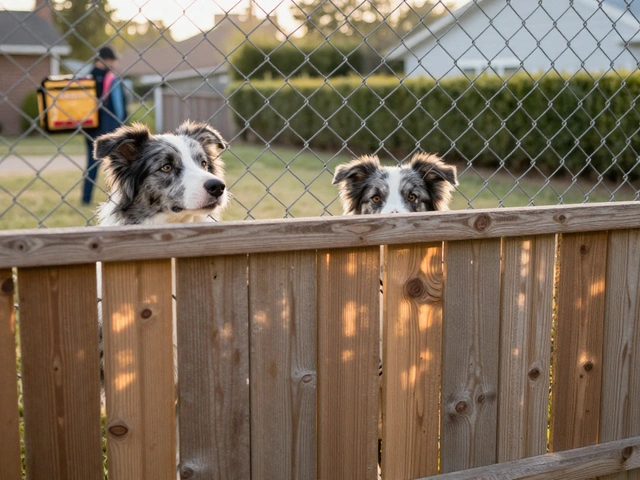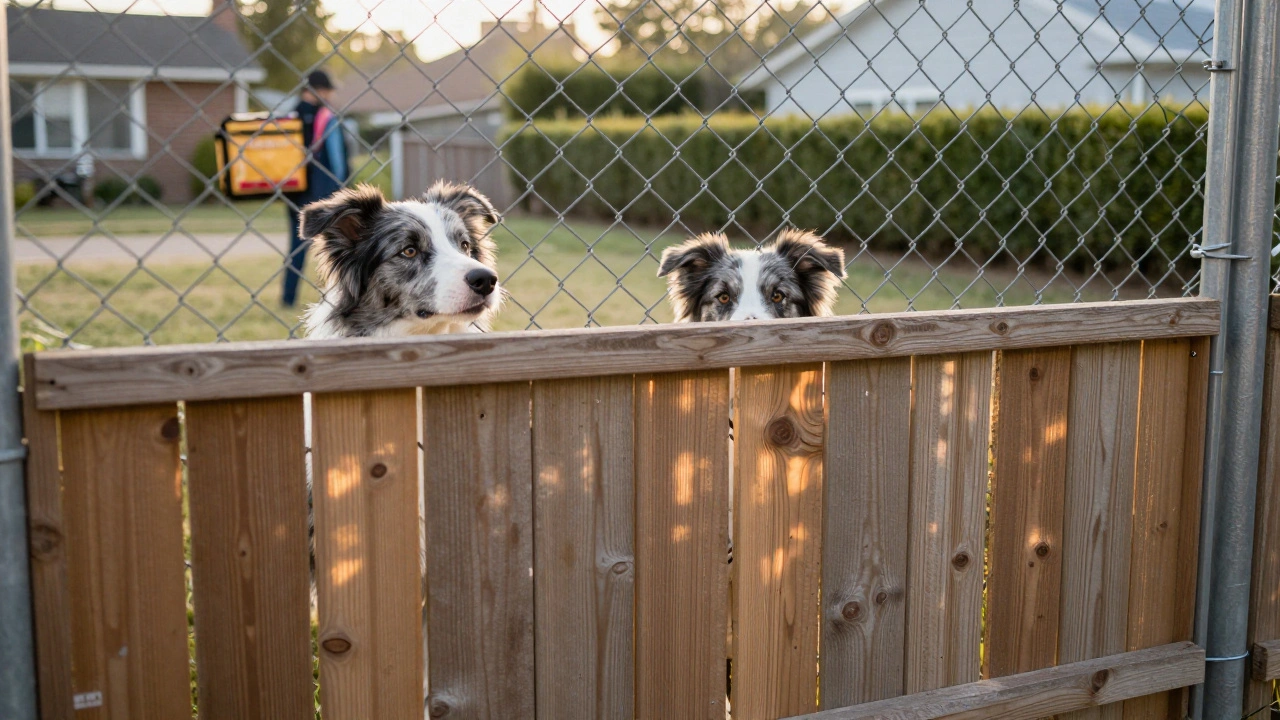
Ever watched your dog go nuts at the fence-barking, lunging, teeth bared-like some wild creature guarding a fortress? And then, five minutes later, they’re curled up on the couch like nothing happened? You’re not alone. Fence fighting is one of the most common and frustrating behavior problems dog owners face. It’s not just noise. It’s stress. For your dog. For you. And for the neighbors.
Why Dogs Fence Fight
Most dogs don’t just bark at the fence because they’re "bad." They’re reacting to something real: visual triggers. A delivery person walking by. A cat darting across the yard. Another dog on the other side of the fence. These aren’t abstract threats-they’re sudden, unpredictable movements that activate your dog’s hunting and territorial instincts.Think of it like this: your dog’s brain sees movement at the fence and thinks, "That’s a potential intruder." The barking isn’t aggression-it’s a warning call, a way to make the threat go away. If the person walks off, your dog thinks, "I did it! I scared them off!" That’s reinforcement. And it gets worse over time.
Studies show that dogs who regularly bark at passersby develop a heightened state of arousal. Their cortisol levels rise. Their heart rate increases. They’re stuck in fight-or-flight mode, even when nothing’s happening. This isn’t just annoying-it’s exhausting. And it can lead to real anxiety, especially if your dog can’t get to the "threat."
What Makes It Worse
Some owners think yelling at their dog or using shock collars will fix it. Those methods don’t work. They just make your dog more stressed. If you’re yelling, you’re adding noise to the chaos. If you’re shocking them, you’re making the fence itself the enemy. Now they associate the sight of a person with pain. That’s not fixing behavior-it’s creating a new problem.Another big mistake? Letting your dog stand at the fence all day. That’s like giving someone a front-row seat to a never-ending action movie. No wonder they’re keyed up. Dogs who spend hours staring out the fence develop what trainers call "fence-line reactivity." It’s not just barking-it’s a full-blown emotional response triggered by sight, sound, and even smell.
And then there’s the breed factor. Herding breeds like Border Collies, terriers like Jack Russells, and guard breeds like German Shepherds are wired to react to movement. It’s in their DNA. That doesn’t mean they’re doomed. But it does mean you need a smarter approach than just "tell them to stop."
Step 1: Control the View
The first thing you need to do is reduce what your dog can see. Not because you’re caging them-but because you’re giving their brain a chance to calm down.Here’s how:
- Install a solid fence panel or privacy screen along the most active side of your yard. Even a 3-foot section can make a huge difference.
- Use outdoor curtains or shade cloth on the lower half of a chain-link fence. It blocks the view but still lets air and light through.
- Move their favorite spot away from the fence. If they always lie by the back gate, put their bed near the house instead.
- Trim bushes or hedges that let dogs see movement peeking through.
One Oregon dog owner, Lisa, from Portland, reduced her Border Collie’s fence barking by 80% just by adding a wooden slat panel along the 12-foot stretch where neighbors walked their dogs. No more yelling. No more frustration. Just quiet.
Step 2: Teach a New Behavior
You can’t just stop barking. You need to replace it with something else. That’s called "counter-conditioning." You’re teaching your dog that when they see something at the fence, they get a better reward than barking.Start small:
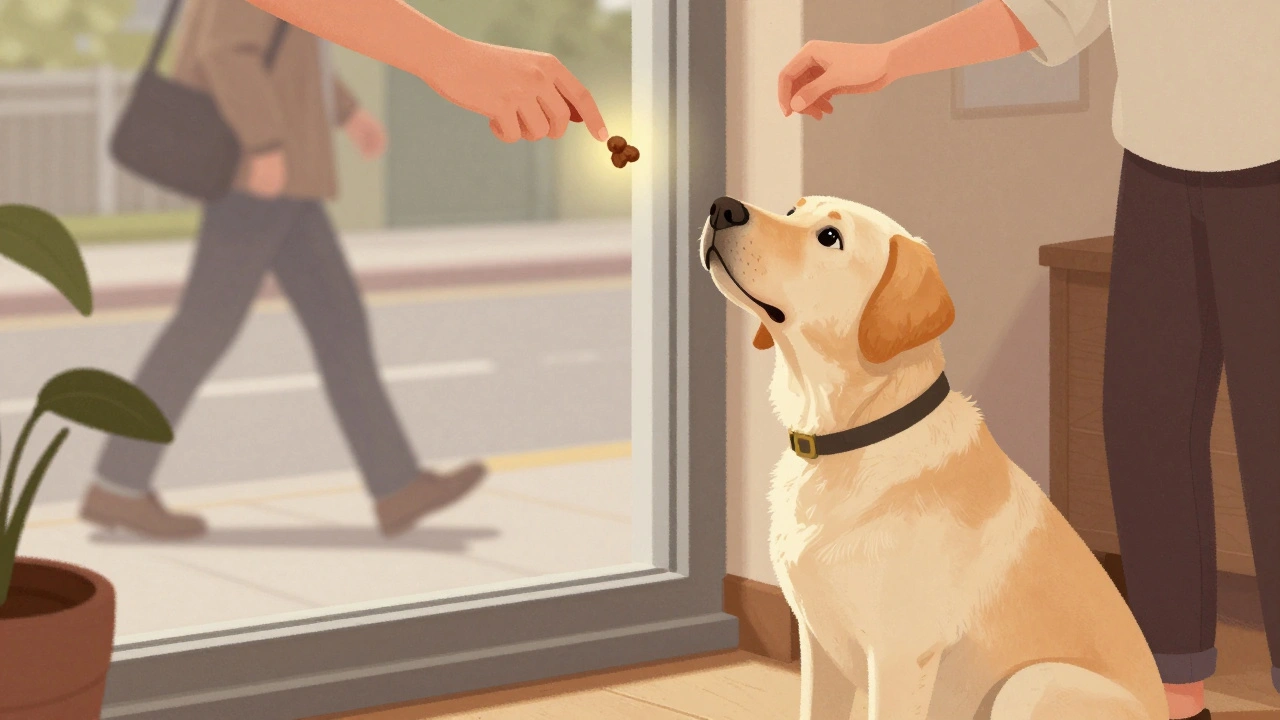
- Put your dog on a leash indoors, near a window with light activity-like a sidewalk or driveway.
- The moment they notice someone walking by (even far away), say "Look at me!" and toss a high-value treat (chicken, cheese, freeze-dried liver) into their mouth.
- Repeat this 10 times a day. No scolding. No yelling. Just treat, look, treat, look.
After a few days, they’ll start turning toward you before you even say anything. That’s the moment you want. You’ve rewired their brain. Now, the sight of a person means "good stuff," not "go crazy."
Step 3: Practice Controlled Exposure
Once your dog reliably looks at you for treats indoors, take it outside. But not to the fence. Not yet.Go to a quiet park or side street. Stay 30 feet away from any foot traffic. Have your dog sit. When someone walks by, mark the moment with a "yes!" and give a treat. If they bark? Turn and walk away. No talking. No eye contact. Just leave. You’re teaching them that barking ends the fun. Calmness brings rewards.
Gradually move closer-over weeks, not days. Some dogs need 4-6 weeks just to get comfortable at 20 feet. Rushing this step makes everything worse.
Step 4: Use the "Quiet" Cue
When your dog starts barking, don’t shout. Say "quiet" in a calm, clear voice. Wait. If they stop-even for a second-immediately give a treat. Don’t wait for silence. Wait for the pause. That’s the behavior you’re reinforcing.Do this every time. Eventually, they’ll learn that "quiet" means "you get paid." It takes patience. But it works. One study from the University of California, Davis, found that dogs trained with this method reduced fence barking by 70% in under 8 weeks.
What Doesn’t Work
Let’s be clear: some "solutions" you’ve heard about are myths.- Ultrasonic bark deterrents-they don’t stop the barking, they just make your dog more anxious.
- Shock collars-they create fear, not understanding. Your dog may stop barking-but they’ll also start avoiding you.
- Leaving them outside all day-it’s not training. It’s neglect.
- Yelling "no!"-you’re just adding to the noise. Your dog hears more yelling, not more calm.
These methods might look like they work in the moment. But they don’t fix the root problem. And they often make it worse.
When to Call a Pro
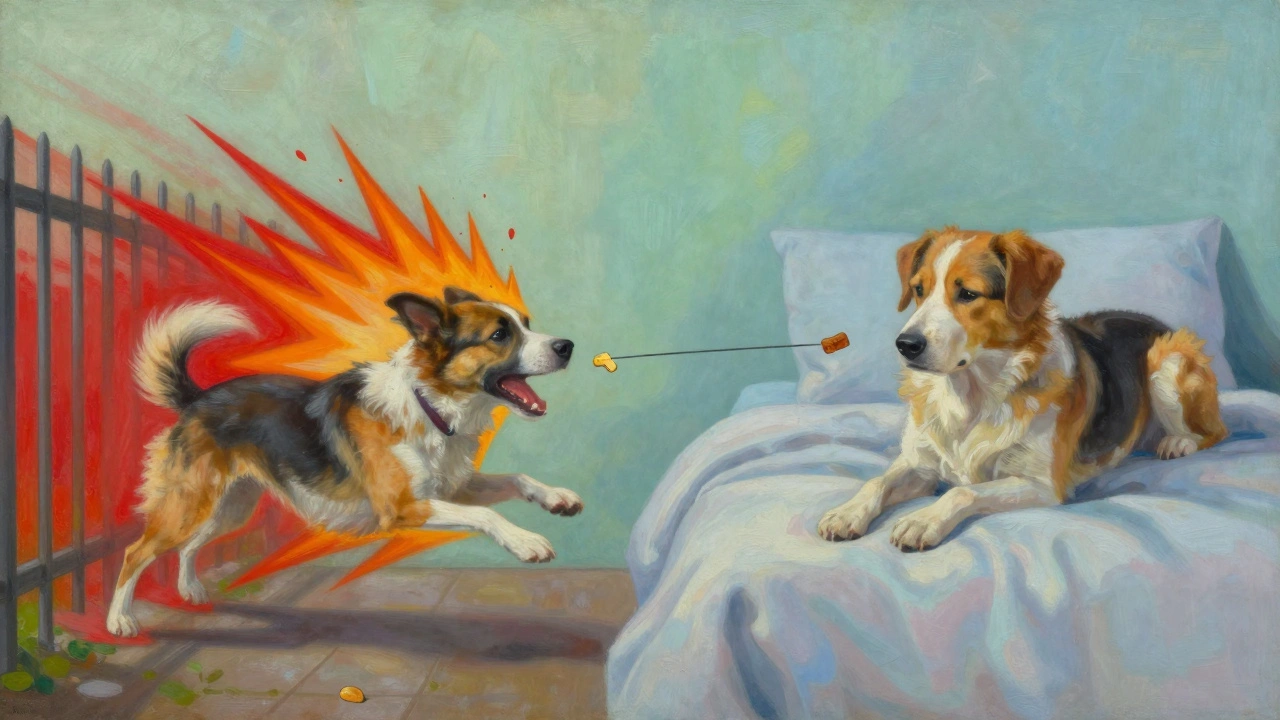
If your dog is lunging, snapping, or showing signs of fear-hiding, trembling, growling-you’re dealing with more than just barking. That’s reactivity. And it needs professional help.Look for a certified dog behavior consultant (CCBC or CPDT-KA). They’ll create a step-by-step plan tailored to your dog’s triggers. Some trainers even use video analysis to pinpoint exactly what sets your dog off. Was it the hat? The backpack? The way they walked? That level of detail makes all the difference.
Real Progress Takes Time
There’s no magic fix. Fence fighting didn’t start overnight. It won’t end overnight either. But with consistency, you can make real changes.One dog owner I spoke with in Portland, Mark, had a 3-year-old Labrador who’d bark for 20 minutes every time someone walked past. After 6 weeks of visual blocking and treat training, he went from 20 minutes of barking to 2 minutes. And now, he looks at Mark when someone passes by-waiting for the treat.
That’s the goal. Not silence. Not perfection. Just calm. And choice.
Final Tip: Manage the Environment
Even after training, keep controlling what your dog sees. Put them in a different room when you have guests coming over. Use baby gates to block off the yard during busy times. Don’t let them practice the behavior-even for 30 seconds-while you’re trying to fix it.Think of it like recovering from an injury. You wouldn’t let someone lift heavy weights while healing. Don’t let your dog practice reactivity while you’re trying to calm them down.
It’s not about shutting your dog out. It’s about helping them feel safe. And when they feel safe, the barking fades. Not because you made them stop. But because they no longer need to.
Why does my dog only bark at the fence and not inside?
Dogs bark at the fence because it’s a boundary. They see movement beyond it as a potential threat they need to control. Inside, there’s no clear line between "here" and "there." The fence gives them a target. It’s not about being "territorial"-it’s about the visual trigger combined with a physical barrier that makes them feel like they should be in charge.
Can fence fighting turn into aggression?
Yes, if left unchecked. Constant barking at the fence keeps your dog in a state of high alert. Over time, that stress can spill over into other areas-like growling at visitors, lunging on walks, or even snapping when someone approaches their space. It’s not that they’re becoming "mean." They’re becoming overwhelmed. The behavior escalates because they never get a chance to relax.
Is fence fighting related to leash reactivity?
Absolutely. Many dogs who bark at the fence also pull and bark on walks. The trigger is the same: sudden movement or presence of people or animals. The fence just gives them a place to practice. Once you fix the fence behavior, walk reactivity often improves too-because you’re teaching them how to respond calmly to triggers.
How long does it take to fix fence barking?
It varies. Some dogs show improvement in 2-3 weeks. Others take 2-3 months. It depends on how long the behavior has been going on, how intense the triggers are, and how consistently you train. The key isn’t speed-it’s consistency. Five minutes a day, every day, beats one hour once a week.
Should I use a muzzle to stop barking?
No. A muzzle doesn’t fix behavior-it just hides it. Your dog still feels the urge to bark. They’re still stressed. And if they can’t pant or drink, it adds physical discomfort. Muzzles are for safety in emergencies, not training. Focus on changing the behavior, not silencing the symptom.