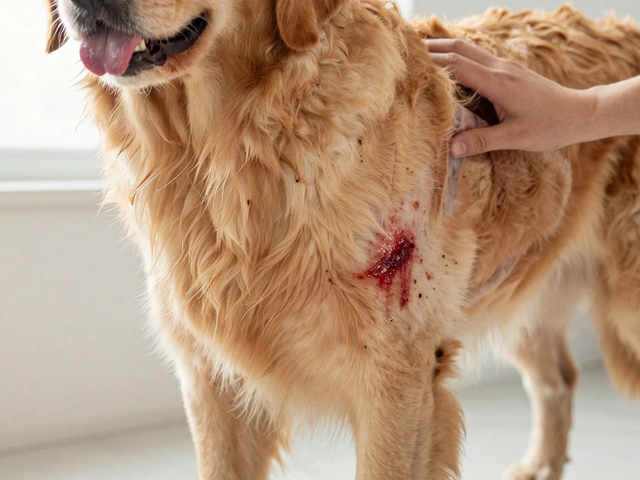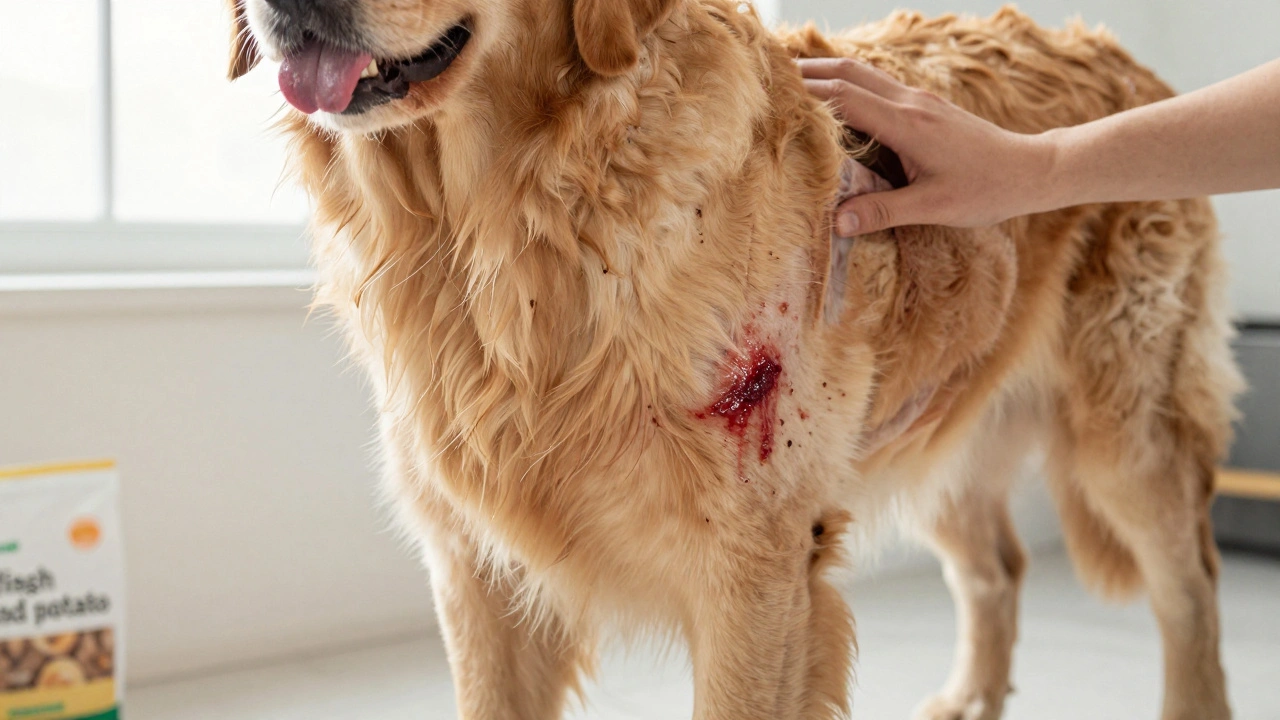
Hot spots in dogs aren’t just messy-they’re painful, fast-spreading, and often a sign something deeper is wrong. If your dog suddenly starts licking, biting, or scratching one spot until it’s raw and oozing, you’re looking at a hot spot. These red, inflamed, moist lesions can grow from a tiny irritation to a large, angry wound in under 24 hours. And while they look alarming, they’re rarely just a skin problem. More often than not, they’re your dog’s body screaming about an allergic trigger you haven’t noticed yet.
What Causes Hot Spots in Dogs?
Hot spots, also called acute moist dermatitis, start when a dog scratches or licks an itchy spot too hard. That sounds simple, but the itch doesn’t come out of nowhere. It’s usually triggered by something in their environment or diet. The most common culprits? Allergies.
Food allergies are a big one. If your dog eats chicken, beef, dairy, or grains like corn or wheat, those ingredients can set off an immune response. That response doesn’t always mean vomiting or diarrhea-it often shows up as skin irritation. Flea allergy dermatitis is another major player. Even one flea bite can cause a dog with this allergy to go into overdrive, scratching for days. The saliva triggers a severe reaction, and the hot spot forms where the dog can reach-usually the lower back, tail base, or thighs.
Environmental allergies are just as sneaky. Pollen, mold, dust mites, and even certain cleaning products can irritate your dog’s skin. Dogs with these allergies often lick their paws, rub their face, or scratch their armpits. Seasonal hot spots? That’s a clue. If your dog breaks out every spring or fall, pollen or mold spores are likely the trigger.
And don’t forget moisture. Dogs with thick coats who swim often or get caught in the rain can develop hot spots from trapped dampness. Bacteria like Staphylococcus intermedius thrive in warm, wet skin, turning a small irritation into a full-blown lesion. But even here, the root cause is usually an underlying allergy that weakened the skin’s natural defenses.
How to Spot a Hot Spot Early
Early detection saves your dog pain and your vet bill. Look for these signs:
- A red, shiny, wet patch of skin-often circular and growing fast
- Loss of hair around the area
- Strong odor coming from the skin
- Your dog obsessively licking, biting, or scratching one spot
- Restlessness or whining when touched near the area
Check under the fur. Hot spots hide under thick coats. Run your fingers gently over the back, belly, and legs. If you feel warmth or stickiness, it’s time to investigate. Don’t wait for it to get bigger. The sooner you act, the easier it is to stop.
What Not to Do
Many well-meaning owners try home remedies that make things worse. Don’t use human antiseptic sprays, hydrogen peroxide, or alcohol on the area. These burn the skin and cause more pain. Don’t wrap the spot tightly-it traps moisture and breeds bacteria. And never ignore it thinking it’ll “just go away.” Hot spots don’t heal on their own. They get worse.
Also, avoid over-the-counter cortisone creams without a vet’s advice. While they seem like a quick fix, they can mask symptoms and delay finding the real cause. If the allergy isn’t addressed, the hot spot will come back-often in a new spot.

How Vets Treat Hot Spots
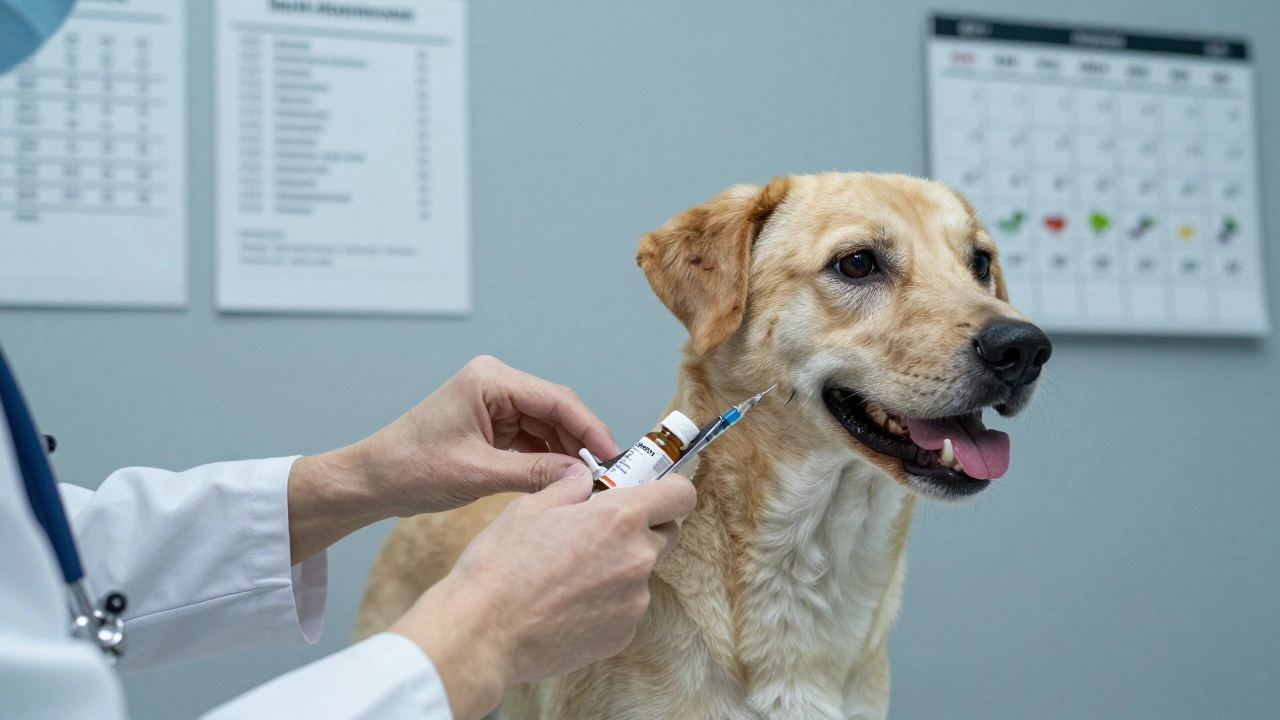
When you bring your dog in, the vet will clean the area first. They’ll clip the fur around the lesion, then gently wash it with a medicated antiseptic solution. This removes debris and bacteria. Next, they’ll likely prescribe an oral antibiotic-usually cephalosporins like cephalexin-to fight the infection. This takes 10-14 days to fully clear.
For pain and inflammation, they’ll give your dog a short course of steroids. This stops the itch-scratch cycle fast. Topical sprays or ointments with antimicrobial and anti-inflammatory ingredients are also common. Some vets use laser therapy to speed healing and reduce discomfort.
But here’s the key: treating the hot spot is only half the job. The vet will dig into what’s causing the itch. That means:
- Flea prevention check-did you miss a dose?
- Diet trial-if food allergy is suspected, they’ll recommend a limited-ingredient diet for 8-12 weeks
- Allergy testing-for environmental triggers, they may do intradermal or blood tests
Without fixing the root cause, you’re just putting out fires. The hot spot will return.
Preventing Hot Spots: Addressing Allergies
Prevention starts with managing allergies. Here’s what works:
- Flea control: Use vet-recommended monthly preventatives. Even indoor dogs need them. Fleas can hitch a ride on shoes or other pets.
- Diet change: If your dog has chronic skin issues, switch to a hydrolyzed protein or novel protein diet. Look for foods with one protein source (like duck or kangaroo) and one carb (like sweet potato). Avoid fillers. Stick with it for at least two months before deciding if it helps.
- Environmental cleanup: Wash your dog’s bedding weekly in hot water. Use fragrance-free detergent. Vacuum often, especially where your dog sleeps. Air purifiers help reduce airborne allergens like pollen and mold.
- Bathing routine: Bathe your dog every 2-4 weeks with a hypoallergenic, oatmeal-based shampoo. Don’t over-bathe-it strips natural oils. Dry them thoroughly after baths or swims.
- Supplements: Omega-3 fatty acids from fish oil reduce inflammation. Look for products with at least 180mg EPA and 120mg DHA per 10 lbs of body weight. Give daily for at least 6-8 weeks to see results.
Some dogs need long-term allergy management. That might mean monthly antihistamines, immunotherapy shots, or even cyclosporine for severe cases. Your vet will tailor this based on your dog’s history and test results.
Real-Life Example: A Case from Portland
Last fall, a Golden Retriever named Luna came in with a hot spot on her inner thigh. Her owner thought it was from rolling in grass. But Luna had been itching for weeks. After checking flea prevention (up to date), we ran a food trial. She was on a chicken-and-rice diet. Switching to fish and potato eliminated the itching in 3 weeks. No more hot spots. The fix wasn’t a cream-it was a new food label.
Another case: a Shih Tzu with recurring hot spots every April. Allergy testing showed heavy pollen sensitivity. We started weekly paw wipes after walks, daily antihistamines in spring, and an air purifier in the bedroom. The hot spots stopped. Prevention works when it’s consistent.
When to Call the Vet
You don’t need to wait for a full-blown lesion. Call your vet if:
- The area is larger than a quarter
- Your dog won’t stop licking or biting
- The skin smells bad or oozes pus
- You’ve tried basic care (cleaning, e-collar) for 48 hours with no improvement
Home care can help minor irritation, but if the skin is broken, warm, or swollen, it’s infected. That needs antibiotics. Delaying treatment risks deeper infection or scarring.
Long-Term Outlook
Most dogs recover fully once the allergy is controlled. But hot spots are a sign, not a one-time event. Dogs with allergies often have recurring skin issues. That’s why ongoing management matters. Keep a journal: note when hot spots appear, what your dog ate, weather changes, or new products used. Patterns reveal triggers.
With the right diet, consistent flea control, and environmental adjustments, many dogs go months or years without another hot spot. It takes patience. But for your dog, it means less pain, fewer vet visits, and a happier, itch-free life.