Every year in the U.S., around 6 million dogs enter animal shelters. About half of them are euthanized-not because they’re sick or aggressive, but because there’s simply not enough space or resources to care for them. The root cause? Unplanned litters. Spaying and neutering dogs isn’t just a vet procedure-it’s one of the most powerful tools communities have to break the cycle of pet overpopulation and save lives.
Shelters Aren’t Just Full, They’re Overwhelmed
Shelters in cities like Portland, Phoenix, and Atlanta don’t just struggle with limited space. They’re also stretched thin on staff, funding, and medical supplies. When a shelter takes in 20 puppies from a single unspayed female, that’s 20 fewer resources for the older dogs, the sick ones, or the ones waiting for adoption. A 2023 study from the Humane Society found that shelters with active spay/neuter outreach programs saw a 40% drop in intake over five years. That’s not a coincidence. It’s cause and effect.
Take a look at what happens when a female dog has one litter. She can have up to two litters a year. Each litter averages six to ten puppies. If even one of those puppies isn’t spayed and has one litter of her own, you’re looking at 676 dogs in just six years. That’s not a hypothetical. That’s a real math problem-and it’s happening in backyards, alleys, and abandoned lots across the country.
Spay and Neuter Cuts Down on Euthanasia Rates
It’s hard to talk about euthanasia without feeling heavy. But here’s the truth: when shelters are full, and there’s no room, the hardest decision becomes who gets to live and who doesn’t. In 2024, the National Council on Pet Population Study and Policy reported that 60% of euthanized dogs in shelters were unaltered. That means if every dog had been spayed or neutered before adoption-or even before being picked up as a stray-thousands of lives could’ve been saved.
Communities that invest in low-cost or free spay/neuter clinics see dramatic drops in euthanasia. In Eugene, Oregon, a city-funded program offering $50 spay/neuter vouchers led to a 58% reduction in dog euthanasia over three years. That’s not just numbers-it’s 58% fewer dogs dying because they had no home.
Community Safety Improves
People often assume spaying and neutering is only about preventing litters. But it does more than that. Unneutered male dogs are far more likely to roam. They follow scent trails, cross busy streets, get hit by cars, or get into fights. In 2022, Portland Animal Welfare Team reported that 73% of dogs brought in with bite wounds or broken legs were intact males.
Neutered dogs are less aggressive toward other dogs and less likely to escape. Spayed females don’t go into heat, which means fewer males congregating outside homes, barking, or marking territory. That leads to fewer complaints to animal control, fewer nuisance calls, and quieter neighborhoods.

Lower Costs for Everyone
Every dog that enters a shelter costs taxpayers money. From intake to medical care, food, staff time, and euthanasia, the average cost per dog is $450. Multiply that by thousands of dogs a year, and you’re talking millions. In contrast, a spay or neuter surgery costs between $50 and $150, depending on the clinic.
When a city spends $100,000 on a spay/neuter program, it can prevent 300+ dogs from entering shelters. That saves nearly $135,000 in shelter costs alone-not counting the cost of treating injuries from dog fights or accidents caused by roaming dogs. It’s one of the few public health programs where the return on investment is clear and immediate.
More Adoptions, Less Stress
When shelters aren’t overflowing, they can focus on what matters: finding homes. A shelter with 50 dogs and 10 cages can’t give each dog attention. They can’t train them, socialize them, or find the right match. But when intake drops, staff can spend time with each animal. They can identify personality traits, spot behavioral issues early, and even help dogs with anxiety or fear.
In communities with strong spay/neuter programs, adoption rates rise. Why? Because dogs are healthier, calmer, and easier to place. A 2024 survey of 12 shelters showed that adoption success rates jumped by 31% in areas with consistent sterilization outreach. People don’t just adopt dogs-they adopt better-behaved, more predictable companions.

What Communities Are Doing Right
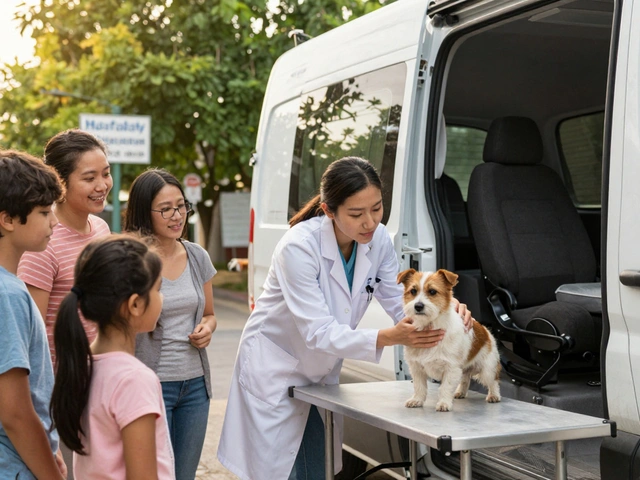
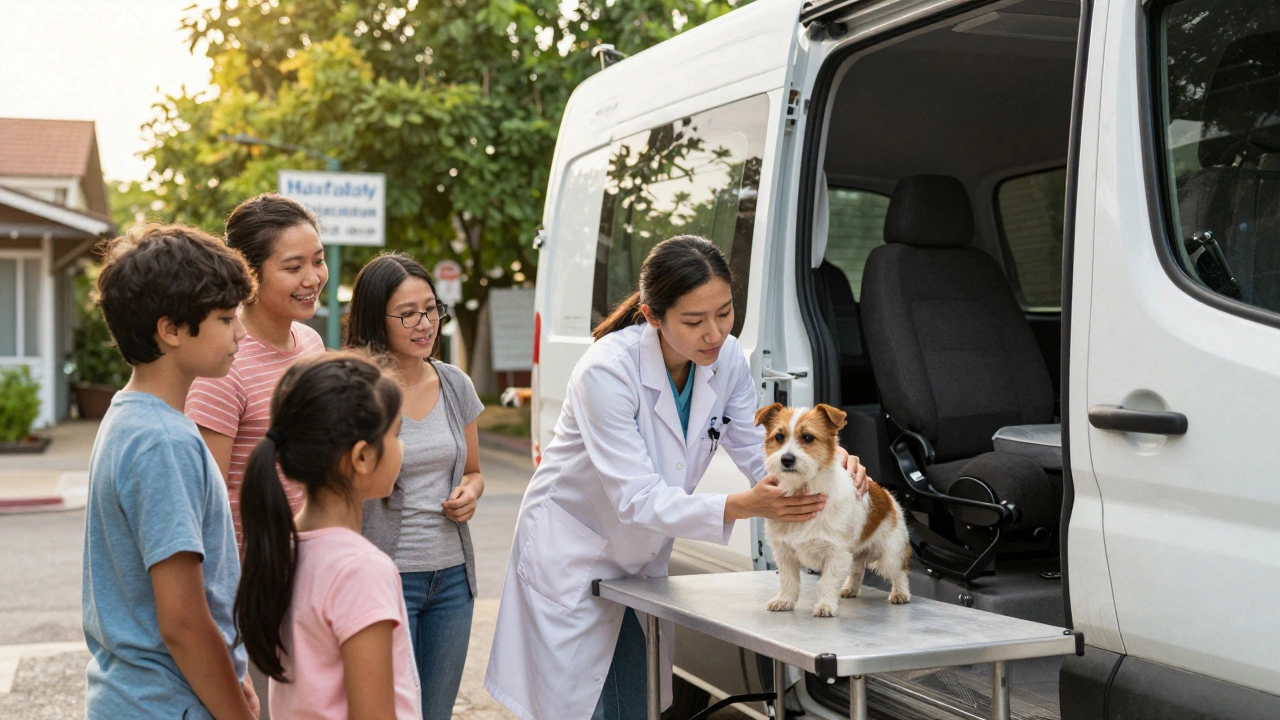
Some cities are making this work. In Seattle, mobile spay/neuter vans hit low-income neighborhoods every month. In Austin, the city partners with local vets to offer vouchers for low-income pet owners. In Portland, the nonprofit Spay Portland is a nonprofit that has performed over 18,000 surgeries since 2019, mostly for dogs owned by people on public assistance. They don’t turn anyone away.
These programs don’t just offer surgery. They offer education. They answer questions. They provide post-op care instructions. They follow up. That’s the key: accessibility. A $50 voucher means nothing if you can’t get to the clinic, don’t have transportation, or are afraid of the vet. Successful programs meet people where they are.
Myths That Hold Us Back
Some people still believe spaying or neutering will make their dog fat or lazy. That’s not true. Weight gain comes from overfeeding and lack of exercise-not hormones. Others think it’s unnatural or cruel. But think about it: we neuter male cats, we spay female rabbits, we even neuter male horses. We do it because it improves quality of life.
And what about the idea that “my dog is special, so I should breed him”? If your dog is a purebred, there are already hundreds of thousands of purebreds in shelters. If they’re mixed, there are even more. Breeding a dog just because you think they’re “special” doesn’t help anyone. It just adds to the pile.
What You Can Do
You don’t need to run a shelter to make a difference. If you own a dog, get them fixed. If you know someone who can’t afford it, help them find a low-cost clinic. In Oregon, programs like Spay Portland and The Animal Foundation in Las Vegas (which also serves nearby states) offer sliding-scale fees. Some even pay for your transportation.
Volunteer at your local shelter. Help transport dogs to clinics. Spread the word on social media. Talk to neighbors. A simple conversation can change a life.
The math is clear: one unspayed female dog can lead to thousands of unwanted puppies. One surgery can stop that chain. And when communities come together to make spay and neuter accessible, shelters become places of hope-not endings.
Is it safe to spay or neuter a young dog?
Yes. Most veterinarians recommend spaying or neutering between 4 and 6 months of age. Studies from the American Veterinary Medical Association show that early sterilization reduces the risk of certain cancers and behavioral issues. Puppies recover faster than adult dogs, and the procedure is routine. Many shelters spay and neuter dogs as young as 8 weeks before adoption.
Does spaying or neutering change a dog’s personality?
No-not in the way most people fear. Dogs don’t lose their energy, loyalty, or playfulness. What changes is the drive to roam, mount, or fight. Many owners report their dogs become calmer and more focused after surgery. Aggression linked to mating behavior drops significantly. The dog you love stays the same-just healthier and less stressed.
What if I can’t afford to spay or neuter my dog?
You’re not alone. Many cities have nonprofit programs that offer free or low-cost spay/neuter services based on income. In Portland, organizations like Spay Portland and Humane Society of Oregon provide vouchers, payment plans, and even mobile clinics. You can also check with your local animal control office-they often have partnerships with clinics. No one should have to choose between feeding their dog and preventing more homeless pets.
Why do shelters still have so many dogs if spay/neuter works?
Because not every community has access to these services. In rural areas, there may be no vet within 50 miles. In low-income neighborhoods, people may not know where to go or fear the cost. Without consistent outreach, education, and affordable options, the problem continues. The solution isn’t to blame people-it’s to build systems that make the right choice easy for everyone.
Can I still get my dog fixed if they’re older?
Absolutely. There’s no upper age limit for spaying or neutering. Many senior dogs benefit from the procedure-especially females, who are at high risk for uterine infections and breast tumors as they age. Veterinarians assess each dog’s health before surgery. If they’re healthy enough for anesthesia, they’re healthy enough for the procedure.