When a dog shows signs of aggression, it’s not about being bad-it’s about being scared, confused, or overwhelmed. Many owners panic when their dog growls, snaps, or lunges. But reacting with fear or punishment only makes things worse. The real goal isn’t to eliminate every growl-it’s to create a safety plan that protects people, keeps your dog calm, and gives you control before things escalate.
Understand What’s Triggering the Aggression
Not all aggression is the same. A dog that growls at strangers on walks is different from one that snaps when you try to take a toy, or one that freezes and bites when touched near the hip. You need to know the triggers.Start by writing down every incident. Include:
- What happened right before the bite or growl?
- Who was there? (Child? Stranger? Another dog?)
- Where were you? (On leash? In the yard? On the couch?)
- What was the dog doing just before? (Staring? Freezing? Lip licking?)
- How did the dog react afterward? (Ran away? Cowered? Stayed tense?)
Look for patterns. Is it always when someone reaches for their head? When kids scream? When you try to move them off the bed? Once you identify triggers, you can start managing them.
Set Up Physical Barriers
You don’t need to lock your dog away forever. But you do need to prevent situations where a bite is likely.Here’s what works in real homes:
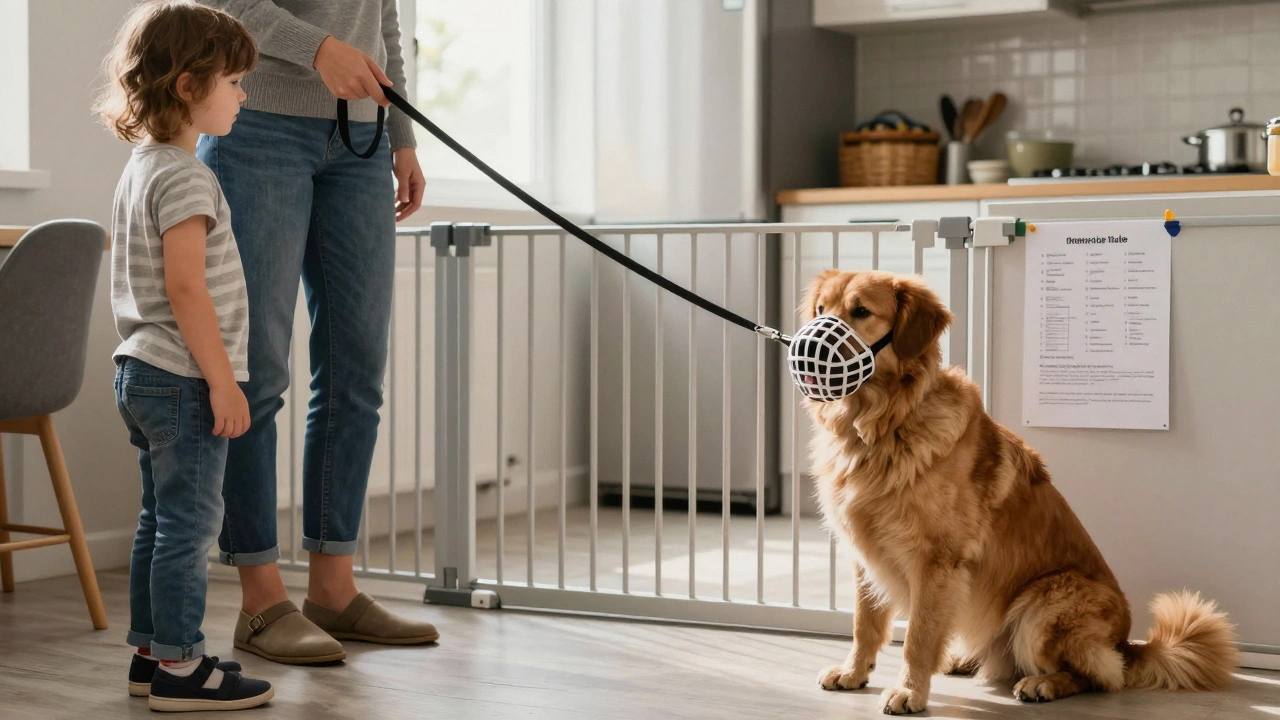
- Use baby gates to keep your dog out of high-risk areas-like the kitchen during meal prep or the hallway where kids run.
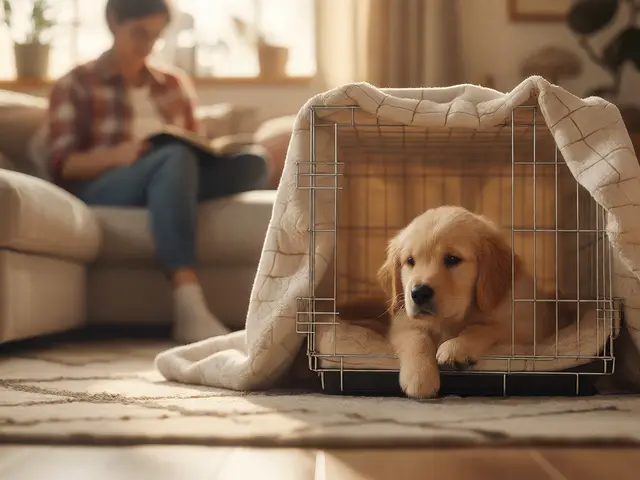
- Install a crate or kennel with a door that latches securely. Train your dog to see it as a safe space, not a punishment.
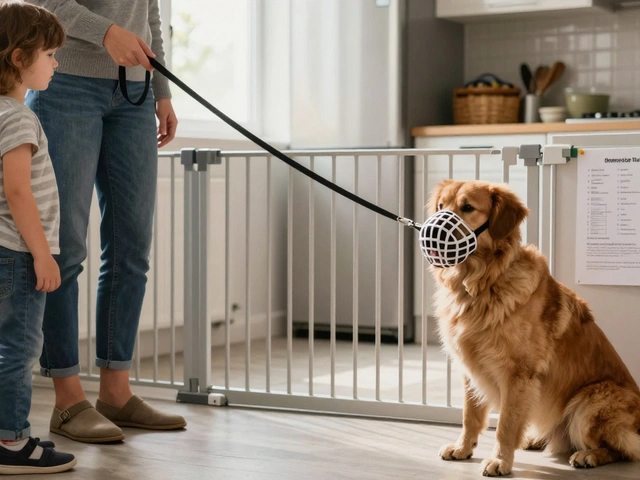
- Keep your dog on a long leash (10-15 feet) indoors when guests are over. It gives you control without needing to grab or pull.
- Use a muzzle during vet visits, grooming, or when visitors are present-even if your dog has never bitten someone else. It’s a safety net, not a sign of failure.
A muzzle might feel embarrassing, but it’s like a seatbelt. You wouldn’t skip it in a car. Same here. A well-fitted basket muzzle lets your dog pant, drink, and even take treats. It doesn’t stop communication-it stops damage.
Teach People How to Act Around Your Dog
Most bites happen because someone doesn’t know how to read a dog’s body language. Kids especially. Adults too.Make a simple rule sheet for everyone who comes near your dog:
- No direct eye contact-staring feels like a threat.
- No reaching over the head-it’s invasive. Let them sniff your hand first.
- No hugging or squeezing-even if they seem to like it, most dogs tolerate it, not enjoy it.
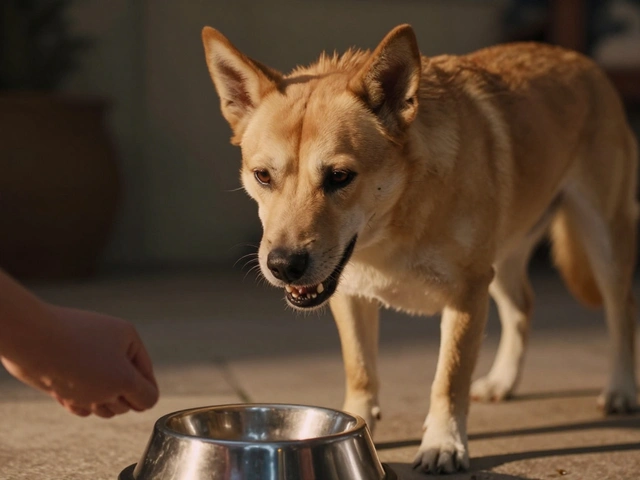
- No approaching while eating-food aggression is one of the most common triggers.
- No sudden movements-if your dog tenses, stop. Don’t try to force interaction.
Print this out. Tape it to the fridge. Say it out loud every time someone visits. If you’re serious about safety, you’ll repeat this until it sticks.
Build a Consistent Routine
Dogs with bite risk often act out because they’re stressed by unpredictability. Chaos = anxiety = reaction.Set up a daily schedule that includes:
- Feeding at the same time every day (use a slow feeder bowl to reduce food guarding).
- Walks at consistent times (avoid busy streets if your dog reacts to crowds).
- Quiet rest periods (15-20 minutes of calm, no interaction, after meals and before bed).
- Training sessions (5-10 minutes, twice a day) focused on calm focus, not obedience.
Even if your dog doesn’t respond to commands like "sit" or "stay," you can teach them to look at you when they’re tense. Start by tossing treats when they glance at you during a walk. Gradually, they’ll learn that looking at you = good things happen.
Work With a Professional-Not Just Any Trainer
Not all dog trainers are created equal. Some use dominance-based methods that make aggression worse. You need someone who understands fear-based aggression.Look for a certified professional who:
- Uses force-free, science-based methods (think: positive reinforcement, desensitization, counter-conditioning).
- Has experience with dogs who have bitten or shown serious aggression.
- Is willing to visit your home, not just train at a facility.
- Will work with you, not just your dog.
Ask for references. Watch a session if you can. If they say, "I’ll fix your dog in three weeks," walk away. Real change takes time. Months, sometimes.
Some vet clinics offer behavior consultations. Others partner with local trainers. Call your vet. Ask: "Who do you refer for dogs with bite risk?" That’s your best starting point.
Know When to Use Emergency Tools
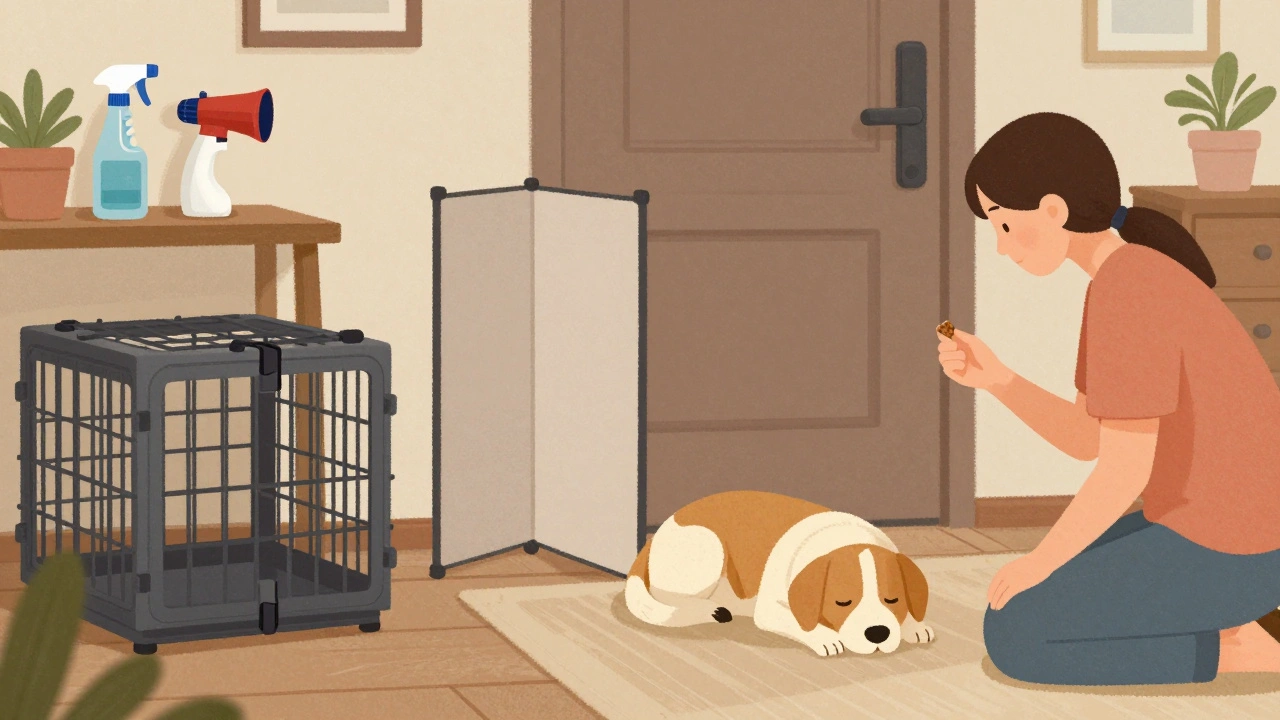
There will be moments when things go wrong. You need tools ready.Keep these on hand:
- A long-handled leash or harness with a handle you can grab quickly.
- A spray bottle of water (not for punishment-just to distract if your dog lunges).
- A loud air horn (like a bike horn) to break fixation without physical contact.
- A sturdy barrier-like a baby gate or folding screen-to separate your dog from visitors.
Never use a shock collar, choke chain, or prong collar. They increase fear. Fear increases aggression.
Document Everything
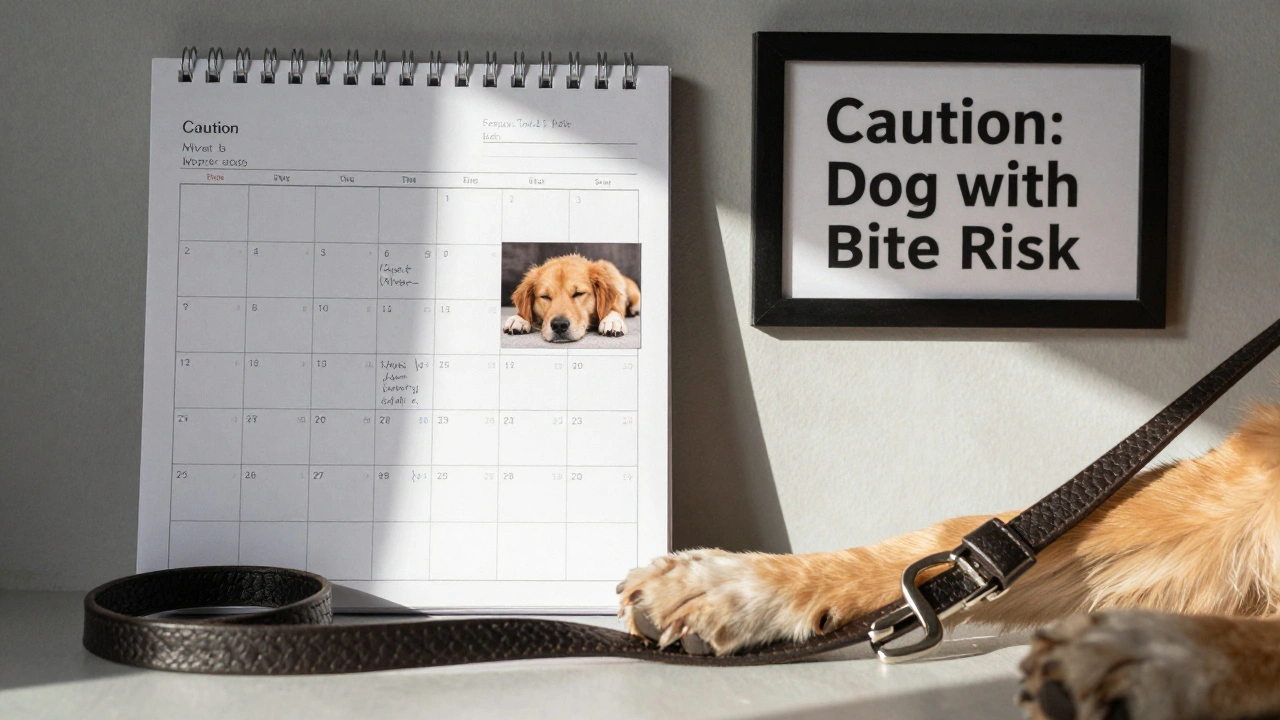
If you ever need to prove you’re doing everything right-whether for a vet, a landlord, or a court-you need records.Start a log:
- Date and time of each incident
- What happened
- How you responded
- What changed after
Also, video record calm behavior. Not the aggression. The moments your dog is relaxed-sleeping, eating calmly, looking away from a stranger. These show progress.
Keep this log for at least six months. It’s not just for you-it’s for your dog’s future.
Know Your Legal and Social Boundaries
In many places, even one bite can trigger legal action-especially if a child is involved. Insurance companies may drop you. Landlords may evict you. Schools may ban your dog from the yard.Here’s what you must do:
- Check your homeowner’s or renter’s insurance policy. Does it cover dog-related liability? If not, switch.
- Notify your landlord in writing that you’re working with a professional trainer. Get it in writing.
- Never leave your dog unsupervised around children or unfamiliar adults.
- Use a sign on your door: "Caution: Dog with Bite Risk. Please Do Not Enter Without Permission." It’s not mean-it’s responsible.
Being honest about your dog’s behavior isn’t weakness. It’s the first step toward safety-for everyone.
Progress Isn’t Linear
There will be setbacks. A visitor walks in too fast. A kid runs past. Your dog snaps. You feel like you’re back at square one.That’s normal. Recovery from aggression isn’t about perfection. It’s about reducing the frequency and intensity of incidents. One less growl per week. One fewer moment of tension. That’s progress.
Celebrate the small wins. The day your dog looked away from a stranger instead of growling. The time you caught a tense moment before it exploded. The fact that you didn’t yell or punish when things went wrong.
These are the moments that save lives.