When a litter of puppies is born, the first few days can feel overwhelming - even for experienced breeders. The smallest ones are blind, deaf, and completely dependent. One wrong move, and a puppy can decline fast. But with the right setup and attention, most newborn puppies thrive. This isn’t about fancy equipment or expensive supplements. It’s about understanding what they need - and what they don’t.
Temperature Is Everything
Newborn puppies can’t regulate their body temperature. They rely entirely on their mother and their environment. If the room is too cold, they’ll huddle together and stop nursing. If it’s too hot, they’ll spread out, pant, and get dehydrated. The ideal temperature for the first week is 85-90°F (29-32°C). After that, drop it by 5°F each week until it hits 72°F by week four.
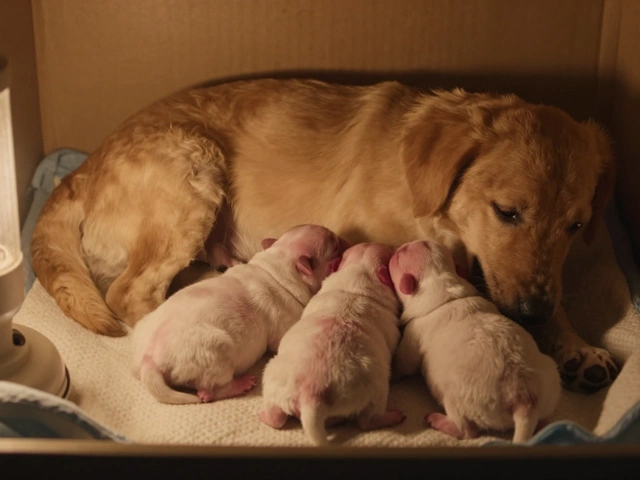
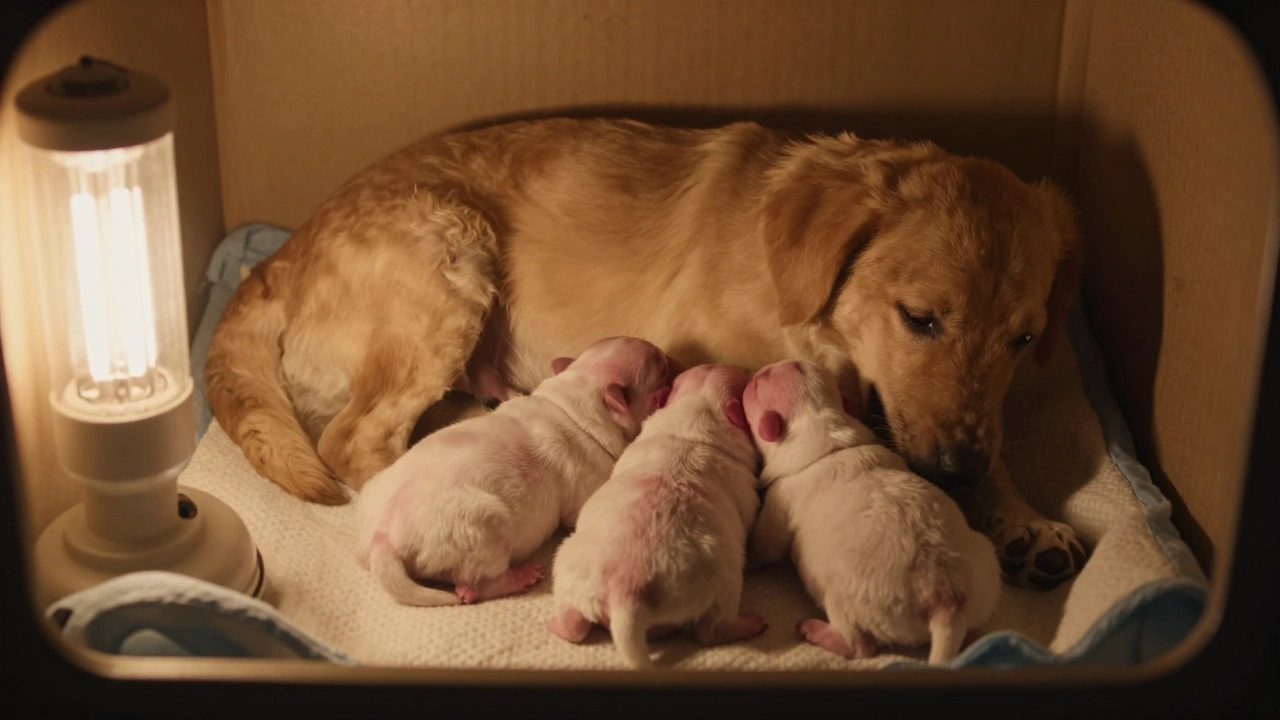
Use a heat lamp or heating pad, but never let the puppies touch it directly. Place the heat source on one side of the whelping box so they can move away if they get too warm. A good rule of thumb: if you can comfortably hold your hand on the surface for 30 seconds, it’s safe for them.
Check them hourly. Cold puppies - limp, quiet, and pale - are in danger. Warm them slowly with a towel-wrapped heating pad. Don’t microwave blankets or use hot water bottles. Those can burn. A study from the University of California, Davis, found that 68% of neonatal puppy deaths in home settings were linked to improper temperature control.
Feeding: Every 2 Hours, Day and Night
For the first two weeks, puppies nurse every two hours. That means you’re up every two hours, even at 3 a.m. If the mother is healthy and nursing well, don’t interfere. But if she’s neglecting them, has low milk, or died during birth, you’ll need to step in.
Use a commercial puppy milk replacer - never cow’s milk. It causes diarrhea and bloating. Warm it to body temperature (100°F). Test a drop on your wrist. If it feels warm, not hot, it’s ready. Use a small syringe or nipple bottle. Never force-feed. Let the puppy suckle. If they’re too weak to nurse, place a drop of milk on their tongue and let them lick it up.
Feed 1-2 ml per ounce of body weight every two hours. A 4-ounce puppy needs about 4-8 ml per feeding. Weigh them daily. Puppies should gain 5-10% of their birth weight every day. If they lose weight or stall, call a vet. That’s not normal.
Stimulation for Bathroom Needs
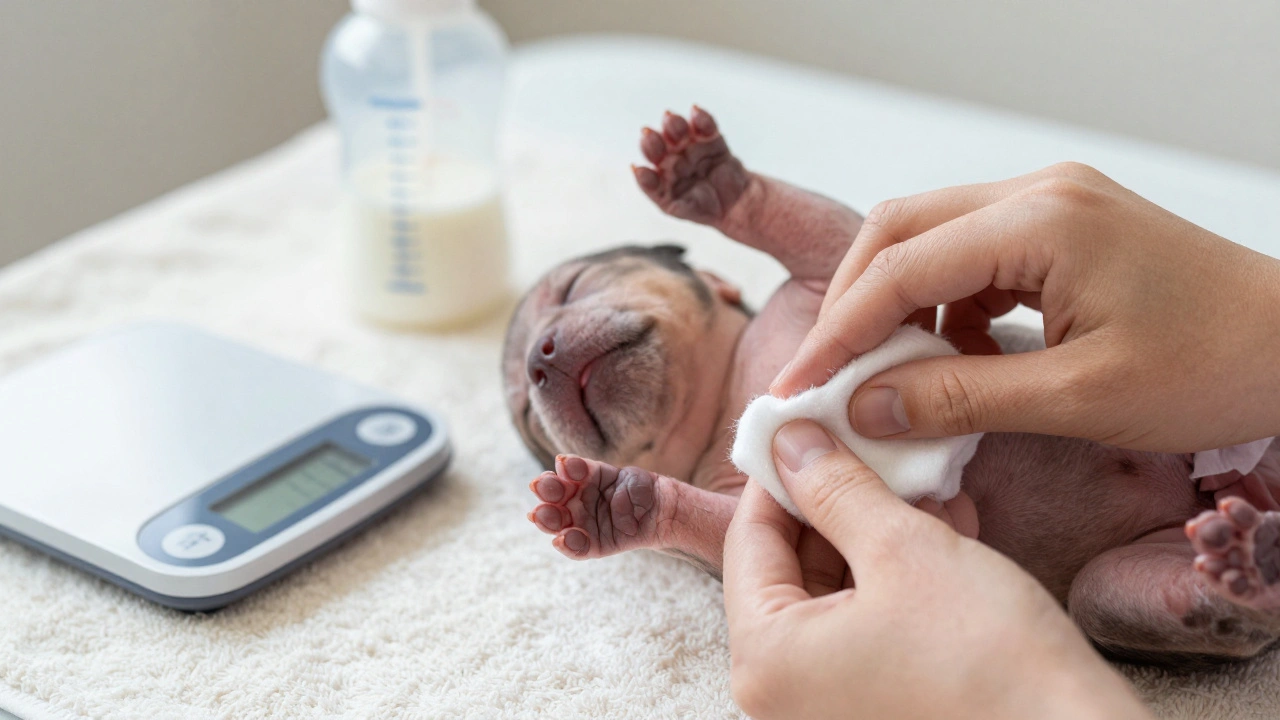
Newborn puppies can’t pee or poop on their own. Their mother licks their genital area to stimulate them. If she’s not doing it - or if you’re hand-raising - you must. After every feeding, use a warm, damp cotton ball or soft cloth. Gently rub their belly and genital area in a circular motion for 30-60 seconds. Watch for output. Urine should be clear or pale yellow. Stool should be soft and mustard-yellow. If they don’t go for more than 24 hours, they’re blocked. That’s an emergency.
Don’t skip this step. One breeder in Oregon lost three puppies last year because she assumed the mother was doing it. The mother had a C-section and was too weak. By the time she noticed, it was too late.
Monitoring Health - What to Watch For
Each puppy should be checked daily. Look for:
- Weight gain - every 24 hours
- Color - pink gums and skin, not blue or gray
- Activity - they should squirm and grunt when handled
- Belly - round and firm, not bloated or sunken
- Nipples - all should be used. If one pup isn’t nursing, it may be too weak
Watch for signs of infection: lethargy, whining, refusal to nurse, cold extremities, or a foul smell from the navel. A red, swollen, or oozing umbilical cord means infection. Clean it with diluted chlorhexidine and get help immediately.
Some breeders use probiotics or electrolytes as prevention. But unless a puppy is dehydrated or sick, don’t add anything. Too many supplements can upset their tiny systems.
When to Start Weaning
At three weeks, puppies start to explore. They’ll nibble on their mother’s food. That’s your cue to introduce gruel. Mix high-quality puppy kibble with warm water or milk replacer until it’s like a thick soup. Offer it in a shallow dish. Let them lick it. Don’t force them.
By four weeks, they should be eating gruel 3-4 times a day. Reduce nursing sessions. By six weeks, they should be fully weaned. If they’re still nursing heavily at five weeks, the mother may be overproducing milk - which can lead to mastitis. Talk to your vet about adjusting feeding schedules.
What Not to Do
Here’s what most new breeders get wrong:
- Don’t handle them too much - except for feeding and cleaning. Too much handling stresses them out. Let the mother bond.
- Don’t bathe them - not even a wipe. Their skin is too sensitive. Use dry brushing only if needed.
- Don’t give vaccines - puppies get maternal antibodies until 6-8 weeks. Vaccines before then won’t work and can harm them.
- Don’t move them - changing the whelping box location can cause temperature swings and stress. Keep them in one quiet, dark room.
When to Call the Vet
You don’t need a vet visit every day. But you should call immediately if:
- A puppy is cold and unresponsive after warming attempts
- They haven’t peed or pooped in over 24 hours
- One pup is significantly smaller than the others and won’t nurse
- The mother is lethargic, has a fever, or refuses to eat
- You see blood, pus, or a foul odor from the navel or vulva
Many breeders wait too long. Puppies decline fast. A delay of even 12 hours can be fatal. Keep your vet’s number handy. And if you’re unsure, call anyway. Better safe than sorry.
Final Notes
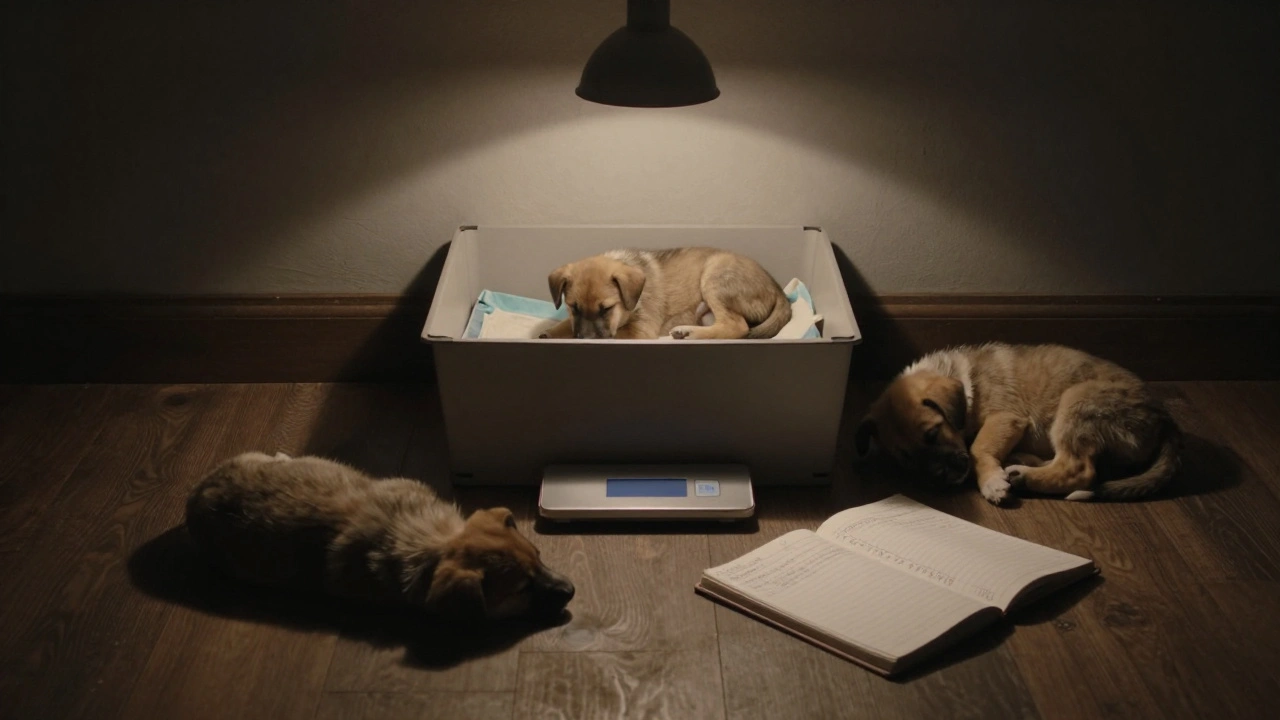
Newborn puppies are fragile, but they’re also resilient. With consistent warmth, proper feeding, and clean stimulation, most will grow strong. You don’t need to be perfect. You just need to be consistent. Keep a log: time of feedings, weights, bathroom output, and behavior notes. It helps you spot problems early.
And remember - the mother knows more than you think. Let her do her job. Your role is to support, not replace. If she’s calm, eating well, and nursing, you’re doing fine. If she’s stressed or overwhelmed, give her space. Quiet, dark, and warm is all they need.
How often should I feed newborn puppies?
Newborn puppies need to be fed every two hours, around the clock, for the first two weeks. That means 12 feedings a day. After two weeks, you can stretch to every three to four hours. Always warm the milk replacer to body temperature and feed slowly. Never let them go more than four hours without food - even at night.
Can I use cow’s milk for newborn puppies?
No. Cow’s milk has the wrong balance of fats, proteins, and sugars for puppies. It causes diarrhea, bloating, and can lead to dehydration. Always use a commercial puppy milk replacer. Brands like Esbilac or Just Born are formulated specifically for neonatal puppies. If you’re in a pinch, a vet can give you a temporary recipe - but don’t use it long-term.
When should I start weaning puppies?
Start introducing gruel at three weeks old. Mix high-quality puppy kibble with warm water or milk replacer until it’s the consistency of oatmeal. Offer it in a shallow dish. Puppies will start licking it out of curiosity. By four weeks, they should be eating gruel three to four times a day. By six weeks, they should be fully weaned off nursing.
How do I know if a puppy is getting enough milk?
Weigh each puppy daily. Healthy puppies gain 5-10% of their birth weight every day. A puppy that’s not gaining, feels cold, or constantly cries is likely not getting enough. Check their bellies - full bellies mean they’ve eaten. If one pup is always on the outside of the litter, it may be too weak to compete. You may need to hand-feed it separately.
Should I give newborn puppies vitamins or supplements?
No, unless a vet says so. Newborn puppies get everything they need from their mother’s milk. Extra vitamins, electrolytes, or probiotics can upset their delicate digestive systems. Only use supplements if a puppy is dehydrated, failing to gain weight, or has been separated from the mother for more than 24 hours. Even then, use them under veterinary guidance.