Why Your Puppy's Weight Matters More Than You Think
You just brought home a wiggly bundle of energy, and the first thing on your mind is probably feeding schedules and potty training. But there’s a silent metric that dictates your pup’s long-term health: their growth trajectory. If you miss the window where they should be gaining mass, or if they’re packing on too much fat too fast, it can lead to joint issues later in life. Puppy growth charts are visual tools that map a dog's expected weight against age and breed standards. They aren't just for show; they are critical diagnostic aids that help you spot deviations before they become medical problems.
Most people think "bigger is better" for puppies, but that’s a dangerous myth. Overfeeding a large-breed puppy by even 10% can double their risk of developing hip dysplasia. Conversely, underfeeding a small-breed puppy can stunt their immune system development. The goal isn't just to make them big; it's to make them healthy. By understanding how to read these charts and monitor body condition scores (BCS), you take control of their developmental timeline.
Understanding the Basics of Puppy Development
Dogs don't grow at a steady rate like humans do. Their growth happens in distinct phases, each with specific nutritional and physical demands. To use a growth chart effectively, you need to know where your puppy fits in this timeline.
- Rapid Growth Phase (Weeks 4-16): This is when your puppy doubles or triples in size. For large breeds, this phase lasts longer. During this time, bone density is forming rapidly. Inadequate calcium here leads to skeletal deformities, while excess calcium can slow down proper bone maturation.
- Puberty Phase (Months 5-12): Growth slows down, but muscle mass increases. This is when sexual maturity hits. Hormonal changes affect appetite, so a sudden drop in eating might not mean illness-it might mean hormones.
- Adolescent Phase (Months 12-18+): Large breeds continue growing until they reach full height. Small breeds usually stop growing around 10-12 months. This is the final stretch where they fill out.
The key takeaway? A growth chart isn't a straight line. It’s a curve. If your puppy’s weight jumps off the curve abruptly-up or down-that’s a red flag. It doesn’t necessarily mean something is wrong, but it means something has changed, and you need to investigate.
How to Read a Standard Puppy Growth Chart
Most veterinary clinics provide a standard chart based on average data from thousands of dogs. However, these charts are often generic. Here’s how to interpret them correctly without getting confused by the averages.
- Find the Axis: The X-axis represents age (in weeks or months). The Y-axis represents weight (in pounds or kilograms).
- Locate the Breed Line: Many modern charts have separate lines for different sizes (Toy, Small, Medium, Large, Giant). Find the line that matches your puppy’s adult size projection.
- Plot the Data Point: Mark your puppy’s current weight on the chart corresponding to their exact age.
- Check the Trend: Look at the last three data points. Are they moving parallel to the breed line? If they are drifting upward, they are gaining faster than average. If drifting downward, they are gaining slower.
A common mistake is comparing a mixed-breed puppy to a purebred chart. Mixed breeds often follow a hybrid growth pattern. In those cases, rely more on body condition scoring rather than strict weight numbers. If your puppy is a Lab-Mix, don't panic if they weigh 5 pounds less than a purebred Labrador at 6 months. Check their ribs instead.
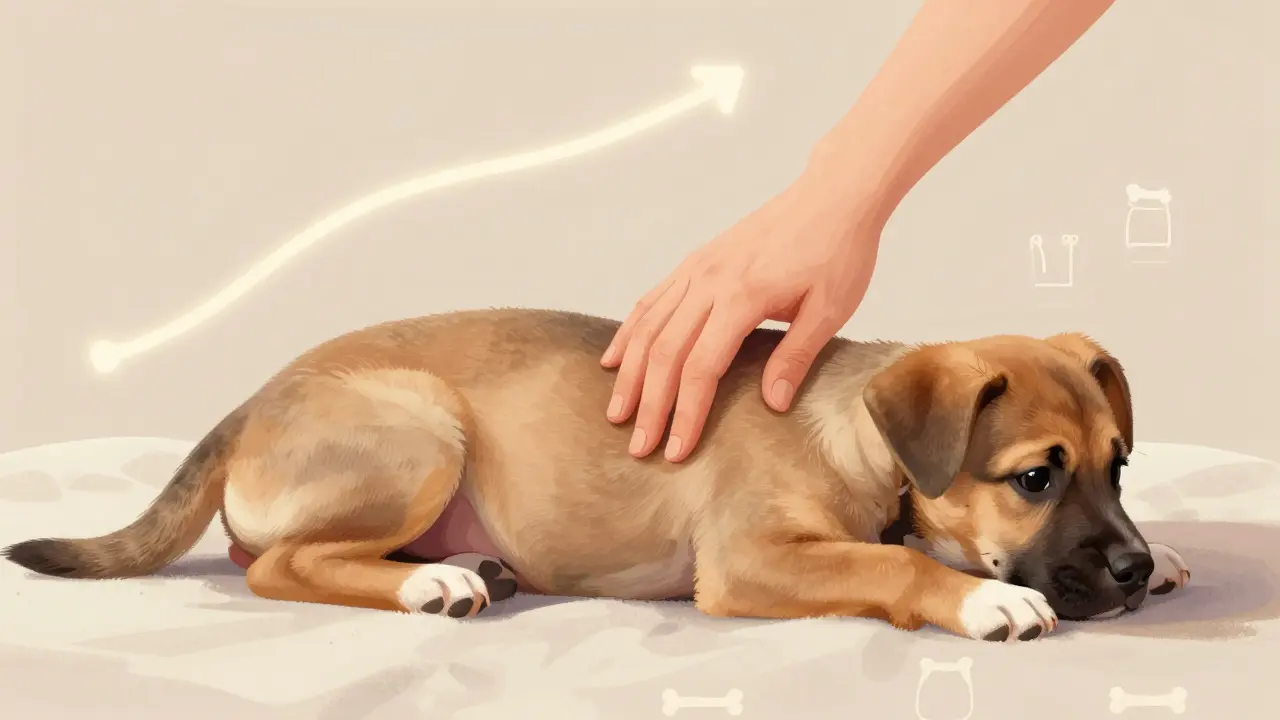
Body Condition Score: The Truth Teller
Weight is a number. Body condition is a reality. A puppy can weigh exactly what the chart says but still be unhealthy if that weight is all fat, or conversely, be underweight despite hitting the target number if they lack muscle. This is why the 9-point body condition scale is essential.
| Score | Description | Visual Cue | Action Required |
|---|---|---|---|
| 1-2 | Underweight | Ribs visible without touching; spine prominent; no waist | Increase calorie intake immediately |
| 3-4 | Lean/Acceptable | Ribs palpable with slight fat cover; clear waist from above | Maintain current diet |
| 5 | Ideal | Ribs covered by thin layer of fat; defined tuck-up; healthy muscle tone | This is the target zone |
| 6-7 | Overweight | Ribs difficult to feel; little to no waist; fat pad over abdomen | Reduce treats; measure food portions |
| 8-9 | Obese | Ribs invisible; round belly; no definition | Veterinary consultation required |
For puppies, the ideal score is usually between 4 and 5. Unlike adult dogs, puppies need a bit more energy reserve for rapid development. A score of 3 is often too lean for a growing dog because they need that energy buffer. If you can see their ribs easily without pressing, they are likely underfed. If you can't feel their ribs at all, they are carrying excess fat. Aim for the middle ground where you can feel the ribs with gentle pressure, similar to feeling the bridge of your nose.
Common Pitfalls in Tracking Puppy Growth
Even with a chart in hand, owners often make mistakes that skew the data. Here are the most frequent errors I see in practice.
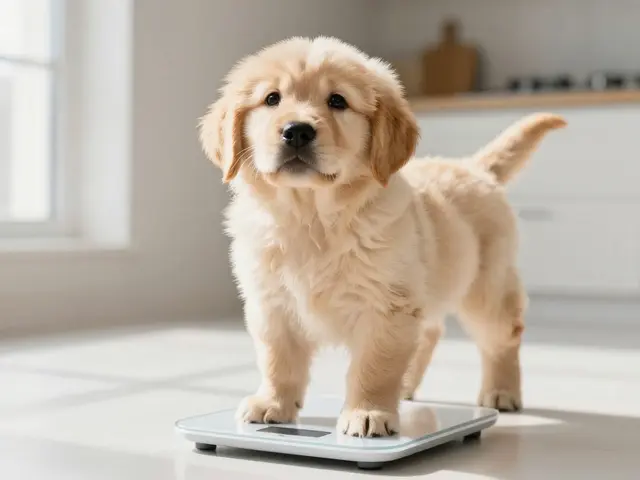
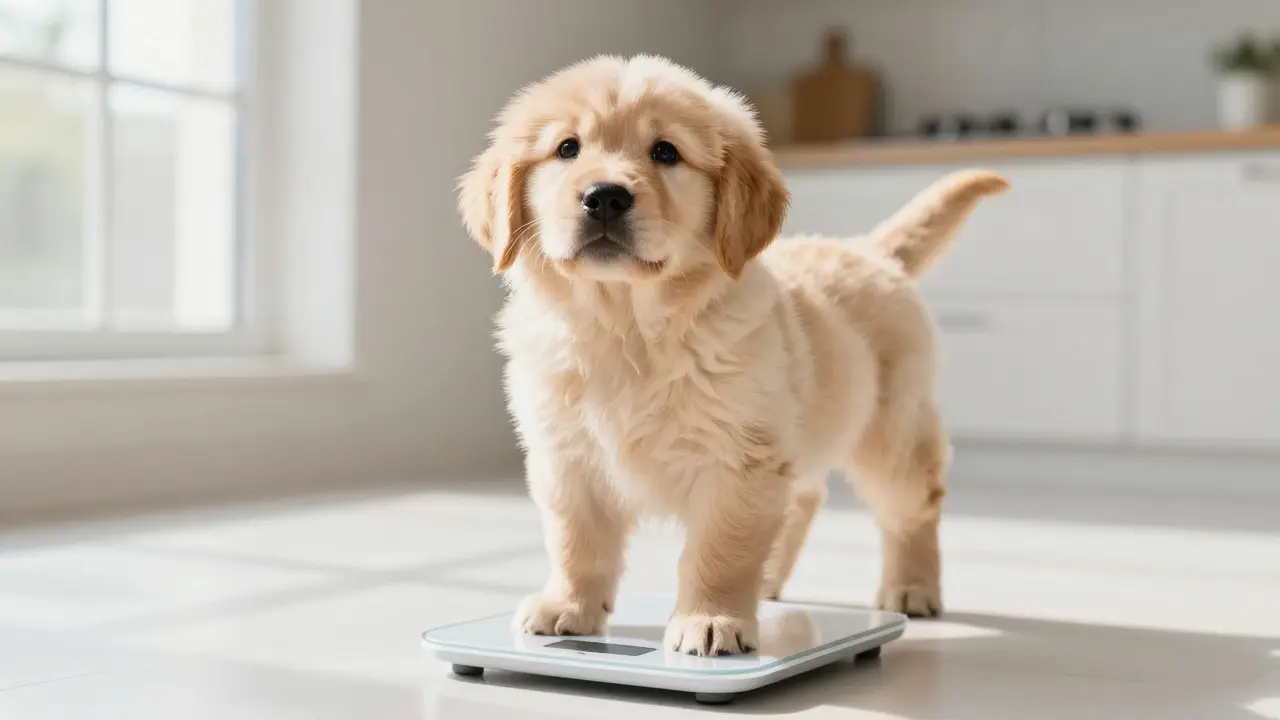
- Inconsistent Weighing Times: Always weigh your puppy at the same time of day, preferably in the morning before breakfast. A puppy after a meal and hydration will weigh significantly more than one before. Use a digital kitchen scale for accuracy under 50 lbs; for larger dogs, use a bathroom scale and subtract your own weight.
- Ignoring Height: Weight alone doesn't tell the whole story. A puppy could gain weight due to increased height (good) or increased girth (bad). Measure chest girth and shoulder height monthly. If weight goes up but height stays flat, check for fat accumulation.
- Over-Reliance on Treats: Training is crucial, but treats add up. If you're giving high-calorie chews, reduce kibble volume accordingly. A single large treat can equal 10% of a daily caloric requirement for a small breed.
- Comparing Siblings: Litters vary. One puppy might be the "big brother" and another the "little sister." Don't force the smaller one to match the larger sibling's weight. Each has its own genetic set point.

When to Call the Vet
Not every deviation from the chart requires an emergency visit, but some signs do. Keep an eye out for these warning signals:
- Sudden Weight Loss: Dropping below the 10th percentile of the growth curve without a change in diet suggests parasites, infection, or metabolic issues.
- Rapid Weight Gain: Gaining more than 15% of body weight in two weeks indicates overfeeding or potential fluid retention.
- Lethargy with Normal Weight: If the puppy is sleeping excessively but maintaining weight, check for pain or underlying organ stress.
- Appetite Changes: A sudden refusal to eat or extreme hunger can signal dental issues, gastrointestinal distress, or hormonal imbalances.
Your veterinarian is your best partner in this process. Bring your handwritten log or app screenshots to every wellness exam. They can compare your puppy's trend against clinical benchmarks and adjust recommendations in real-time.
Frequently Asked Questions
What is the best way to weigh a puppy at home?
Use a digital scale for consistency. For puppies under 50 lbs, a kitchen scale works well. Place a sturdy box on the scale, zero it out, then place the puppy inside. For larger puppies, stand on a bathroom scale holding the puppy, then subtract your own weight. Weigh them at the same time each week, ideally in the morning before feeding.
How often should I update my puppy's growth chart?
Weekly updates are ideal during the first six months of life. After six months, bi-weekly checks are sufficient for most breeds. For giant breeds like Great Danes or Mastiffs, weekly monitoring is recommended until they reach 18 months, as their growth plates close later and are more sensitive to nutritional errors.
Is it normal for a puppy to lose weight during teething?
Yes, mild weight loss or plateauing is common during teething (around 3-6 months). Discomfort can reduce appetite. As long as the puppy remains active and hydrated, a slight dip is acceptable. If weight loss exceeds 5% of total body mass, consult your vet to rule out other causes.
Do mixed-breed puppies follow standard growth charts?
Not strictly. Mixed breeds often fall between the parent breeds' curves. Instead of relying solely on weight charts, focus on body condition scores. If your mixed-breed puppy maintains a BCS of 4-5 and shows steady growth in height and girth, they are likely on track regardless of where they sit on a purebred chart.
What should I do if my puppy is consistently underweight?
First, rule out parasites like worms, which are a leading cause of poor growth in puppies. Deworming is often the first step. If deworming doesn't help, increase caloric density by adding puppy-safe supplements or switching to a higher-energy formula. Monitor for two weeks; if no improvement occurs, seek veterinary diagnosis for metabolic or absorption issues.