Watching your best friend struggle with pain is one of the hardest parts of being a pet parent. You love them, you want to fix it, but sometimes the body just gives out. Deciding when to stop fighting and choose comfort isn't about giving up; it’s about respecting their dignity. This guide helps you move past the guilt and focus on what actually matters: your dog's daily experience.
Understanding the Core Concept
Quality of Life (QoL) Assessment is a structured method used by veterinarians and owners to evaluate whether a pet's remaining time brings more joy than suffering. It moves beyond simple medical metrics like blood pressure or tumor size. Instead, it looks at behavior, appetite, and interaction. The goal is to catch the shift from "managing illness" to "managing decline" early enough to make an informed choice.
This concept relies heavily on the idea that animals don't tell us when they are in pain the way we do. They hide it. So, we need objective tools to interpret their signals. Without this framework, decisions often happen too late, leading to emergency vet visits or prolonged suffering.
The HHHMM Scale: A Practical Tool
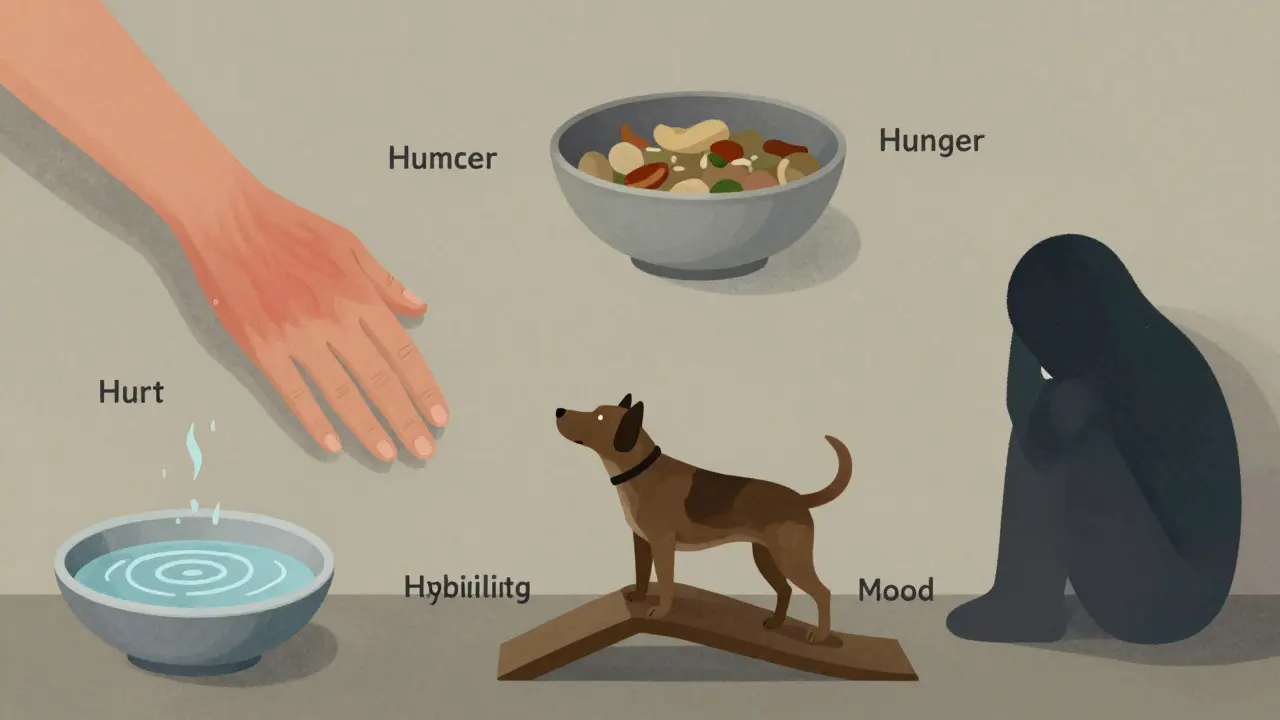
The most widely recognized tool for this is the HHHMM Scale, developed by Dr. Alice Villalobos. It stands for Hurt, Hunger, Hydration, Mobility, and Mood. Each category is scored from 1 to 10. A score of 1 means no problem, while 10 means severe issue. If the total score exceeds 35, many vets suggest that quality of life has significantly declined.
| Category | What to Look For | Red Flags (Score 7-10) |
|---|---|---|
| Hurt | Pain response, vocalization, posture | Crying when touched, hunched back, refusing to lie down |
| Hunger | Appetite level, interest in food | Eating less than 50% of normal, ignoring favorite treats |
| Hydration | Water intake, skin elasticity | Not drinking, sunken eyes, dry gums |
| Mobility | Walking, climbing stairs, getting up | Dragging legs, falling frequently, unable to stand without help |
| Mood | Social interaction, happiness | Hiding, lethargy, no tail wagging, loss of eye contact |
You don't need to be a doctor to use this. Just keep a log for three days. Note down every instance where your dog seems off. Patterns matter more than single bad days. A dog who is grumpy because he can't get into his bed is different from a dog who is grumpy because he doesn't want to eat breakfast.
Beyond the Numbers: Behavioral Clues
Numbers are helpful, but behavior tells the real story. Senior dogs often show subtle changes that signal their body is shutting down. One major sign is Anorexia, which is more than just skipping a meal. It’s when a dog stops caring about food they usually love. If your picky eater ignores high-value treats, that’s a strong indicator that digestion is becoming painful or unappealing.
Another critical factor is Incontinence. While common in old age, it becomes a QoL issue when the dog can no longer control it or feels embarrassed by it. Some dogs start hiding in corners to avoid messes. Others become aggressive if approached while urinating. These behaviors indicate a loss of dignity, which is a core part of QoL.
Look at their sleep patterns too. Healthy seniors sleep more, but they wake up refreshed. Unhealthy seniors sleep constantly but seem restless, twitching, or crying in their dreams. This is often a sign of neurological decline or chronic pain that medication isn't fully covering.
Medical Interventions vs. Comfort Care
Before deciding on end-of-life care, ensure you've exhausted reasonable medical options. However, there is a difference between treating the disease and treating the patient. Sometimes, aggressive treatment causes more harm than good.
- Pain Management: Are you using multimodal analgesia? Combining NSAIDs, opioids, and nerve blocks works better than one drug alone. If your dog is still limping or flinching, the dose might be wrong.
- Nutritional Support: Force-feeding a dog who refuses food is rarely beneficial in the final stages. Subcutaneous fluids can help with hydration, but only if the dog tolerates them. Watch for stress during administration.
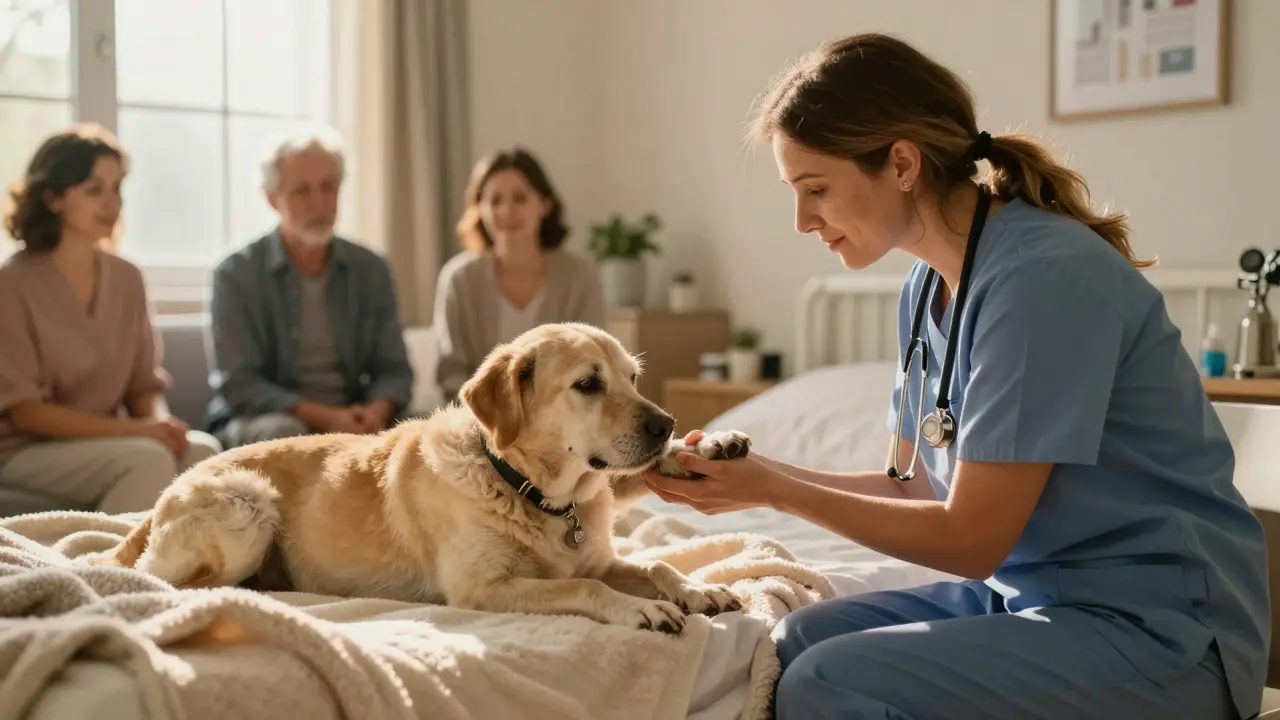
- Hospice Care: Pet Hospice is a service that provides in-home palliative care, focusing on symptom management rather than cure. It allows dogs to die in familiar surroundings, reducing stress. Vets visit weekly to adjust meds and check vitals.
If the side effects of treatment (like vomiting from chemo or sedation from pain meds) outweigh the benefits, it’s time to pivot. The goal shifts from extending life to enhancing its quality.
The Emotional Aspect for Owners
Let’s be honest: the hardest part isn’t the science; it’s the grief. Many owners delay the decision because they fear being seen as "giving up." But consider this: your dog doesn’t know what tomorrow looks like. They live in the moment. If today is painful, it’s bad for them now. Waiting until they are in crisis doesn’t give them more happy days; it just adds more sad ones.
Talk to your vet about Euthanasia. It’s a clinical term for a humane procedure. Modern protocols use injectable anesthetics that put the dog to sleep before the final step. It is not a scary process if done correctly. Ask your vet to explain the exact steps so you know what to expect. Knowing removes a lot of anxiety.
When to Pull the Trigger
There is no perfect day. But here are concrete signs that the balance has tipped:
- More bad days than good days for two weeks straight.
- Inability to perform basic functions (eating, drinking, eliminating) without significant assistance.
- Visible distress when moved or touched.
- Loss of recognition or interaction with family members.
- Owner burnout: If you are exhausted and resentful, your dog can sense it. Their environment needs to remain positive.
If you find yourself dreading waking up to see how they look, that’s a valid data point. Trust your gut. You know your dog best.
Frequently Asked Questions
Is it cruel to euthanize a dog who still has some good moments?
Not necessarily. Cruelty is letting them suffer. If the good moments are brief and the bad moments dominate, euthanasia preserves the memory of their good times. It prevents the last chapter from being defined by pain.
How long should I wait after a diagnosis to assess QoL?
Give treatments 4-6 weeks to work. If there is no improvement in mobility, appetite, or pain levels within that window, the trajectory is likely downward. Don't wait for a crisis to decide.
Can I use the HHHMM scale if my dog has multiple conditions?
Yes. In fact, it's more important then. Multiple conditions compound each other. A dog with arthritis and kidney failure will have higher scores in both Hurt and Hydration. Add the scores together for a total view.
What is the role of subcutaneous fluids in end-of-life care?
They provide temporary hydration and can improve comfort for a few days to weeks. However, they are not a cure. If the dog resists the needles or shows no improvement in energy/appetite, they may be adding stress without benefit.
How do I talk to children about a dog's death?
Be honest but gentle. Explain that the dog is very sick and tired, and you are helping them go to a place where they won't hurt anymore. Let them say goodbye. Avoid saying "they went to sleep" as it can cause fear of bedtime later.