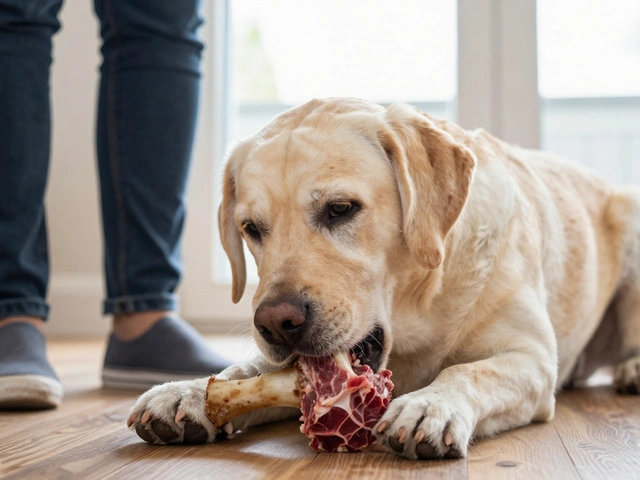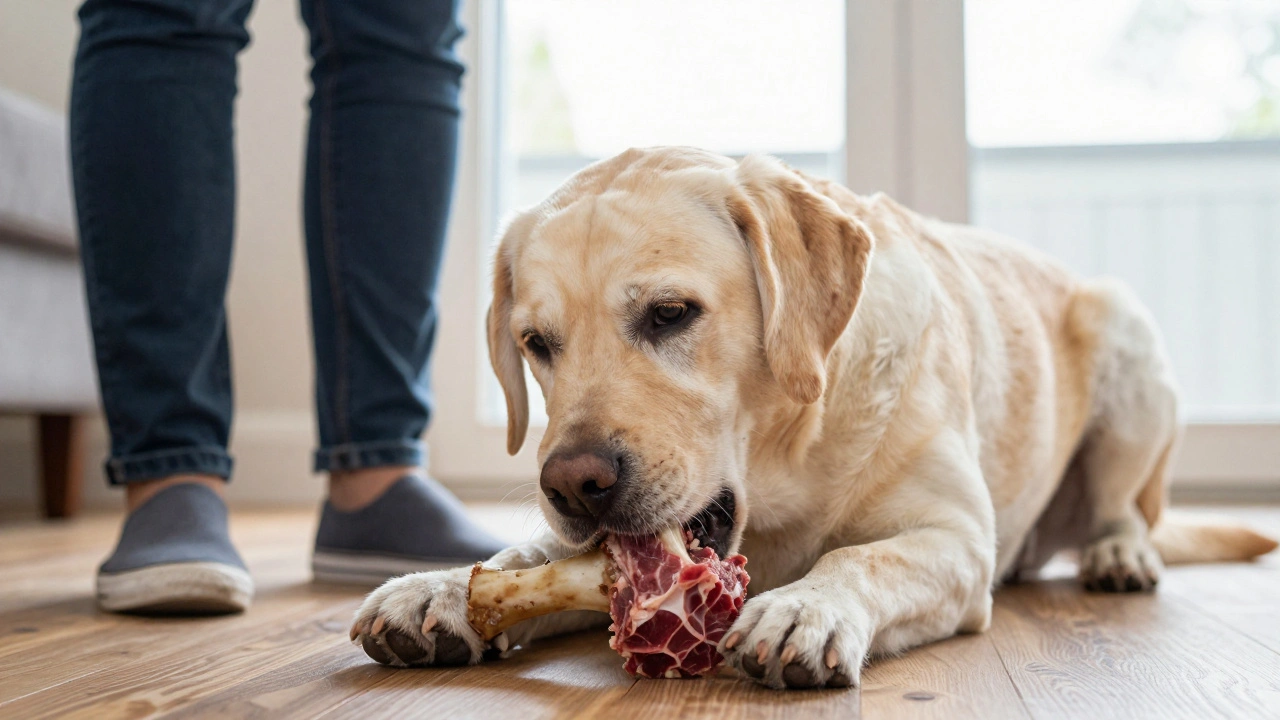
Feeding raw bones to dogs sounds simple-after all, wolves eat bones in the wild, right? But if you’re thinking about giving your dog a raw beef femur or a chicken neck, you need more than instinct. You need clear, science-backed rules. And yes, your vet might have strong opinions about it.
What Are Raw Bones, Really?
Raw bones for dogs aren’t the cooked ones you find in your kitchen scraps. They’re uncooked, unprocessed bones from animals like beef, lamb, chicken, turkey, or rabbit. These can be whole bones, marrow bones, or even whole prey parts like chicken backs or turkey necks. The idea behind them is simple: they mimic what dogs evolved to eat. Unlike cooked bones, which become brittle and can splinter, raw bones stay flexible and are easier to digest.
But not all raw bones are the same. A large, dense marrow bone from a cow is very different from a small, hollow chicken wing. Size, shape, and source matter. And while some dogs handle them perfectly, others can get hurt-even if you think you’re doing everything right.
Why Do People Feed Raw Bones?
Owners turn to raw bones for three main reasons: dental health, mental stimulation, and nutrition.
- Dental health: Chewing on raw bones scrapes plaque off teeth. A 2021 study in the Journal of Veterinary Dentistry found that dogs fed raw bones had 40% less tartar buildup than those on kibble alone.
- Mental enrichment: A bone isn’t just food-it’s a puzzle. It takes time, effort, and focus to get to the marrow. This reduces boredom and anxiety in high-energy dogs.
- Nutrition: Raw bones contain calcium, phosphorus, trace minerals, and healthy fats. For dogs on homemade or raw diets, they’re a natural way to balance nutrients without synthetic supplements.
But here’s the catch: these benefits only come when bones are chosen correctly and fed safely.
The Real Risks: What Can Go Wrong?
Raw bones aren’t risk-free. Every year, emergency vets see dogs with broken teeth, intestinal blockages, or perforated guts from bone-related accidents. Here are the most common dangers:
- Broken teeth: Hard marrow bones can crack the carnassial teeth-the large chewing teeth in the back of a dog’s mouth. This is especially common in strong chewers like German Shepherds or Rottweilers.
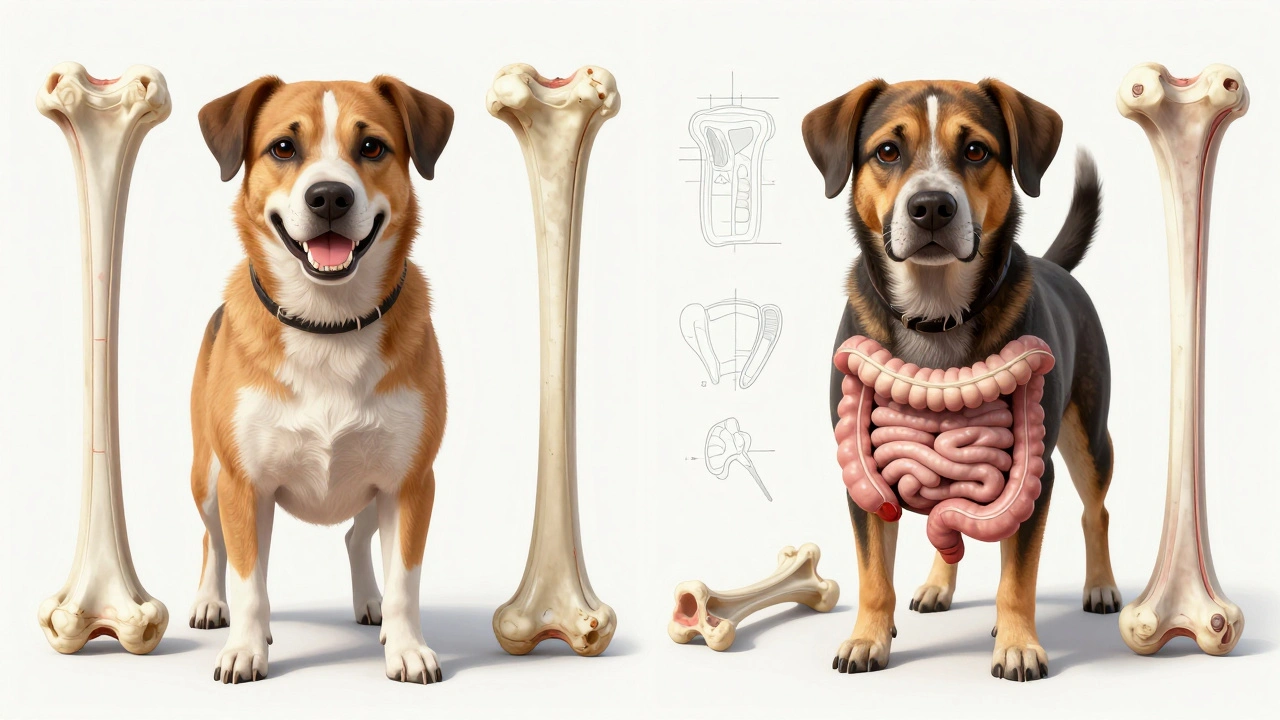
- Obstruction: If a dog swallows a bone fragment too big to pass, it can get stuck in the esophagus, stomach, or intestines. Surgery is often needed.
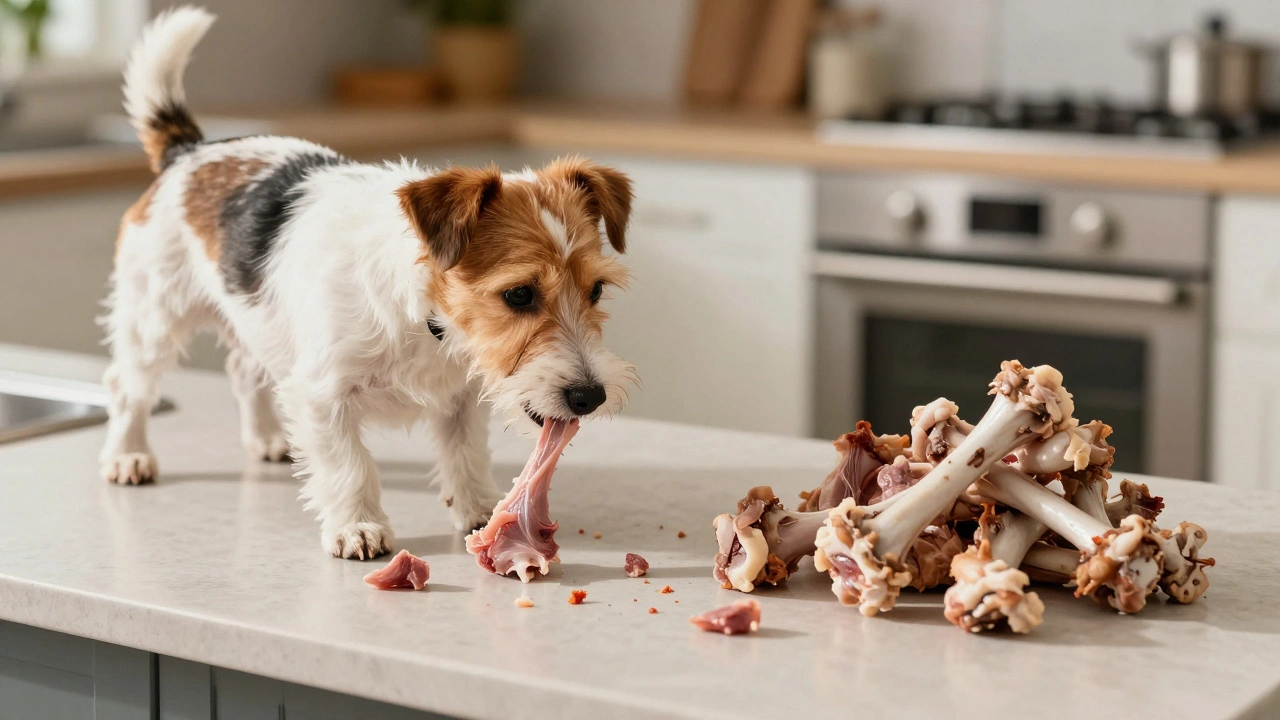
- Perforation: Sharp bone shards can pierce the digestive tract. This is rare with raw bones but still possible, especially with poultry bones that have thin, brittle edges.
- Bacterial contamination: Raw meat can carry Salmonella or E. coli. While healthy dogs usually handle it fine, immunocompromised dogs or households with young kids or elderly people are at higher risk.
A 2023 survey of 200 veterinary clinics in the U.S. found that 18% of emergency cases involving gastrointestinal issues were linked to raw bone ingestion. That’s not a small number.
Veterinary Opinions: Are Raw Bones Safe?
Vets don’t all agree. Some refuse to recommend them. Others see them as a valuable part of a balanced diet.
The American Veterinary Medical Association (AVMA) officially advises against feeding any raw bones, citing risks of injury and disease transmission. But many holistic and integrative vets take a different view. They say the risks are manageable with proper selection and supervision.
Dr. Lisa Larrabee, a board-certified veterinary nutritionist in Portland, says: "I’ve seen dogs thrive on raw bones for years-no issues, great teeth, no GI problems. But I’ve also seen dogs die from a single bad bone. It’s not about whether bones are good or bad. It’s about matching the bone to the dog."
So what’s the middle ground? Most experienced vets agree on these three rules:
- Only give raw, never cooked.
- Match the bone size to your dog’s breed and chewing style.
- Always supervise. Never leave your dog alone with a bone.
Which Raw Bones Are Safe? A Practical Guide
Not all bones are created equal. Here’s what most vets recommend based on dog size and chewing behavior:
| Dog Size | Recommended Bones | Bones to Avoid |
|---|---|---|
| Small (under 15 lbs) | Chicken necks, turkey wings, duck feet | Beef marrow bones, lamb shanks |
| Medium (15-50 lbs) | Chicken backs, rabbit legs, goat ribs | Beef femurs, pork ribs |
| Large (50-100 lbs) | Beef knuckles, lamb necks, turkey necks | Chicken leg bones, fish bones |
| Extra Large (over 100 lbs) | Beef femurs, bison ribs, oxtail | Any bone smaller than half the dog’s muzzle width |
Here’s a quick rule of thumb: if the bone is longer than your dog’s snout, it’s probably too big. If it’s smaller than a golf ball, it’s too small. And if your dog gulps it whole without chewing, stop immediately.
How Often Should You Give Raw Bones?
Most vets suggest 1-2 times per week. More than that can lead to constipation from too much calcium. Less than once a week might not offer enough dental or mental benefits.
Also, rotate your bones. Don’t give the same type every time. A chicken neck one week, a beef knuckle the next. This prevents nutrient imbalances and keeps your dog interested.
And always refrigerate unused bones. Raw bones can spoil in a day if left out. If your dog doesn’t finish a bone in 15-20 minutes, take it away and store it in the fridge. Discard it after 3 days.
What If Your Dog Eats a Cooked Bone by Accident?
If your dog swallows a cooked bone, don’t panic-but don’t wait either. Cooked bones splinter easily and can cause internal damage. Call your vet immediately. Don’t try to induce vomiting-that could make things worse.
Watch for signs of trouble over the next 24-48 hours:
- Loss of appetite
- Vomiting or retching
- Straining to poop or no bowel movement
- Lethargy or abdominal pain (whining when touched)
If any of these show up, get to the vet. X-rays or ultrasounds may be needed to check for blockages.
Alternatives to Raw Bones
If you’re nervous about raw bones-or your vet advises against them-there are safer options:
- Edible dental chews: Look for ones approved by the Veterinary Oral Health Council (VOHC). Brands like Greenies or Dentastix work well.
- Rubber chew toys: KONGs filled with peanut butter or frozen broth give mental stimulation without risk.
- Freeze-dried bones: These are made from raw bones that have been dried without heat, preserving nutrients while reducing bacteria.
- Calcium supplements: If you’re feeding a homemade diet, talk to a veterinary nutritionist about calcium sources like ground eggshells or bone meal.
Final Verdict: Should You Feed Raw Bones?
Yes-if you’re careful. Raw bones can improve your dog’s teeth, calm their mind, and add natural nutrition. But they’re not for every dog. If your pup is a speed-eater, has a history of GI issues, or lives with a baby or elderly person, skip them.
Start small. Try a chicken neck. Watch closely. If your dog chews slowly, licks the meat off, and doesn’t swallow chunks, you’re on the right track. If they gulp, crack teeth, or show signs of distress, stop.
There’s no one-size-fits-all answer. Your dog’s health, your home environment, and your vet’s advice matter more than internet trends. Trust your observations more than viral videos. And always, always supervise.
Are raw bones better than commercial dental treats?
Raw bones offer more natural chewing action and nutritional value than most dental treats. They’re also more mentally engaging. But dental chews are safer for dogs that swallow too fast or have sensitive stomachs. The best choice depends on your dog’s behavior and health history.
Can puppies eat raw bones?
Puppies under 6 months shouldn’t have hard bones. Their teeth are still developing and can crack easily. Soft options like chicken necks or turkey wings are okay under supervision, but only after they’ve had all their baby teeth. Always consult your vet before introducing bones to a puppy.
Do raw bones cause constipation?
Yes, too many raw bones-especially large marrow bones-can cause hard, white stools and constipation. This is because of high calcium content. Limit bones to 1-2 times per week and balance them with meat and vegetables if feeding a homemade diet.
Can I give my dog fish bones?
No. Fish bones are thin, brittle, and sharp. They’re hard to digest and can easily puncture the digestive tract. Even if they’re raw, avoid them entirely. Stick to mammal or poultry bones.
What if my dog gets sick after eating a raw bone?
Stop giving bones immediately. Watch for vomiting, diarrhea, lethargy, or loss of appetite. If symptoms last more than 24 hours, or if your dog seems in pain, go to the vet. A simple stool test can check for bacteria like Salmonella, and imaging can reveal blockages or perforations.
Raw bones aren’t a magic solution. They’re a tool. Use them wisely, and they can be a great part of your dog’s life. Use them carelessly, and they can turn dangerous fast. Know your dog. Know the risks. And when in doubt, ask your vet.