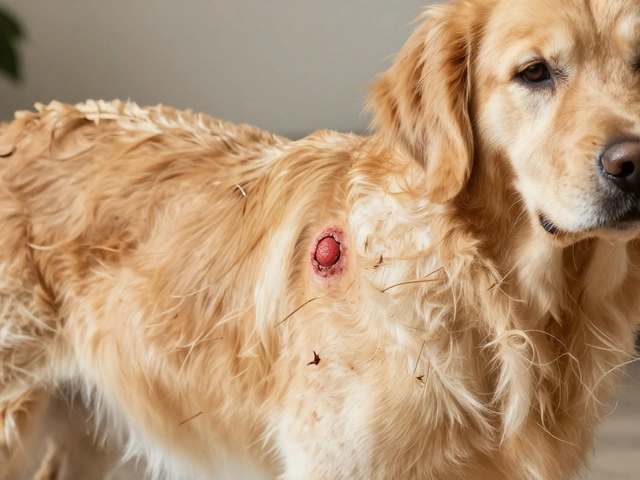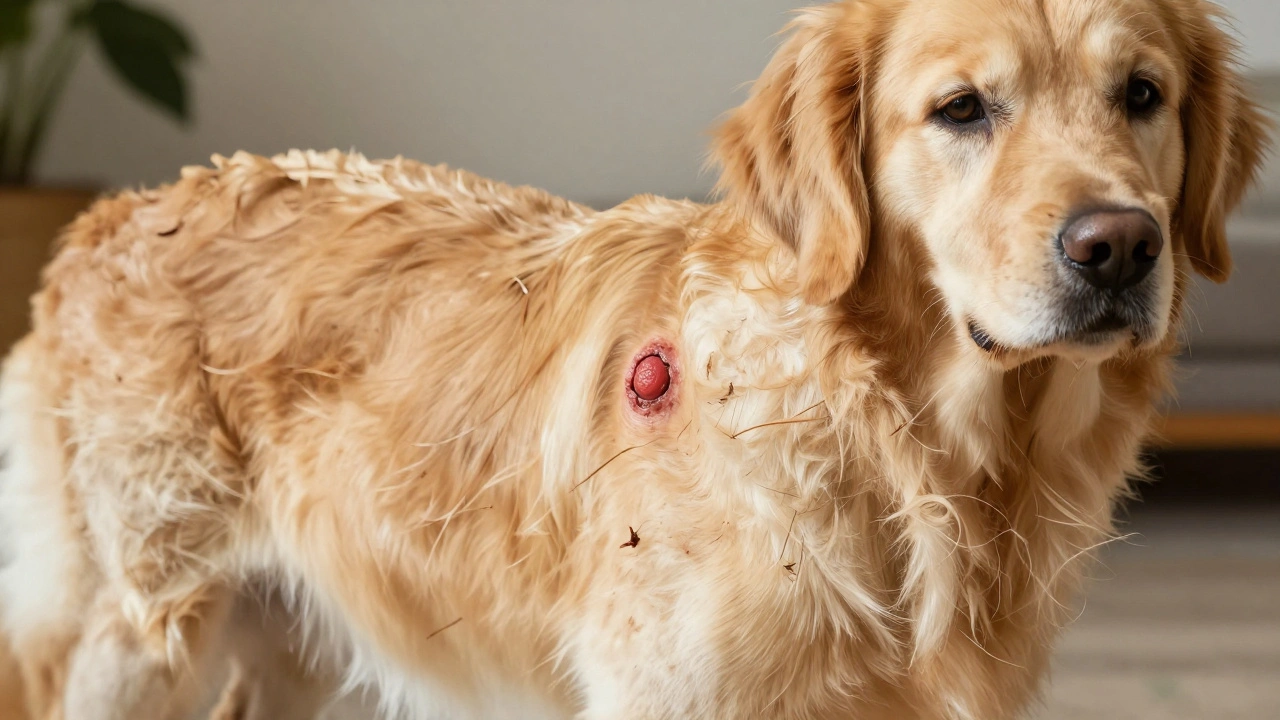
Ringworm in dogs doesn’t have worms. Not even one. Despite the name, it’s a fungal infection that attacks the skin, hair, and sometimes nails. It’s one of the most common skin problems vets see in dogs - and it’s highly contagious. If your dog has a circular patch of missing fur, flaky skin, or an itchy red spot, it’s probably not a bug, tick, or allergy. It’s likely ringworm - and you need to act fast.
What Actually Causes Ringworm in Dogs?
The real culprit behind ringworm is a group of fungi called dermatophytes. These fungi feed on keratin, a protein found in skin, hair, and nails. The most common species in dogs is Microsporum canis.
These fungi aren’t picky. They thrive in warm, moist places. Think of a dog’s fur after a swim, a damp dog bed, or a grooming tool left in a humid bathroom. Once the fungus lands on your dog’s skin - usually through a tiny cut, scratch, or weak spot - it starts growing. It doesn’t burrow deep. It spreads sideways across the surface, killing hair follicles as it goes. That’s why you see bald, scaly patches that look like they’ve been cut out with a cookie cutter.
Ringworm isn’t just a dog problem. It’s a zoonotic disease. That means it can jump from dogs to people, especially kids, the elderly, or anyone with a weak immune system. If your dog has it, so might you. And if you have it, you can give it right back.
How Do You Know If Your Dog Has Ringworm?
Ringworm doesn’t always look the same. Some dogs show classic signs. Others barely react. Here’s what to watch for:
- Circular patches of hair loss, often with red, scaly skin in the center
- Broken, brittle hairs around the edges of the patch
- Dull, patchy coat that looks like it’s shedding more than usual
- Itching - some dogs scratch constantly, others don’t bother at all
- Small, raised bumps or pustules that look like pimples
- Claw infections - if the fungus gets under the nails, they become thick, misshapen, or crumbly
Don’t wait for the perfect ring-shaped lesion. That’s actually rare. More often, it’s just a weird bald spot on the nose, ear, or tail. Puppies and older dogs are most at risk. Breeds with dense fur - like Shih Tzus or Persian cats - are also more likely to show symptoms because the fungus hides under thick hair.
How Is Ringworm Diagnosed?
Most owners try to guess. That’s risky. Other skin issues - like allergies, mange, or bacterial infections - look almost identical. Your vet won’t rely on looks alone.
Here’s what they actually do:
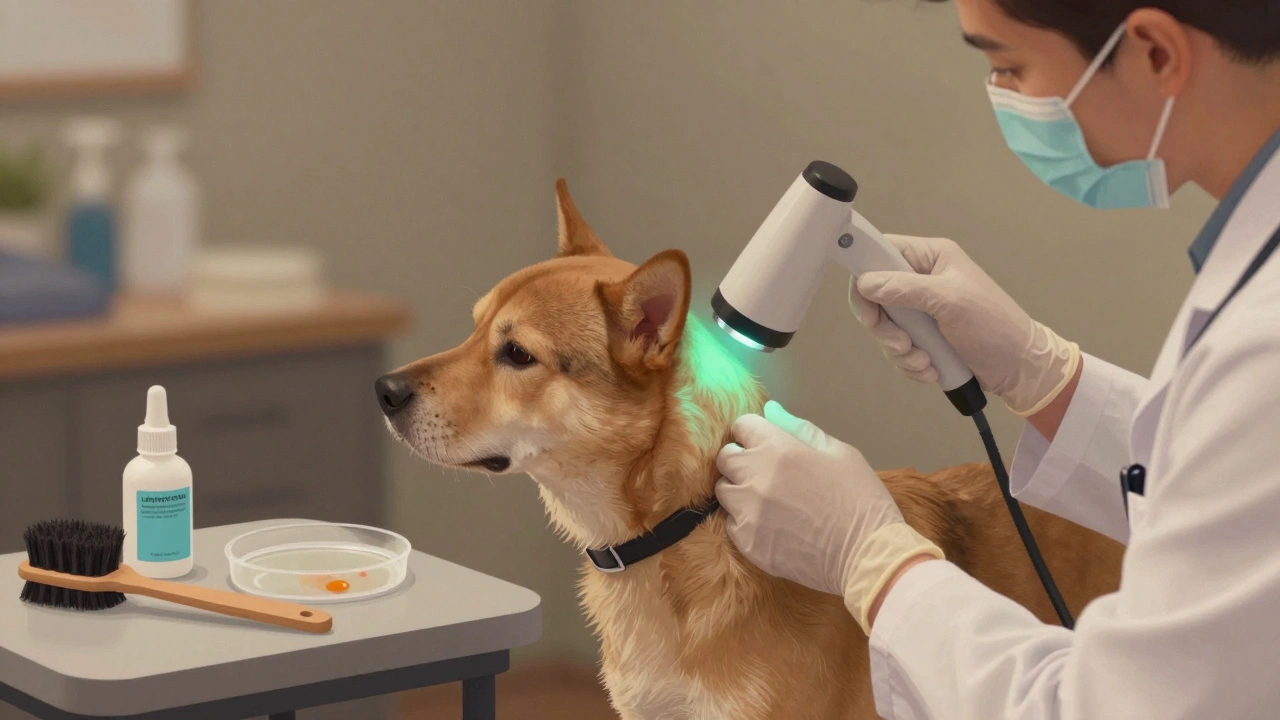
- Wood’s Lamp Test: A special blacklight shines on the dog’s fur. About 50% of Microsporum canis cases glow a bright green under this light. It’s quick, non-invasive, and cheap. But it’s not foolproof - some strains won’t glow, and other things can glow too.
- Fungal Culture: The gold standard. A brush is used to collect hairs and skin flakes from the affected area. These are placed on a special growth medium and left in a warm incubator for 1-3 weeks. If fungus grows, it’s confirmed. This is slow, but 95% accurate.
- Microscopic Exam: A sample of skin or hair is mixed with potassium hydroxide, which dissolves non-fungal material. Under the microscope, fungal spores look like tiny rods or chains. It’s fast, but not always clear.
Most vets start treatment before the culture comes back. Why? Because ringworm spreads fast. Waiting two weeks to confirm means you’re risking your whole household.
How Is Ringworm Treated?
Ringworm isn’t deadly - but it’s stubborn. Left alone, it can last 4-8 months. With treatment, most dogs clear it in 3-6 weeks. Here’s what works:
Topical Treatments
For mild cases, your vet will likely prescribe:
- Antifungal shampoos: Products with miconazole or chlorhexidine are used twice a week. Lather, leave on for 10 minutes, rinse. This kills surface spores.
- Dip solutions: Lime-sulfur dips are very effective and safe for puppies. They’re smelly and messy, but they kill spores on contact.
- Creams or ointments: Applied directly to the lesions. Clotrimazole or terbinafine work well. Apply daily for 2-4 weeks.
Oral Medications
If the infection is widespread, or if your dog has a weak immune system, oral drugs are needed:
- Griseofulvin: Older drug, used for decades. It’s cheap but can cause vomiting, liver issues, or bone marrow suppression. Not for pregnant dogs.
- Itraconazole: More modern. Fewer side effects. Works faster. Usually given once a day for 4-6 weeks.
- Terbinafine: Often used in cats, but effective in dogs too. Less liver stress than griseofulvin.
Never give human antifungal meds without vet approval. Dosing is critical. Too little = no effect. Too much = poisoning.
How Do You Stop It From Spreading?
This is the hardest part. Ringworm spores survive for up to 18 months in carpets, furniture, and bedding. You can’t just treat the dog and call it done.
Here’s your cleanup checklist:
- Wash all dog bedding, towels, and blankets in hot water with bleach (if fabric allows). Dry on high heat.
- Vacuum floors, carpets, and furniture daily. Use a HEPA filter. Throw the vacuum bag or empty the canister outside.
- Disinfect surfaces with a 1:10 bleach solution (1 cup bleach to 1 gallon water). Let sit for 10 minutes. Rinse if needed.
- Isolate your dog from other pets and people. Use a crate or a single room while treating.
- Wash your hands after touching your dog. Don’t hug or let them sleep on your bed.
- Clip long hair around infected areas to reduce spore spread.
Don’t use disinfectant sprays labeled "antifungal" unless they’re proven to kill dermatophytes. Most household cleaners don’t work.
How Long Until Your Dog Is No Longer Contagious?
Once treatment starts, your dog usually stops shedding spores within 1-2 weeks. But you still need to keep treating until all signs are gone - and then some. Vets usually recommend continuing treatment for 2 weeks after the last visible symptom disappears. Then, they’ll do a follow-up culture to confirm the fungus is dead.
Don’t assume your dog is safe just because the fur is growing back. Fungus can still be hiding under the skin. Testing is the only way to know for sure.
Can Ringworm Be Prevented?
Yes - but it takes work. Ringworm isn’t like fleas. You can’t just give a monthly pill. Prevention is about environment and hygiene:
- Keep your dog’s coat clean and dry. Moisture is the enemy.
- Don’t let your dog sleep on your bed or couch if they’ve had ringworm before.
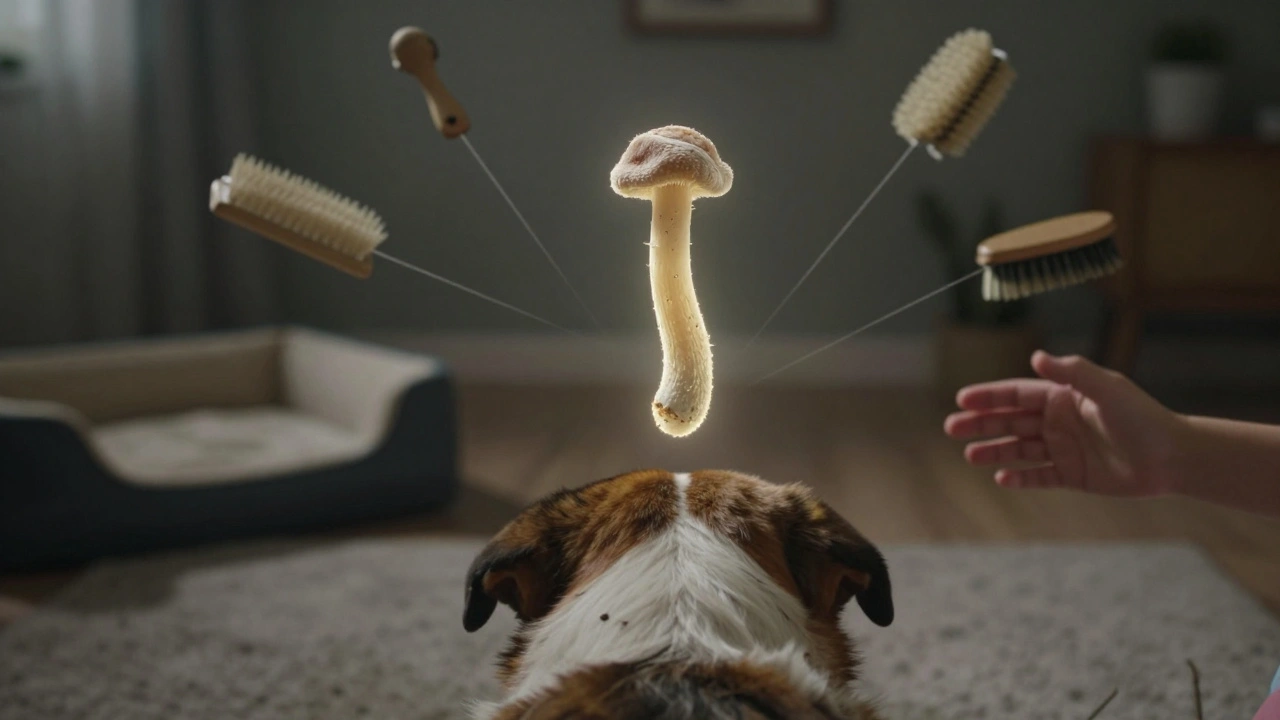
- Sanitize grooming tools after each use. Brushes, combs, and clippers should be soaked in bleach or alcohol.
- Limit exposure to unknown dogs. Shelters, dog parks, and boarding facilities are hotspots.
- Boost your dog’s immune system with good nutrition. A healthy dog resists infection better.
There’s no vaccine. No preventive medication. Just vigilance.
What Happens If You Ignore It?
Ringworm doesn’t just go away on its own. It spreads. It gets worse. And it spreads to people.
In dogs, untreated ringworm can lead to secondary bacterial infections, open sores, and chronic skin damage. In humans, it causes itchy, red rings that can last for months. Kids are especially vulnerable - and schools often require proof of treatment before allowing a child back in.
Ignoring ringworm isn’t just risky. It’s irresponsible. It’s not a minor rash. It’s a public health issue.
When Should You See the Vet?
If you see any of these, call your vet today:
- A bald patch that’s getting bigger
- Multiple spots appearing
- Your child or elderly family member has a similar rash
- Your dog is scratching until they bleed
- The skin looks infected (oozing, swollen, foul smell)
Early treatment = faster recovery = less stress for everyone.
Can ringworm in dogs go away without treatment?
Yes, but it can take 3-12 months. During that time, your dog keeps spreading spores to other pets, people, and surfaces. Treatment cuts recovery time to 3-6 weeks and stops transmission. Waiting is not safer - it’s riskier.
Is ringworm in dogs painful?
Not usually. Most dogs don’t seem to be in pain. But they often itch, which leads to scratching, scabbing, and skin damage. Secondary infections from scratching can become painful. So while the fungus itself isn’t painful, the results can be.
Can humans get ringworm from dogs?
Yes. Ringworm is zoonotic. The same fungus that infects your dog can infect you. It usually appears as a red, circular, itchy rash. Kids, seniors, and people with weak immune systems are most at risk. Wash hands after handling your dog, and avoid contact with affected areas.
How do you clean your house after ringworm?
Use bleach (1:10 dilution) on hard surfaces. Wash all bedding and fabrics in hot water. Vacuum daily with a HEPA filter. Dispose of the vacuum bag or empty the canister outside. Disinfect brushes, toys, and crates. Fungal spores survive for months - thorough cleaning is non-negotiable.
Can a dog get ringworm more than once?
Yes. Immunity to ringworm isn’t long-lasting. Dogs can get reinfected, especially if they’re exposed again to spores in the environment or from other animals. That’s why cleaning and prevention matter more than just treating the current outbreak.