Traveling with a senior dog isn’t like packing for a puppy. Their joints ache, their energy fades, and their routines matter more than ever. If you’re planning a road trip, a visit to the coast, or even a short stay with family, the key isn’t just getting there-it’s making sure your dog arrives calm, comfortable, and healthy. Many owners skip the basics and end up with a stressed dog, a messy car, or an emergency vet visit. It doesn’t have to be that way.
Plan the Trip Around Your Dog’s Limits
Senior dogs don’t handle long drives the way younger ones do. A 6-hour drive that felt easy at age 5 might be overwhelming at age 10. Start by checking how long your dog can sit comfortably without needing to stretch or relieve themselves. Most older dogs need a break every 2 to 3 hours. That means planning stops ahead of time-not just at gas stations, but at quiet parks, grassy fields, or pet-friendly rest areas.
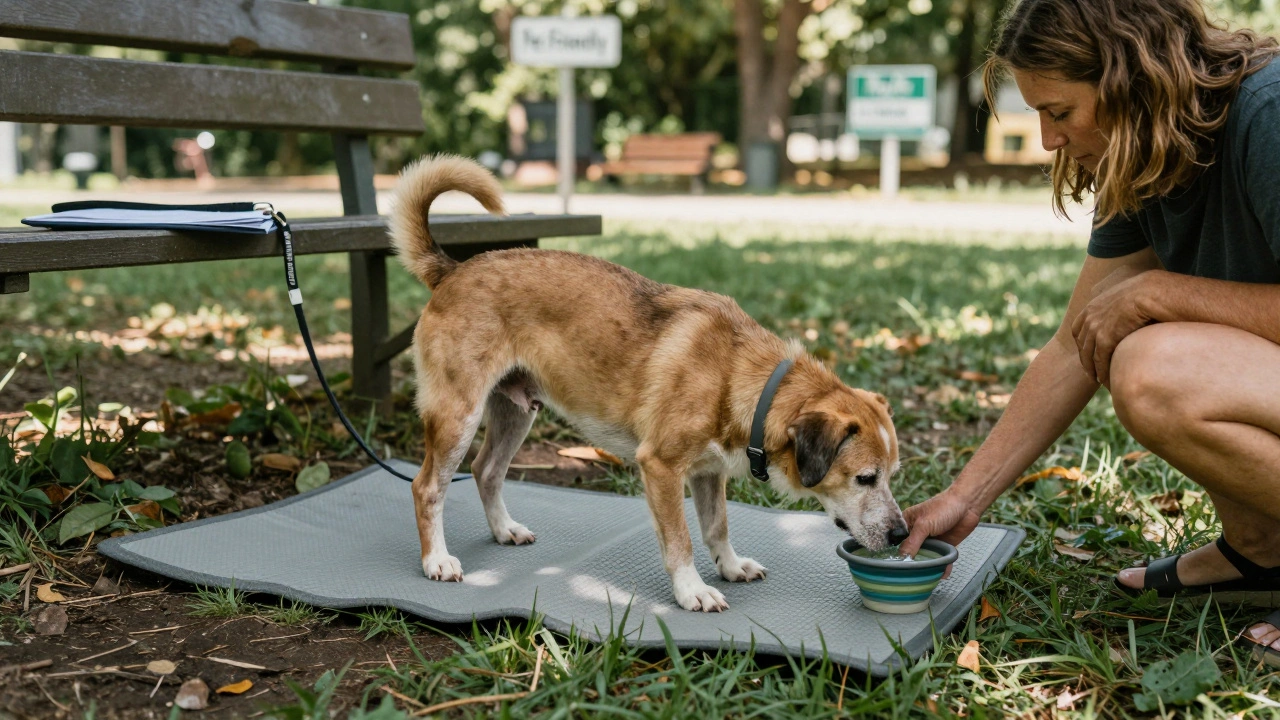
Use apps like BringFido or PetFriendly to find places with soft ground, shade, and clean water. Avoid rest stops with heavy traffic or concrete lots. Your dog’s paws are more sensitive now. Hot pavement can burn them. Wet grass or dirt is better. Bring a lightweight, foldable mat for them to stand on while they go potty. It gives them traction and keeps their nails from catching on rough surfaces.
Comfort Starts in the Car
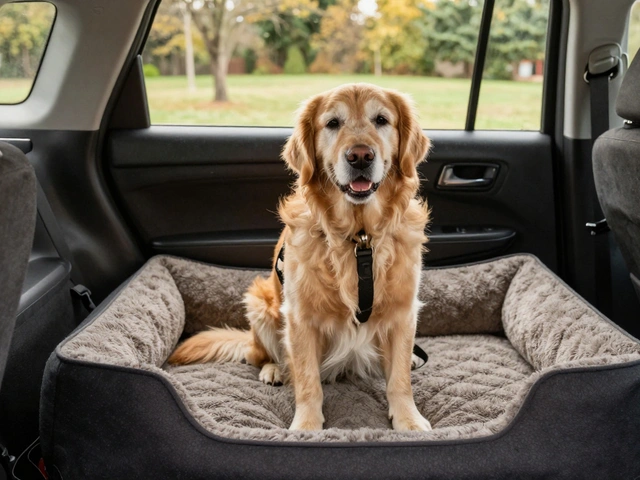
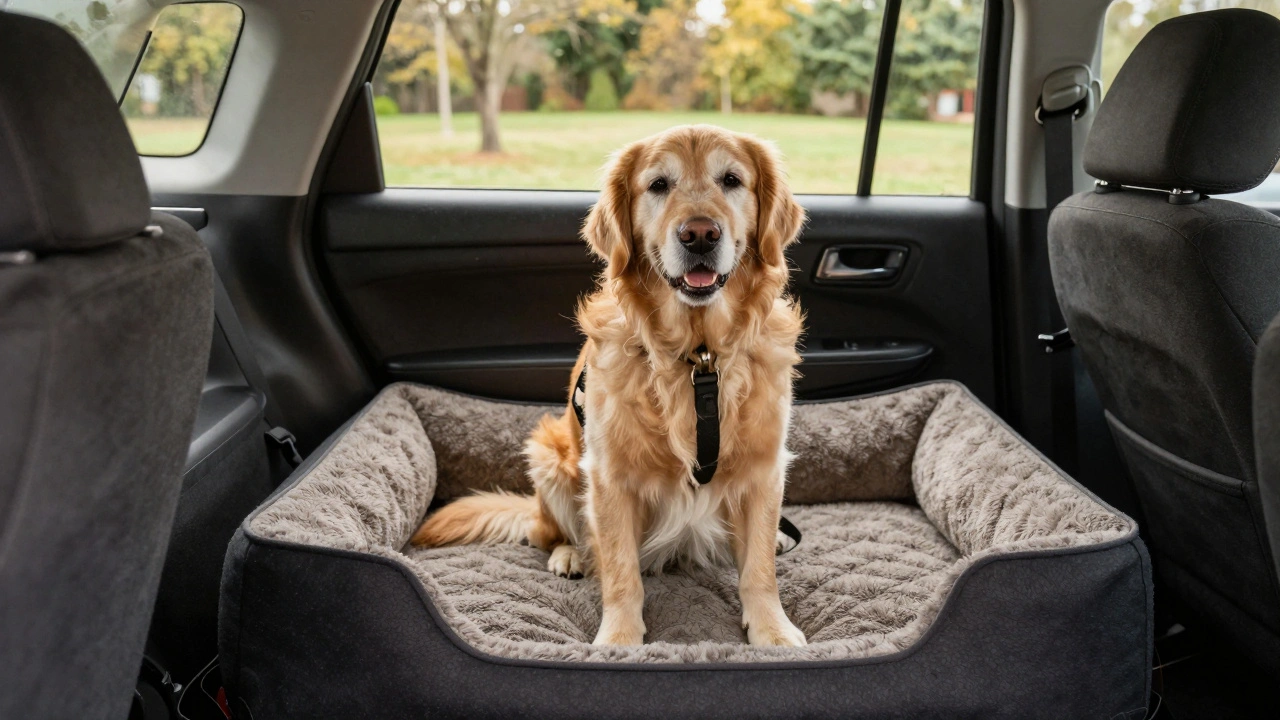
That old dog bed in the garage? It’s not good enough anymore. Senior dogs need support. A memory foam orthopedic bed designed for dogs with arthritis makes a huge difference. Place it on the back seat or in the cargo area with non-slip padding underneath so it doesn’t slide around. A harness-style seatbelt, like the Sleepypod Clickit Sport, holds them safely without putting pressure on their spine or hips.
Keep the temperature in the car steady-around 72°F (22°C). Older dogs lose their ability to regulate body heat. Too cold, and their joints stiffen. Too hot, and they can overheat fast. Never leave them alone in the car, even for five minutes. A 70°F day outside can turn into a 100°F oven inside in under 30 minutes.
Bring familiar items: their favorite blanket, a chew toy, or even a shirt that smells like home. These aren’t just comforts-they reduce anxiety. Senior dogs often get confused or scared in new places. Familiar scents act like a safety net.
Breaks Are Non-Negotiable
Plan every stop like a mini-recovery session. Don’t just let them jump out and run. Let them sniff slowly. Let them stand on grass for five minutes. Gently stretch their back legs if they’re stiff. A short 10-minute walk is better than a frantic 20-minute sprint. Watch for signs they’ve had enough: panting without cooling down, limping, reluctance to move, or whining.
Bring a collapsible water bowl and always have fresh water on hand. Dehydration hits older dogs harder. Their kidneys don’t filter as efficiently. Offer water every time you stop-even if they don’t seem thirsty. You can also carry a small bottle of electrolyte solution made for dogs (like Pet-A-Lyte) to mix in if they’re showing early signs of fatigue.
Snacks matter too. Soft, easy-to-digest treats are best. Avoid hard kibble or bones. Try small pieces of cooked chicken, sweet potato, or commercial senior dog treats with glucosamine. Keep portions small. Too much food on the road can cause nausea or upset stomachs.
Vet Records Are Your Lifeline
Before you leave, call your vet. Ask for a complete copy of your dog’s medical records. Not just vaccination proof-everything. That includes:
- Current medications and dosages
- Diagnoses like arthritis, heart disease, or kidney issues
- Allergy history
- Recent bloodwork or X-ray results
- Emergency contact info
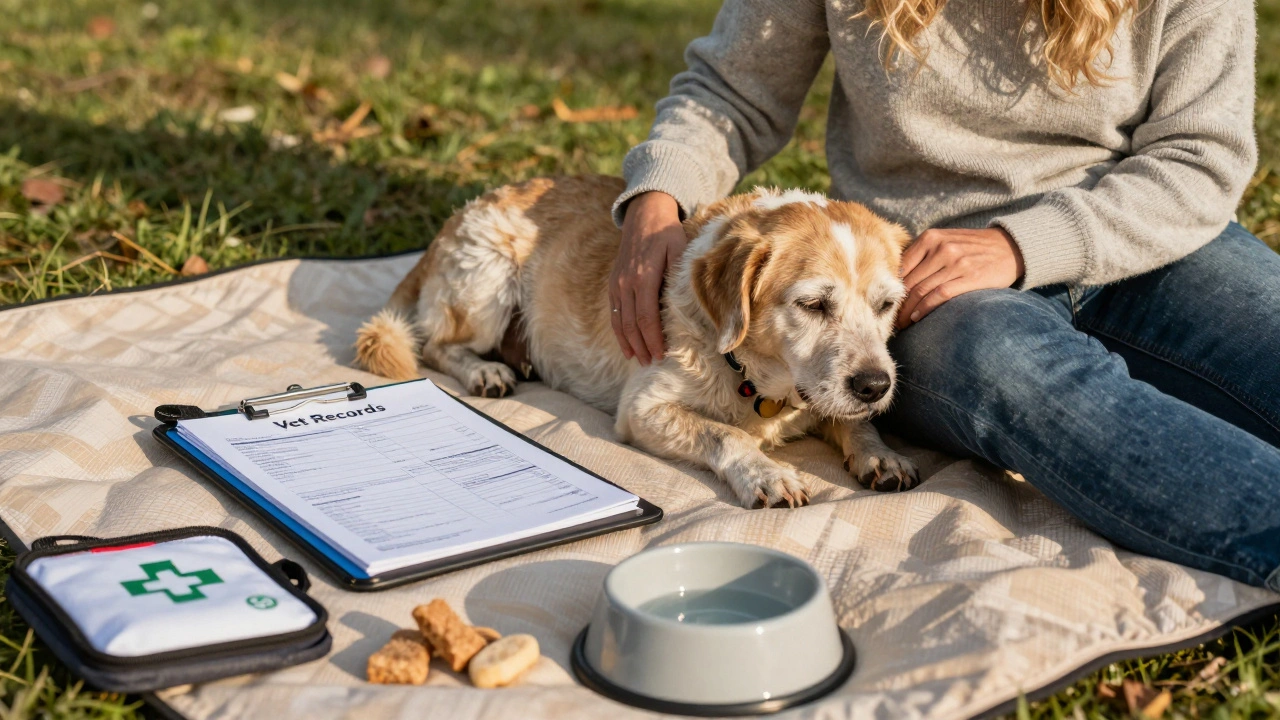
Print these records and keep them in a waterproof folder. Also save a digital copy on your phone. If something happens on the road-like a sudden limp, vomiting, or labored breathing-you need to give a vet clear, fast info. Many emergency clinics won’t treat without knowing what medications your dog is on. A simple mistake in dosage can be dangerous.
Ask your vet for a travel letter. It’s a short note confirming your dog is healthy enough to travel and listing their meds. Some hotels, airlines, or pet-friendly resorts ask for this. It also helps if you need to cross state lines. Some states require health certificates for dogs entering from out of state-even if they’re just passing through.
What to Pack (The Real Essentials)
Forget the cute bandanas. Focus on these 10 items:
- Orthopedic bed or cushion
- Non-slip mat for the car
- Leash and harness (preferably with a handle for lifting)
- Collapsible water bowl and bottled water
- Easy-to-digest treats and snacks
- Medication in original bottles with labels
- Wet wipes and paper towels (for cleanup)
- Plastic bags for waste (biodegradable if possible)
- Emergency contact list (vet, nearest 24-hour clinic)
- Copy of vet records (printed and digital)
Don’t forget a small first-aid kit: gauze, vet-approved antiseptic spray, tweezers for ticks, and a thermometer. You might not need it, but if your dog suddenly stops eating or has a fever, you’ll be glad you have it.
Watch for Warning Signs on the Road
Sometimes, a senior dog will hide discomfort. They don’t want to be a burden. Pay attention to subtle changes:
- Refusing food or water for more than 12 hours
- Excessive panting, even when resting
- Shaking, trembling, or reluctance to stand
- Disorientation or confusion in familiar places
- Accidents in the car or at stops (they used to be house-trained)
If you notice any of these, stop driving. Find a quiet place. Offer water. Don’t force movement. Call your vet. If it’s after hours, head to the nearest 24-hour emergency clinic. It’s better to be safe than sorry. A quick check-up at a clinic can prevent a full-blown crisis.
When Travel Isn’t Right
Not every senior dog should travel. If your dog has advanced arthritis, severe heart disease, or is in hospice care, a long trip might do more harm than good. Some dogs do better with a pet sitter or a trusted friend watching them at home. It’s not giving up-it’s honoring their quality of life.
Ask yourself: Will this trip improve their day, or just exhaust them? If they’re sleeping more than usual, eating less, or seem anxious about packing, it might be a sign to stay put. There’s no shame in choosing comfort over adventure.
Final Thought: It’s About Them, Not You
Traveling with a senior dog isn’t about ticking off destinations. It’s about quiet moments-sniffing the grass, resting in the shade, leaning against you in the car. The best trips aren’t the longest. They’re the ones where your dog feels safe, supported, and loved.
Take your time. Bring the extra blanket. Stop more often. Call the vet ahead. Your dog won’t remember the miles. They’ll remember how you made them feel.
Can I give my senior dog human travel meds like Dramamine?
No. Human motion sickness medications like Dramamine can be dangerous for dogs. Some contain antihistamines that are toxic at certain doses. Always talk to your vet before giving any medication. They can recommend a safe, dog-approved option like Cerenia or prescribe a low dose of an antihistamine like diphenhydramine if appropriate. Never guess the dosage.
Should I fly with my senior dog or drive?
Driving is almost always better for senior dogs. Air travel involves stressors like loud noises, temperature changes, confinement in cargo, and long waits-all hard on aging bodies. If you must fly, choose a direct flight, use a pet-friendly airline, and get a vet health certificate. But unless it’s absolutely necessary, stick to the road. You control the pace, the stops, and the comfort.
How often should I stop for bathroom breaks on a road trip?
Plan a stop every 2 to 3 hours. Older dogs have weaker bladder control and often can’t hold it as long. Some may need to go every 90 minutes, especially if they have kidney issues. Always carry absorbent pads or a portable potty mat in case you can’t find a grassy spot. Let them go at their own pace-don’t rush them.
What if my senior dog gets sick during the trip?
Stay calm. Pull over in a safe, quiet place. Offer water. Do not give food or medication unless directed by your vet. Call your vet immediately for advice. If they’re vomiting, having diarrhea, or acting confused, head to the nearest 24-hour emergency clinic. Bring your printed vet records and medication list. Most clinics can handle urgent cases even without an appointment.
Do I need a health certificate to travel with my senior dog?
It depends. If you’re crossing state lines, some states require a health certificate issued by a vet within 10 days of travel. Airlines always require one for flying. Even if not required, it’s smart to have one. It proves your dog is up to date on vaccines and is fit to travel. Your vet can issue it during your pre-trip checkup.