
Imagine this: your dog eats a sock at 2 AM, leading to an emergency surgery that costs $4,500. If you have no Dog Insurance is a financial product designed to cover unexpected veterinary expenses for pets, typically including accidents, illnesses, and sometimes preventive care, that bill hits your credit card directly. But if you have the right policy, you might only pay $500 out of pocket. The difference comes down to two things: what the insurer covers and how much you pay monthly to keep that protection active.
Choosing a provider isn't just about picking the lowest price tag. It’s about understanding the fine print on deductibles, reimbursement percentages, and annual caps. In 2026, the market has shifted slightly toward more transparent pricing models, but the core mechanics remain the same. You trade higher premiums for lower risk, or vice versa. Let’s break down how the major players stack up so you can make a decision that fits your budget and your dog’s health history.
Key Takeaways
- Premiums vary by age: A puppy’s policy costs significantly less than a senior dog’s due to higher risk profiles.
- Deductibles are the lever: Raising your annual deductible from $250 to $1,000 can drop monthly premiums by 30-40%.
- Coverage limits matter: Always check if there is a lifetime cap or an annual cap; unlimited coverage is rare and expensive.
- Pre-existing conditions are excluded: Most standard policies do not cover issues present before the start date, making early enrollment critical.
- Reimbursement rates: Standard plans reimburse 70-80%, while top-tier plans offer 90-100%.
How Dog Insurance Actually Works
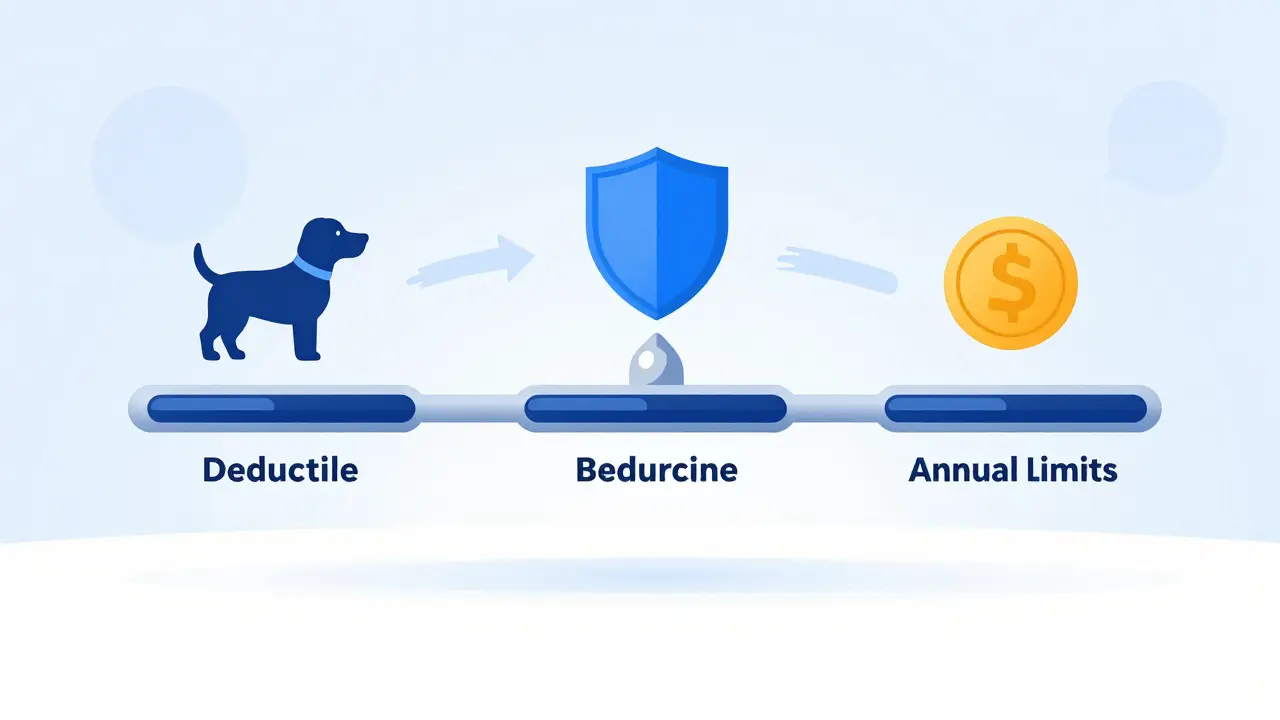
To compare companies fairly, you first need to understand the three main levers that control your cost: the Annual Deductible is the amount you pay out of pocket each year before the insurance starts paying, the Reimbursement Percentage is the portion of the covered bill the insurer pays back to you after the deductible is met, and the Annual Limit is the maximum total amount the insurer will pay in one calendar year.
Think of it like car insurance. The deductible is the first chunk of cash you spend. Once you cross that line, the insurer kicks in. If you choose a high reimbursement rate (like 90%), the insurer pays most of the rest. However, insurers often impose an annual limit. For example, a plan might cap payouts at $5,000 per year. If your dog needs two major surgeries in one year totaling $8,000, you pay the difference between the $5,000 cap and the actual bills, minus your deductible.
There are two main types of coverage structures you’ll encounter:
- Accident & Illness Only: Covers unexpected events like broken bones, cancer, or digestive issues. This is the most common and affordable option.
- Comprehensive: Includes Accident & Illness plus preventive care (vaccines, heartworm meds, annual exams). This is more expensive but offers broader peace of mind.
Top Providers Compared: Rates and Features
The landscape in 2026 features several dominant players. While specific rates fluctuate based on your location, breed, and zip code, we can look at average baseline costs for a healthy 2-year-old Labrador Retriever in Portland, Oregon, with a $500 deductible and 80% reimbursement.
| Provider | Avg. Monthly Cost ($500 Ded.) | Max Annual Benefit | Key Feature | Best For |
|---|---|---|---|---|
| Trupanion is a pet insurance company known for offering unlimited annual benefits and flexible deductibles | $45 - $65 | Unlimited | No annual cap on payouts | Owners wanting maximum security against catastrophic costs |
| Healthy Paws is an insurance provider focused on accident and illness coverage without waiting periods for certain conditions | $40 - $60 | Unlimited | No pre-existing condition exclusions after 12 months | Owners concerned about long-term chronic issues |
| Embrace Pet Insurance is a digital-first insurer offering personalized plans and direct payment options to vets | $35 - $55 | $10,000 - Unlimited | Direct Pay feature (insurer pays vet directly) | Busy owners who want streamlined claims processing |
| Nationwide Pet Insurance is a large national carrier offering both comprehensive and accident-only plans with varying benefit limits | $30 - $50 | $5,000 - $10,000 | Wide network of preferred veterinarians | Budget-conscious owners accepting capped benefits |
Notice the trend here: Companies offering unlimited annual benefits tend to charge higher premiums. Why? Because they take on more risk. If your dog develops aggressive cancer requiring $15,000 in treatment, Trupanion or Healthy Paws will cover it all (minus deductible). Nationwide, with a $10,000 cap, would stop paying after that threshold. You’d be responsible for the remaining $5,000.
The Impact of Age and Breed on Pricing
Your dog’s profile dictates your base rate. Insurers use actuarial data to predict likelihood of claims. Here is how those factors skew the numbers:
- Age: Enrolling a puppy (under 1 year) is the cheapest time. By the time a dog is 7 years old, premiums can double compared to a 2-year-old. Senior dogs (10+) often face steep hikes or limited availability.
- Breed: Large breeds like Great Danes or Bernese Mountain Dogs cost more to insure than small breeds like Chihuahuas or Yorkies. This is due to genetic predispositions to hip dysplasia and bloat in large dogs.
- Location: Veterinary costs in urban areas like New York or San Francisco are higher than in rural parts of the Midwest. Since insurance reimburses based on actual vet bills, higher-cost regions result in higher premiums.
For example, a 2-year-old French Bulldog in Seattle might pay $70/month, while a similar-age Beagle in rural Ohio might pay $35/month. The Frenchie’s respiratory and skin issues drive up the expected claim frequency, pushing the price up.
Understanding Deductibles and Reimbursement Percentages
This is where you save money. Most people default to the middle-of-the-road options, but adjusting these variables can drastically change your monthly bill.
Deductible Strategy: If you raise your annual deductible from $250 to $1,000, you are telling the insurer, "I’ll handle the first $1,000 of any yearly bills." In exchange, they lower your monthly premium. For many healthy dogs, this is a smart move. You only hit the deductible if you have multiple visits or one significant event. If you go with a low deductible ($100), your premiums stay high because the insurer expects to pay out sooner.
Reimbursement Rate Trade-off: Standard plans offer 80% reimbursement. This means if a bill is $1,000 and you’ve met your deductible, the insurer pays $800, and you pay $200. Moving to a 90% or 100% plan increases your premium by roughly 15-20%. Is that extra monthly cost worth saving $200 on a single visit? Usually, no. Unless you expect frequent minor visits, sticking to 80% is often the most cost-effective choice.

Common Pitfalls to Avoid
Even with the best intent, policyholders often trip over these issues:
- Waiting Periods: Most policies have a 14-day waiting period for accidents and 30 days for illnesses. Don’t enroll right before a scheduled procedure unless the policy explicitly waives this.
- Pre-existing Conditions: If your dog has been diagnosed with arthritis before you buy insurance, it won’t be covered. Some insurers allow you to add back conditions after a certain period (e.g., 12 months claim-free), but it’s not universal.
- Lifetime Caps: Older policies sometimes had lifetime caps (e.g., $10,000 total over the dog’s life). Modern plans mostly use annual caps, but always verify. A lifetime cap is a red flag for long-term ownership.
- Claim Limits Per Condition: Some cheaper plans limit payouts for specific conditions (e.g., max $2,000 for dental issues). Read the exclusions list carefully.
Is Dog Insurance Worth It?
It depends on your risk tolerance. If you can comfortably absorb a $3,000 emergency bill without selling assets or going into debt, you might skip insurance. But if that scenario would cause financial stress, insurance acts as a safety net.
Consider the math: If you pay $50/month ($600/year) and your dog never makes a claim, you’ve lost $600. But if your dog needs a $5,000 surgery, you save $4,400 (after deductible and co-pay). Over a 10-year lifespan, the probability of at least one major medical event is high. Insurance shifts that risk from your bank account to the insurer.
For puppies and young adults, the value proposition is strongest. As dogs age, premiums rise, and the window for enrolling shrinks. Many insurers stop accepting new clients for dogs over 10 years old. So, if you’re on the fence, earlier is better.
Frequently Asked Questions
Does dog insurance cover preventive care like vaccines?
Only if you choose a 'Comprehensive' plan. Standard 'Accident & Illness' plans do not cover routine check-ups, vaccinations, or flea/tick prevention. Comprehensive plans cost more but include these preventive services.
What happens if I switch insurance providers?
You can switch anytime, but there is usually a new waiting period (14-30 days) for the new policy to activate. During this gap, you are uninsured. Also, any conditions treated under the old policy may become pre-existing for the new one if you don’t maintain continuous coverage.
Can I increase my deductible mid-policy to lower costs?
Yes, most insurers allow you to adjust your deductible and reimbursement percentage annually or sometimes mid-term. Increasing the deductible will lower your next month's premium. Decreasing it will raise it.
Do mixed-breed dogs cost less to insure?
Often, yes. Purebreds have documented genetic health risks (like hip dysplasia in German Shepherds). Mixed breeds are generally considered lower risk because their genetic pool is wider, though size still plays a major role in pricing.
Is there a minimum age to get dog insurance?
Most providers require dogs to be at least 8 weeks old and fully vaccinated. There is no strict upper age limit for all companies, but some stop accepting new clients for dogs older than 10 or 14 years depending on the provider.