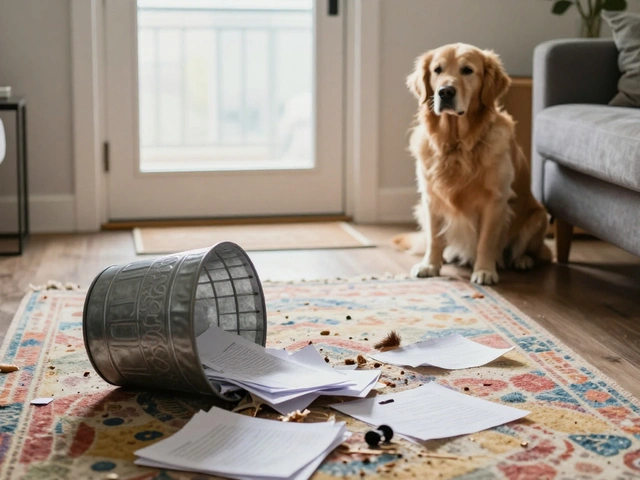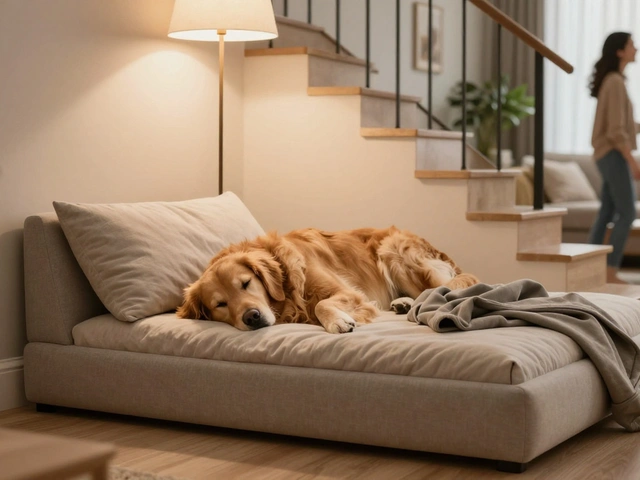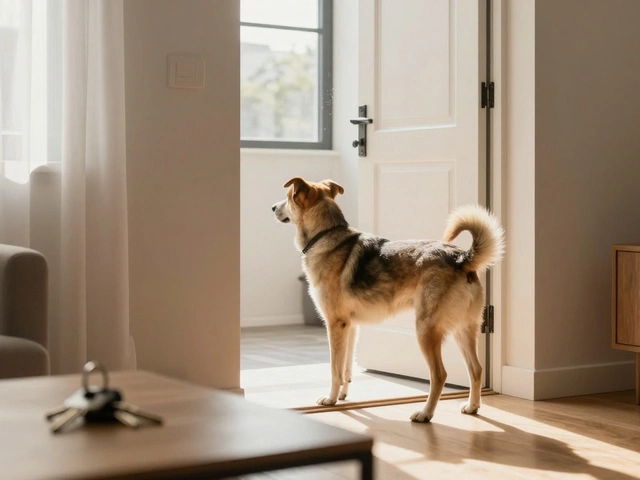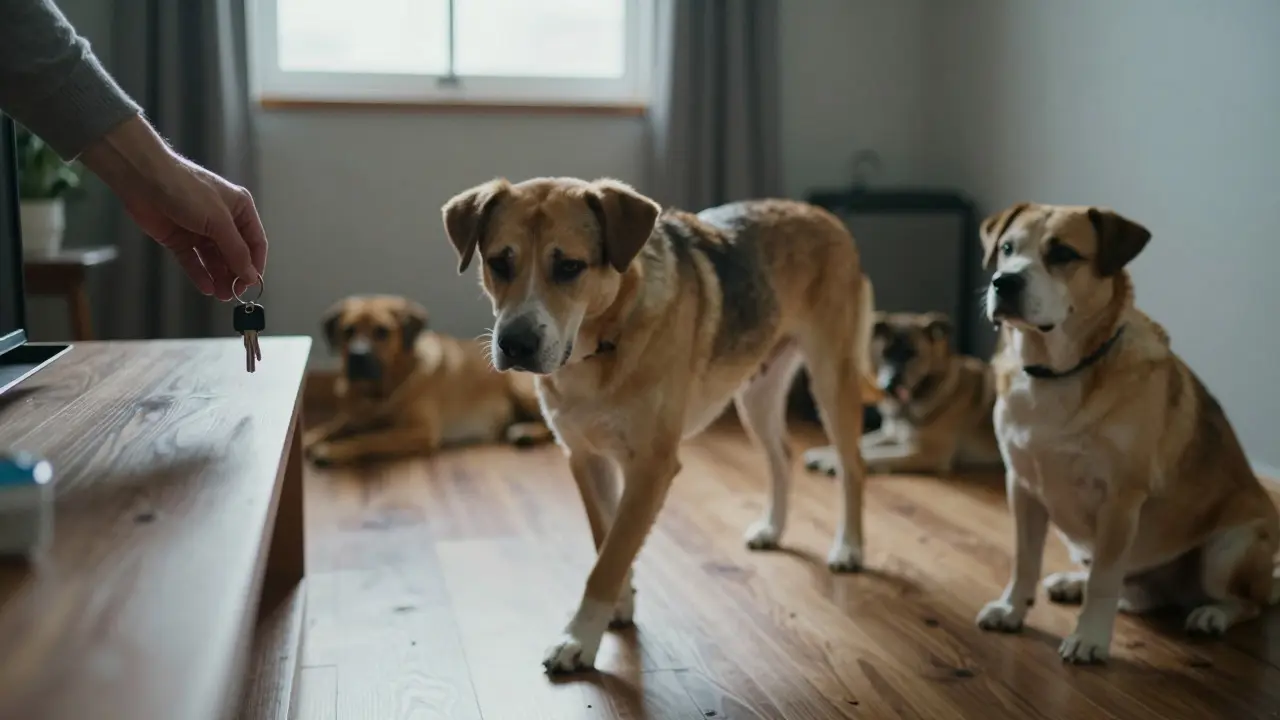
You know that feeling when you grab your keys and one of your dogs starts pacing while the others settle down? That’s the reality for many multi-dog households where separation anxiety is a behavioral condition where a dog exhibits extreme distress when left alone or separated from their primary attachment figure. It’s not just about barking; it’s about a nervous system in overdrive. When you have multiple dogs, this dynamic gets complicated fast. The anxious dog doesn’t just suffer in isolation; they can trigger secondary stress in calmer housemates, or worse, turn into a reactive force that disrupts the entire pack hierarchy.
The goal here isn’t to make every dog identical in temperament. It’s to create a home environment where the anxious dog feels safe enough to relax, even when the humans are gone. This requires shifting from a "reactive" approach-dealing with destruction after the fact-to a proactive management strategy. We’re talking about environmental design, routine consistency, and understanding the subtle body language that precedes a meltdown.
Why Multi-Dog Dynamics Amplify Anxiety
In a single-dog home, separation anxiety is a direct line between the dog and the owner. In a multi-dog home, the social buffer can either help or hurt. Sometimes, another dog acts as a companion, reducing the perceived loss. Other times, the presence of other dogs increases the stakes. If Dog A is anxious and Dog B is confident but territorial, leaving them together might cause Dog A to feel trapped or overwhelmed by Dog B’s energy.
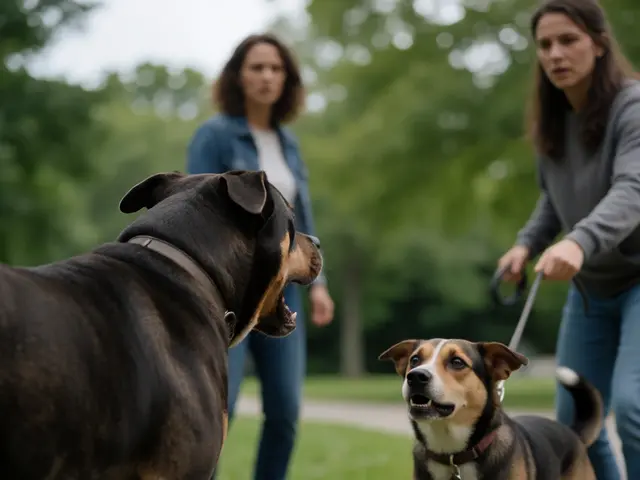
Resource Guarding is a defensive behavior where an animal protects food, toys, or space from perceived competitors often flares up during absences. Without the owner to mediate disputes, the anxious dog may hoard resources aggressively, or conversely, become so stressed they lose interest in eating entirely. This creates a feedback loop: stress leads to poor appetite, which weakens the dog, making them more vulnerable and anxious. Understanding these specific triggers is the first step to breaking the cycle.
Decoding Stress Signals Before the Meltdown
Most owners wait until the scratching at the door or the howling starts to realize something is wrong. By then, the threshold has already been crossed. To manage this effectively, you need to learn the pre-meltdown cues. These are often subtle and easy to miss if you’re not looking for them.
- Lip Licking: A quick lick of the lips, especially when there’s no food present, is a classic appeasement signal.
- Pacing: Repetitive movement back and forth, usually along a wall or around the room.
- Whale Eye: Showing the whites of the eyes while keeping the head still, indicating fear or uncertainty.
- Displacement Behaviors: Sudden yawning, shaking off (when dry), or turning away from interaction.
If you catch these signs within the first five minutes of leaving, you haven’t failed yet. You’ve just identified the window where intervention works best. Document these behaviors in a simple log. Note the time, what you did before leaving, and which specific cue appeared first. Patterns will emerge quickly, showing you exactly what triggers the spike in cortisol levels.
Environmental Design for Calm
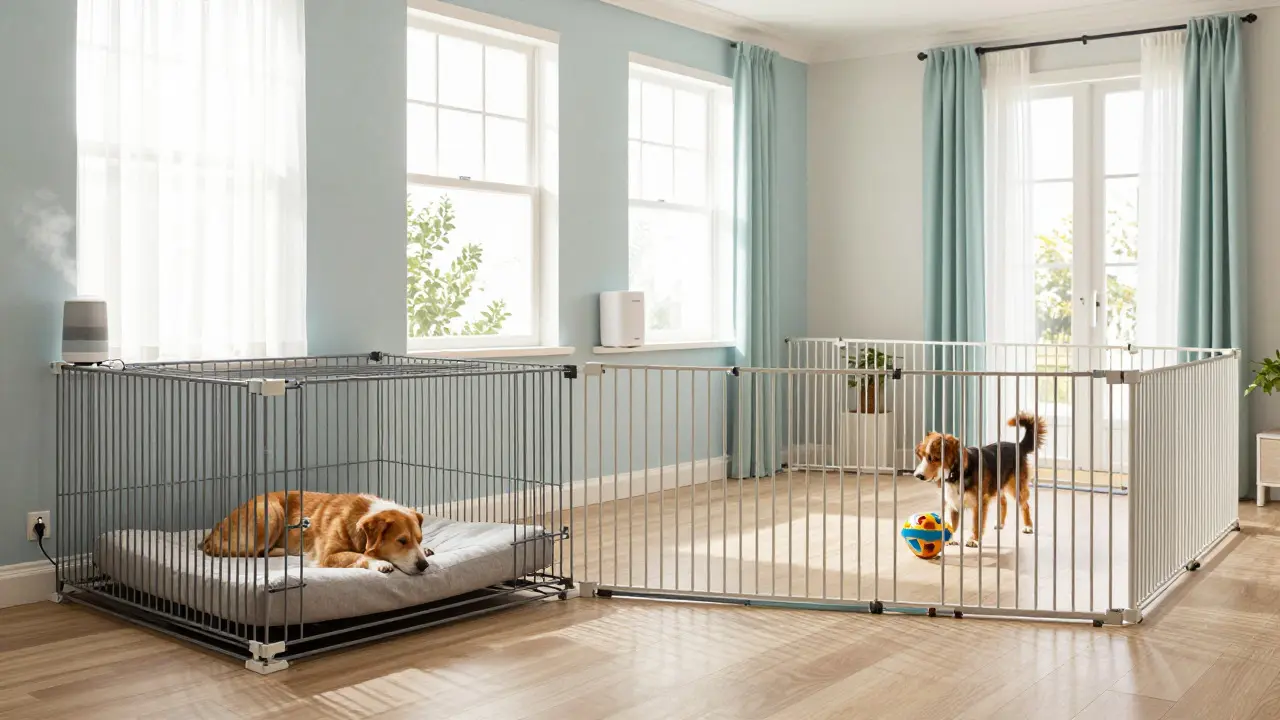
Your home layout matters more than you think. An open floor plan might feel spacious to humans, but it can feel exposed and unsafe to an anxious dog. They want retreat spots. Create designated "safe zones" for each dog, ensuring the anxious dog has access to a low-stimulation area.
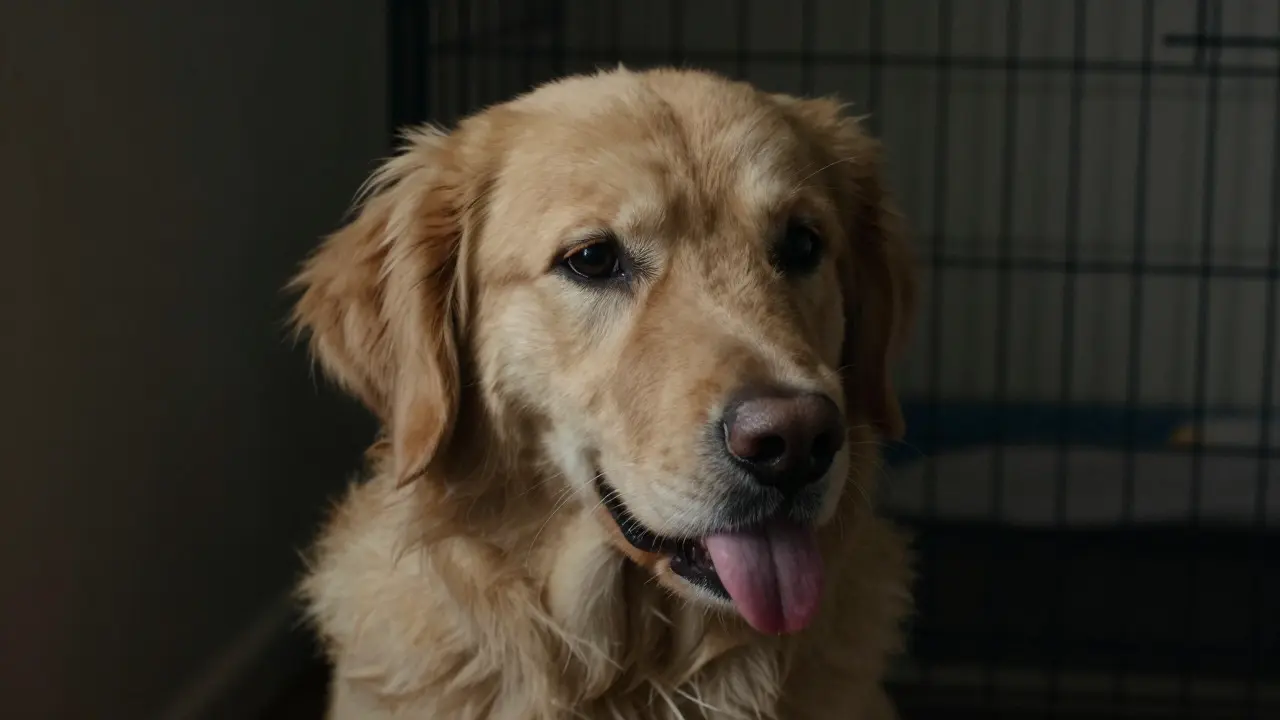
This could be a crate with a cover, a quiet bedroom with a closed door, or a specific corner with a bed. The key is consistency. The dog needs to know that *this* spot is always available and never associated with punishment. For multi-dog homes, consider using baby gates or pet doors to separate spaces temporarily. This isn’t permanent isolation; it’s a tool to prevent conflict and allow the anxious dog to decompress without pressure from housemates.
Sound and scent play huge roles too. White noise machines can mask outside sounds that trigger vigilance. Pheromone diffusers, like those containing synthetic Adaptil is a commercial product designed to release synthetic dog-appeasing pheromones to reduce stress in dogs, can help lower baseline anxiety levels. Place these in the areas where the dogs spend the most time when you leave, not just in the living room.
Routine and Departure Cues
Anxious dogs live on prediction. When they can predict what happens next, their nervous systems stay regulated. This means your departure routine needs to be boring and predictable. No frantic goodbyes. No dramatic hugs. Just a calm, neutral exit.
Try desensitizing the departure cues. Pick up your keys, put on your shoes, and sit back down. Do this ten times a day. Then, pick up the keys, walk to the door, and come back. Gradually increase the duration. The goal is to teach the dog that picking up the keys doesn’t mean the world is ending. This process, known as systematic desensitization, takes weeks, not days. Patience is non-negotiable here.
Feeding puzzles or long-lasting chews right before you leave can also help. But be careful: if the dog associates the treat with your leaving, it can backfire. Instead, try giving the treat *before* you start your departure routine. This separates the positive experience from the stressful event.
Managing Housemate Interactions
The other dogs in the house aren’t just bystanders; they’re active participants in the social dynamics. A confident dog might bully the anxious one for being slow to eat or sleeping in the wrong spot. Or, a playful puppy might not understand that the adult dog needs quiet.
Manage interactions during high-stress periods. If you know you’re leaving soon, keep the dogs separate for the last 30 minutes. Let them settle individually. When you return, don’t let them all rush to greet you at once. Enter calmly, ignore the excitement initially, and reward calm behavior. This teaches the whole pack that chaos doesn’t get attention; calm does.
| Strategy | Anxious Dog Approach | Confident Dog Approach |
|---|---|---|
| Space Management | Provide enclosed, low-stimulation retreats | Allow access to common areas but monitor dominance |
| Feeding | Separate bowls, high-value treats for calm | Standard bowls, use puzzle feeders to reduce boredom |
| Departure Routine | Neutral, boring, no eye contact | Can include brief, calm acknowledgment |
| Return Home | Ignore initial greeting, reward settling | Wait for all four paws on floor before greeting |
When to Seek Professional Help
Sometimes, behavior modification isn’t enough. If the anxiety involves self-injury, total refusal to eat, or constant vocalization lasting hours, you likely have a severe case. This is where veterinary medicine comes in. Medication isn’t a failure; it’s a tool. Drugs like SSRIs (selective serotonin reuptake inhibitors) can lower the baseline anxiety enough for training to work. Think of it like glasses for bad eyesight-you can’t read the fine print without them, but the glasses don’t fix the eyes permanently. They just help you see clearly enough to function.
Work with a certified behaviorist who specializes in multi-dog dynamics. They can assess the hierarchy, identify hidden triggers, and create a tailored plan. Don’t rely solely on internet advice for severe cases. The nuances of individual dog personalities require expert eyes.
Should I adopt another dog to comfort my anxious dog?
Generally, no. Adding a new variable to a stressed system often makes things worse. Wait until the current dog’s anxiety is significantly reduced before considering any new additions. Stability is the priority.
Is it okay to leave the TV or radio on?
Yes, but only if it masks outdoor sounds. Avoid news programs with loud voices or sudden noises. Classical music or white noise apps are better options. Test it while you’re home first to ensure it doesn’t startle the dog.
How long does it take to see improvement?
For mild cases, you might see changes in 2-4 weeks. For moderate to severe cases, expect 3-6 months of consistent work. Consistency is more important than speed. Rushing the process often leads to setbacks.
What if the other dogs are fine when I’m gone?
This is actually helpful. Use the calm dogs as models. Reward the anxious dog for mimicking their relaxed behavior. However, ensure the calm dogs aren’t bullying the anxious one while you’re away. Check cameras if you suspect conflict.
Do I need to change my job schedule?
Only if necessary. Try to find a mid-day break where you can leave for short periods to practice departures. If your job requires long absences, consider hiring a dog walker for a mid-day visit. This breaks up the duration of alone time and provides exercise, which helps burn off excess energy.