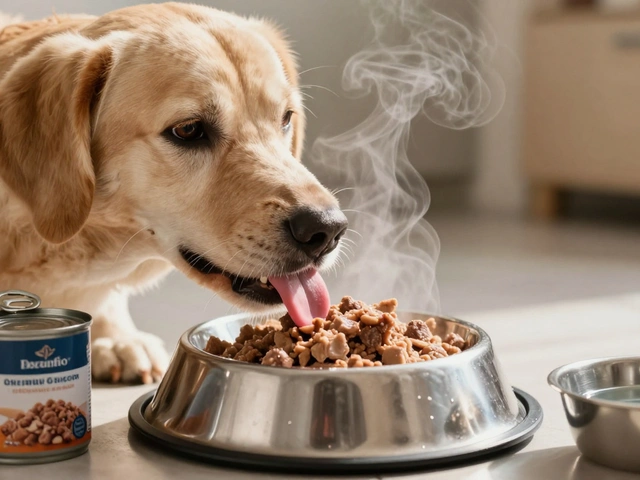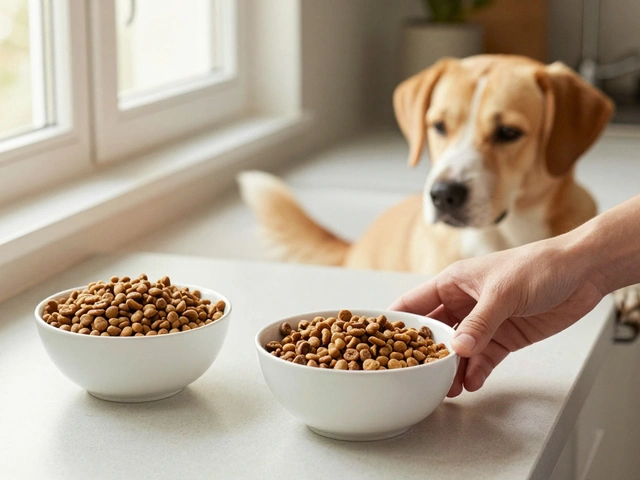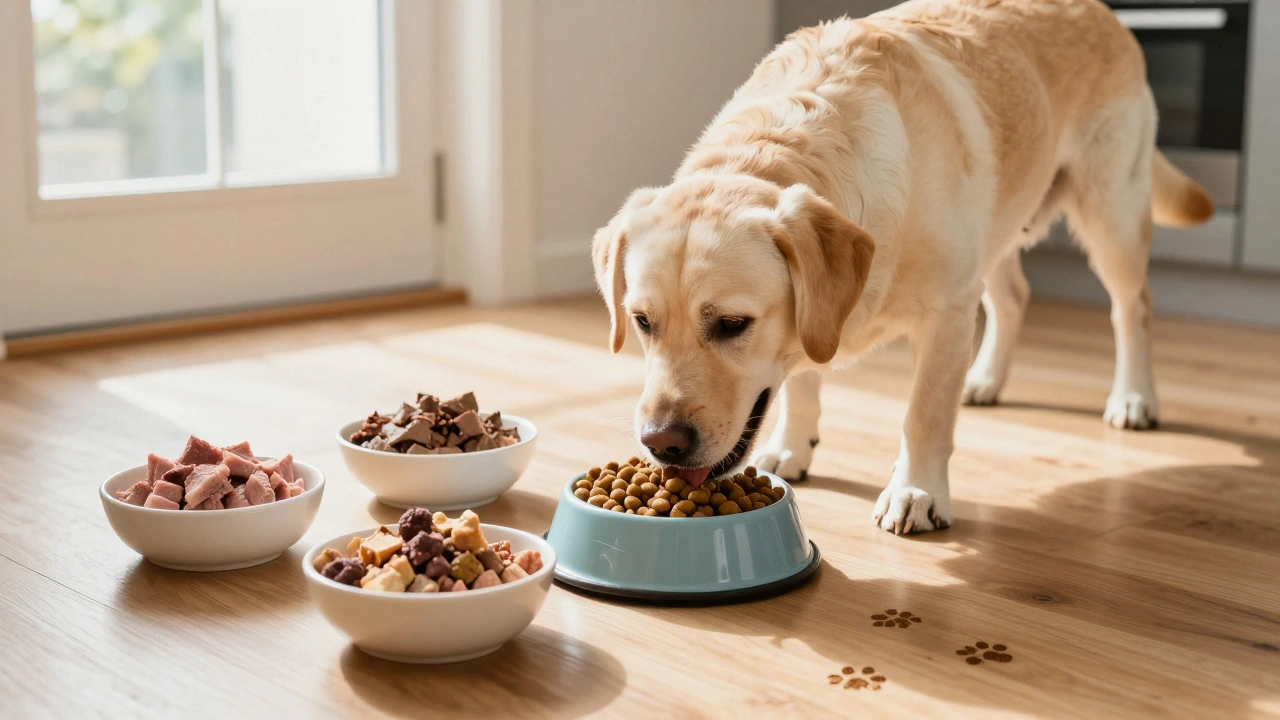
Ever wonder why your dog seems bored with kibble every morning? Or why they suddenly lose interest in a food they used to gobble up? You’re not alone. Many dog owners are turning to rotational feeding-a simple idea: switch up your dog’s food regularly. Not just between brands, but between protein sources, formulas, and even food types. It sounds straightforward, but there’s a lot more to it than just swapping bags. Let’s break down what actually works, what doesn’t, and how to do it right without messing up your dog’s stomach.
What Is Rotational Feeding?
Rotational feeding means changing your dog’s food on a regular schedule-weekly, monthly, or every few months. It’s not about random changes. It’s about cycling between different proteins (chicken, beef, fish, lamb), different formulas (grain-free, limited ingredient, high-protein), and sometimes even different food types (kibble, wet, freeze-dried). The goal? To mimic the natural variety dogs would eat in the wild, support long-term nutrition, and prevent food sensitivities from developing.
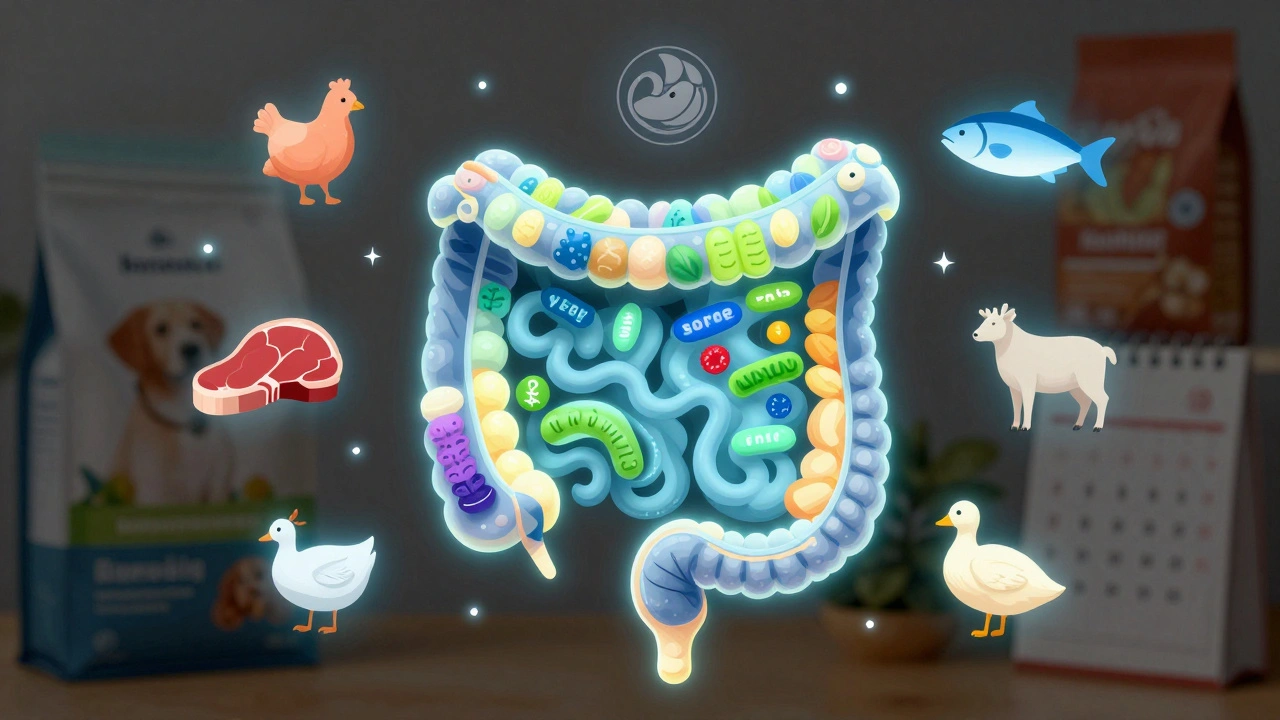
It’s not new. Back in the 1990s, holistic vets started recommending it as an alternative to feeding one food forever. Today, it’s backed by research from the Journal of Animal Physiology and Animal Nutrition, which found that dogs fed varied diets had better gut microbiome diversity than those on single-protein diets. That’s a big deal. A healthy gut means better digestion, stronger immunity, and even improved mood.
Why Do It? The Pros
- Prevents food sensitivities - Feeding the same protein day after day can train your dog’s immune system to react to it. Rotating proteins reduces this risk. A 2023 study from the University of California, Davis tracked 217 dogs over two years and found that those on rotational diets had 40% fewer cases of chronic itching and gastrointestinal upset.
- Better nutrient balance - No single food has every vitamin, mineral, and amino acid your dog needs. Rotating foods fills those gaps naturally. For example, fish-based foods bring in omega-3s, while beef offers iron and B12. You’re not relying on one bag to do it all.
- Keeps meals interesting - Dogs get bored. Just like humans, they enjoy variety. A 2024 survey of 1,200 dog owners found that 78% reported their dogs ate more enthusiastically after switching to rotational feeding.
- Reduces pickiness - If your dog’s only ever had one food, they’ll refuse anything new. Rotational feeding from puppyhood teaches them that change is normal. It makes future transitions (like switching to senior food) way easier.
What Could Go Wrong? The Cons
- Upset stomach - Too many changes too fast? That’s a recipe for diarrhea, vomiting, or gas. One owner in Portland switched brands every week and ended up with a dog that couldn’t hold food down for a month. It’s not the rotation-it’s the speed.
- Cost - Buying multiple bags of food, or different formats (wet, freeze-dried), adds up. A 30-lb bag of premium kibble costs $50-$80. Rotating three formulas means $150-$240 a month. That’s not cheap.
- Confusion for owners - Not all foods are created equal. Some are complete and balanced. Others are meant for intermittent feeding. Mixing them without knowing can lead to nutritional gaps. One woman fed a “complete” chicken formula one week, then switched to a “supplemental” lamb formula the next. Her dog developed a zinc deficiency.
- Not for every dog - Dogs with sensitive guts, pancreatitis, or food allergies may need strict, single-protein diets. Rotational feeding can backfire if your dog’s system can’t handle variety.
How to Do It Right: Best Practices
Rotational feeding isn’t about flipping labels. It’s about strategy. Here’s how to make it work.
- Start slow - If your dog’s never had variety, don’t jump in. Begin with one new food every 4-6 weeks. Gradually increase frequency as their digestion adjusts.
- Stick to complete and balanced formulas - Every food you rotate should be AAFCO-approved. That means it meets nutritional standards for adult dogs or all life stages. Avoid “treat” or “supplemental” foods as main meals.
- Rotate proteins, not just brands - Two chicken-based foods aren’t a rotation. Switch between chicken, beef, fish, lamb, duck, or even venison. Aim for 3-5 different proteins over 6-12 months.
- Use a transition period - When switching foods, mix 25% new food with 75% old food for 3 days. Then 50/50 for 2 days. Then 75% new, 25% old. Finally, go full new food. This gives their gut time to adapt.
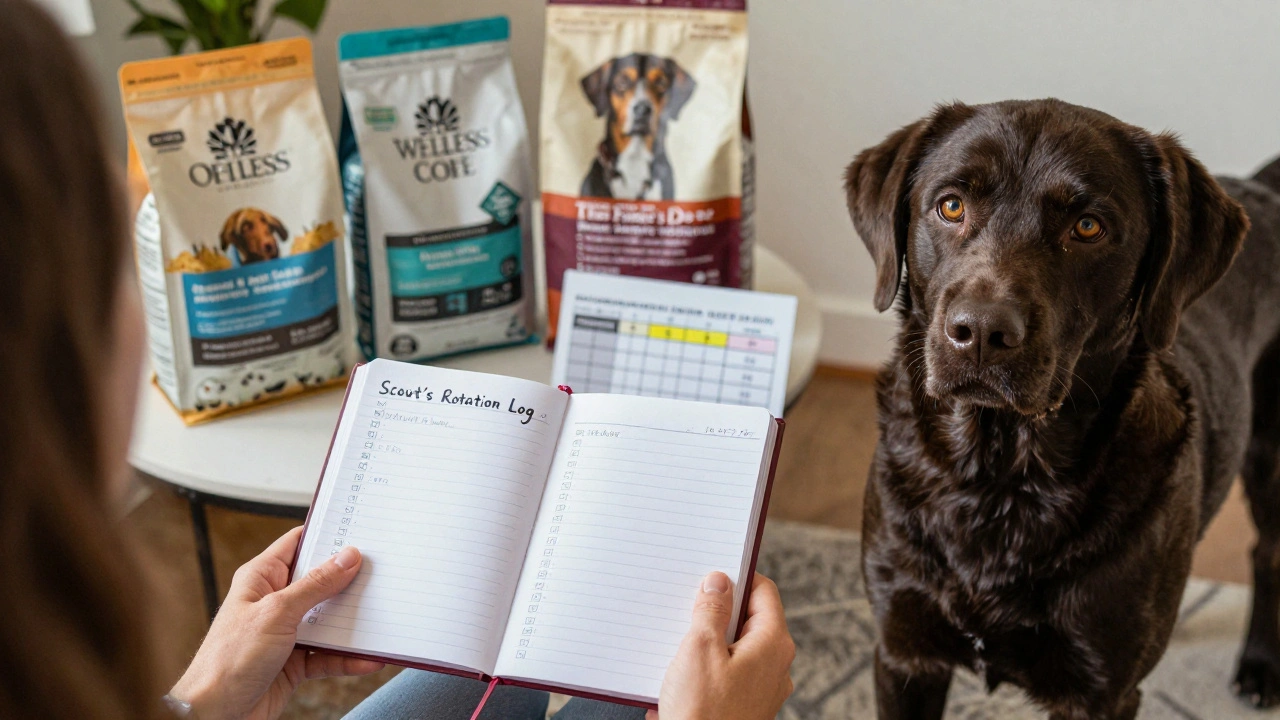
- Track everything - Keep a simple log: date, food name, protein source, and any changes in stool, energy, or coat. Apps like Dog Diet Tracker or even a notebook work. You’ll spot patterns. Maybe your dog’s coat shines after fish, or their energy drops after beef.
- Don’t overcomplicate it - You don’t need five different foods. Three is enough. Two kibbles, one wet food. That’s plenty. More isn’t better.
What Foods Work Best for Rotation?
Not all foods are made to be swapped. Here’s what to look for:
| Food Type | Pros | Cons | Best For |
|---|---|---|---|
| Kibble | Long shelf life, affordable, dental benefits | Low moisture, can be monotonous | Base diet for most dogs |
| Canned wet food | High moisture, palatable, easy to digest | More expensive, shorter shelf life after opening | Boosting hydration, picky eaters |
| Freeze-dried raw | High protein, minimal processing, nutrient-dense | Pricey, needs rehydration, not for all dogs | Active dogs, performance breeds |
| Dehydrated | Easy to prep, good nutrition, less messy than raw | Still pricey, requires water | Travelers, owners who want raw without handling |
Brands like Open Farm, The Farmer’s Dog, Wellness Core, and Blue Buffalo Wilderness offer multiple protein lines that are easy to rotate. Look for ones that use the same base recipe with just the protein swapped out. That way, you’re not changing carbs, fillers, or additives-just the meat.
Who Should Avoid Rotational Feeding?
Not every dog benefits from variety. Here’s when to skip it:
- Diagnosed food allergies - If your vet has pinpointed a specific protein your dog reacts to (like chicken or soy), rotating around it can still trigger reactions. Stick to one safe protein.
- Chronic digestive issues - Dogs with IBD, pancreatitis, or colitis often need consistent, low-fat, single-protein diets. Rotating can worsen inflammation.
- Senior dogs with kidney disease - Protein levels matter. Rotating high-protein foods can overload their kidneys. Stick to vet-recommended formulas.
- Puppies under 6 months - Their digestive systems are still developing. Stick to one high-quality puppy food until they’re older.
If you’re unsure, talk to a veterinary nutritionist. They can help design a rotation plan that fits your dog’s health history. Many clinics offer low-cost consultations.
Real-Life Example: How It Worked for a Dog in Portland
A friend in Portland had a 4-year-old Labrador named Scout. He’d been on the same chicken kibble for two years. He started scratching constantly, had loose stools, and lost interest in meals. His vet ruled out parasites and skin infections. Then they tried rotational feeding.
They switched to a monthly rotation: chicken kibble → salmon wet food → beef freeze-dried → lamb kibble. Within six weeks, Scout’s coat became shiny. His stools solidified. He started begging for meals again. After six months, he was healthier than ever. No meds. No special diets. Just smart variety.
That’s not luck. It’s science.
Can I rotate dog food every week?
You can, but it’s risky. Most dogs need 5-7 days to adjust to a new food. Switching weekly can cause diarrhea, vomiting, or gas. Start with 4-6 week rotations. Once your dog’s digestive system is used to change, you can shorten it to 3 weeks. Never rush the transition.
Do I need to buy expensive food to rotate?
No. You don’t need grain-free, organic, or raw food. Many affordable brands like Victor, Nutro, and Canidae offer multiple protein formulas that are AAFCO-approved. The key is consistency in quality, not price. Stick to foods with real meat as the first ingredient and no artificial additives.
Can I mix different foods in one meal?
Yes, but only if they’re both complete and balanced. Mixing kibble and wet food from the same brand is fine. Mixing a chicken kibble with a fish-based raw topper? That’s okay too. But avoid mixing foods with vastly different calorie densities or protein levels unless you’re tracking intake. A 1:1 ratio of kibble to wet food usually works well.
What if my dog refuses the new food?
Don’t force it. Go back to the old food for a few days, then try again with a smaller transition ratio (e.g., 10% new, 90% old). Some dogs are picky. Others have underlying issues. If they refuse three different foods over two weeks, consult your vet. It could be a medical issue, not a preference.
Is rotational feeding better than raw diets?
Not necessarily. Raw diets can be excellent for some dogs, but they’re not required for rotational feeding. Rotational feeding works with kibble, wet food, or dehydrated meals. Raw is just one option. Many owners combine them-like feeding kibble Monday-Friday and raw on weekends. The goal is variety, not the form of food.
Next Steps: How to Start Today
Here’s a simple 3-step plan:
- Check your current food. Is it AAFCO-approved? If not, switch to one that is.
- Choose one new protein source you haven’t fed before. Buy a small bag or a single can.
- Start the transition next week. Mix 25% new, 75% old for 3 days. Then 50/50 for 2 days. Then go full new.
Wait a week. Watch your dog’s energy, coat, and poop. If all looks good, plan your next rotation in 4-6 weeks. You’re not trying to fix a problem-you’re building a healthier, more resilient dog over time.