Most dog owners know that extra weight is bad for their pets. But few realize that exercise intensity matters more than just how long they walk. A 30-minute stroll at a slow pace might not burn enough calories to help an overweight dog lose weight. On the flip side, pushing a senior pup into high-intensity sprints can cause injury or exhaustion. The key isn’t just movement-it’s the right kind of movement.
Why Heart Rate Matters More Than Steps
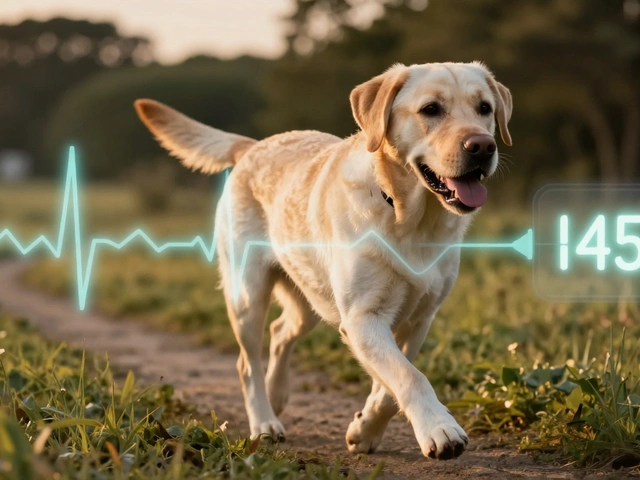
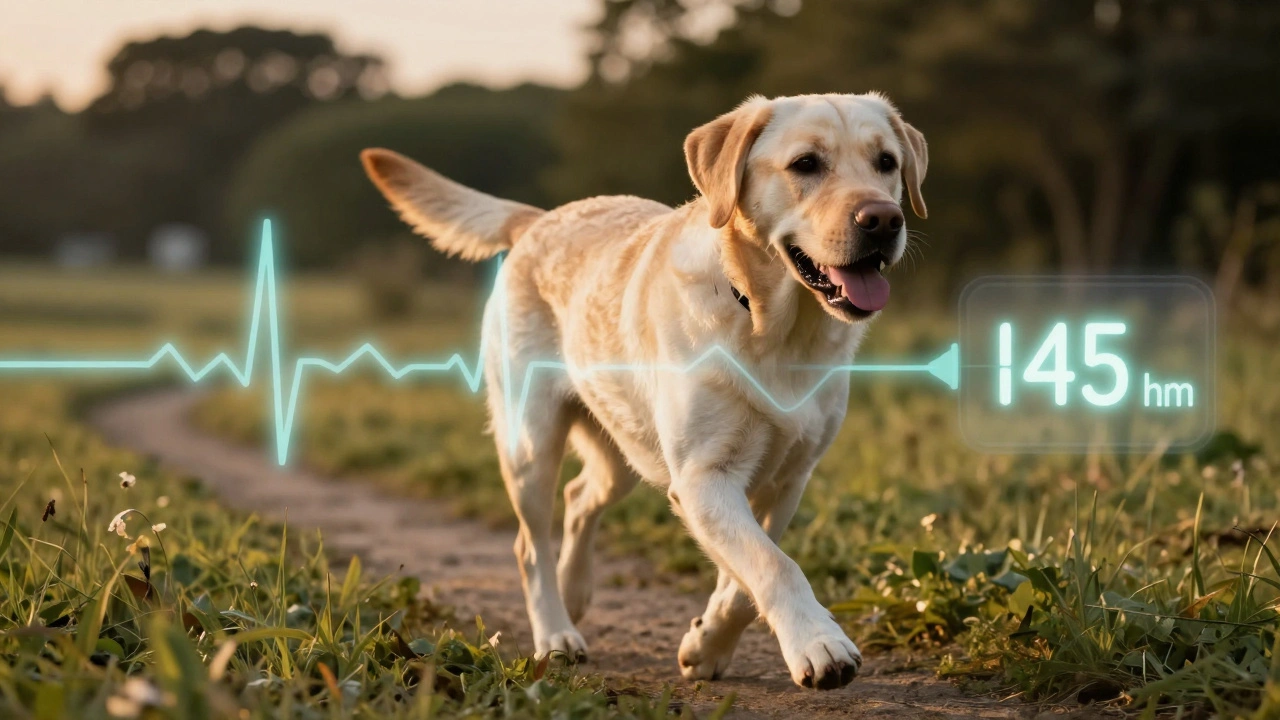
Counting steps or minutes walked is easy, but it doesn’t tell you if your dog is working hard enough. Dogs, like humans, have target heart rate zones for fat burning. For most medium to large dogs, that zone is between 60% and 75% of their maximum heart rate. Below 60%, they’re just strolling. Above 75%, they’re shifting into anaerobic mode-burning glycogen, not fat.
How do you find your dog’s max heart rate? A simple formula: 220 minus your dog’s age gives you a rough estimate. For example, a 6-year-old Labrador has a max heart rate of around 214 beats per minute (bpm). Their fat-burning zone? Between 128 and 160 bpm.
Most pet owners don’t have a heart rate monitor for their dog-but you don’t need one. You can estimate using the talk test. If your dog can trot comfortably and still pant lightly, they’re in the sweet spot. If they’re gasping, tongue out, and struggling to keep up, they’re overdoing it. If they’re dragging their feet and yawning, they’re not working hard enough.
The Pace That Actually Burns Fat
Many people think brisk walking = good exercise. But for weight loss, a slow walk won’t cut it. Studies show that dogs need to maintain a pace of at least 4.5 miles per hour for sustained fat burning. That’s not a leisurely stroll-it’s a purposeful, steady jog.
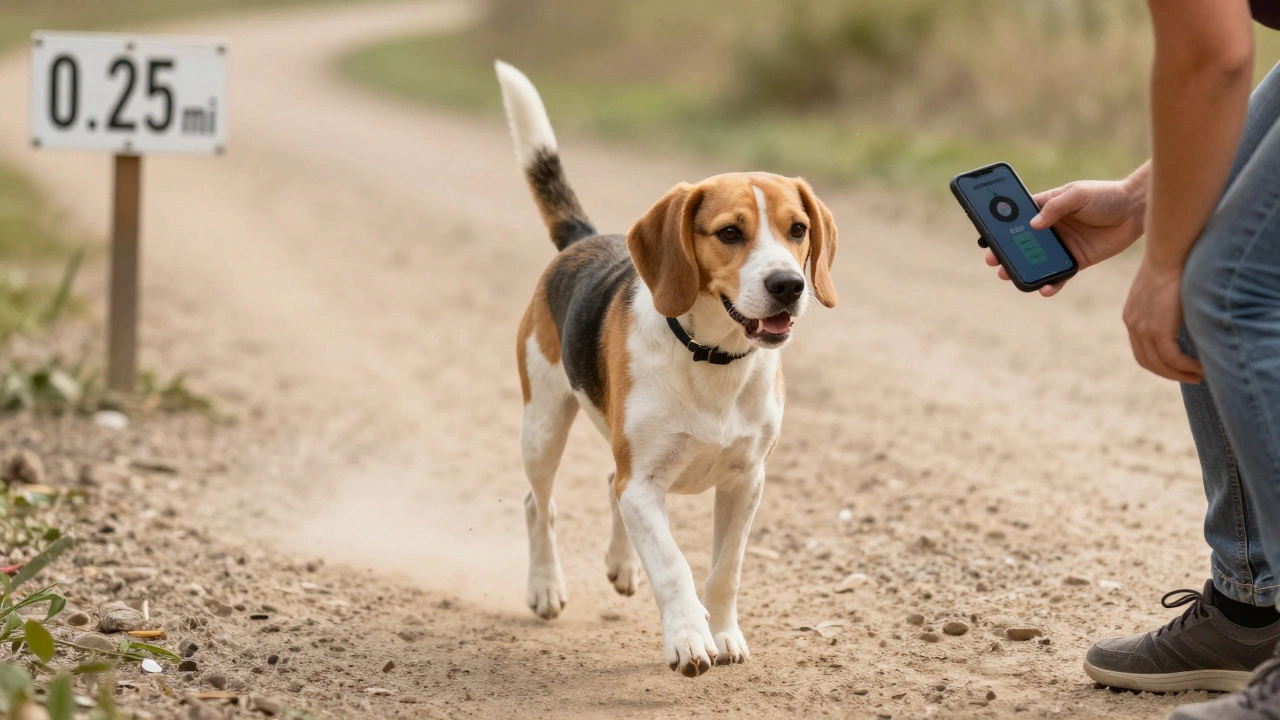
Try this: Time your dog’s walk. Walk a measured 0.25-mile route (like around a city block) and note how long it takes. If it takes more than 3 minutes and 20 seconds, you’re moving too slow. If it takes less than 2 minutes, you might be pushing too hard.
Here’s a real-world example: A 7-year-old Beagle named Luna weighed 32 pounds when she should’ve been 24. Her owner walked her twice a day for 20 minutes each time. After three months, no change. Then they switched to two 15-minute brisk walks at 5 mph, three times a week. Within six weeks, Luna lost 3.5 pounds. She wasn’t walking longer-she was walking harder.
How to Build a Weight-Loss Routine
Start slow. If your dog is obese or has joint issues, jumping into high-intensity exercise is risky. Begin with three sessions per week, each lasting 10-15 minutes at a pace that makes your dog pant just a little but still able to take a breath between steps.
Gradually increase intensity over four weeks:
- Week 1-2: 10-minute walks at 3.5-4 mph. Focus on consistency.
- Week 3-4: Increase to 15 minutes at 4.5 mph. Add one short hill or incline.
- Week 5-6: Add one 20-minute session midweek. Try light play-fetch or tug-of-war-for 5 minutes after the walk.
- Week 7+: Four sessions per week, mixing brisk walks with short bursts of speed (10-15 seconds of trotting, then slow down).
Always warm up and cool down. Start with 2-3 minutes of slow walking, then ease into the faster pace. End with 2-3 minutes of slow walking again. This helps prevent muscle strain and keeps blood flow steady.
What to Avoid
Not all exercise is created equal. Some common mistakes sabotage weight loss:
- Too much off-leash play: Random chasing and zoomies burn energy, but not consistently. Your dog needs sustained effort, not bursts.
- Walking on pavement only: Hard surfaces stress joints. Grass, dirt trails, or gravel are better. If you must walk on pavement, do it in the morning or evening when it’s cooler.
- Ignoring breed limits: Bulldogs, Pugs, and other brachycephalic breeds can’t handle intense exercise. Stick to short, cool-weather walks. Overheating kills faster than obesity.
- Skipping rest days: Dogs need recovery. Two days of exercise followed by one rest day is ideal. Overtraining leads to fatigue, joint damage, and weight gain from stress hormones.
Tools That Help
You don’t need expensive gear, but a few simple tools make tracking easier:
- A leash with a built-in timer: Some models track distance and pace. Even a basic stopwatch app on your phone works.
- A fitness tracker for dogs: Devices like the FitBark or Whistle track activity, rest, and even estimate calories burned. They’re not perfect, but they give you trends over time.
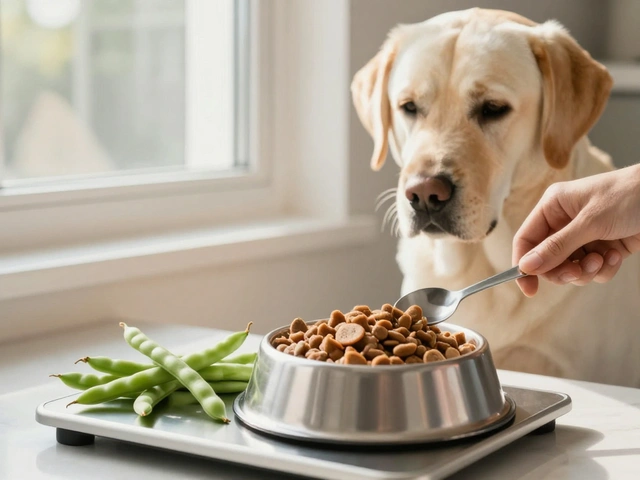
- A weight scale for pets: Pet-specific scales (like those from Etekcity) cost under $50. Weigh your dog every two weeks-not daily. Daily fluctuations are normal.
One Portland vet clinic tracked 87 overweight dogs over six months. Those who used a fitness tracker and weighed in weekly lost 22% more weight than those who didn’t. Tracking creates accountability.
When to Call the Vet
Weight loss isn’t just about exercise. Underlying health issues can make it impossible:
- Hypothyroidism (common in middle-aged dogs) slows metabolism.
- Cushing’s disease causes weight gain around the belly.
- Arthritis or hip dysplasia makes movement painful.
If your dog isn’t losing weight after 8 weeks of consistent, properly paced exercise-and you’ve cut treats and switched to a vet-approved diet-it’s time for bloodwork. A simple T4 test can rule out thyroid problems. Many vets offer low-cost wellness panels for overweight pets.
Real Results, Not Magic
There’s no shortcut. A 10-pound dog losing 1 pound per month is doing great. That’s 10% of their body weight in 10 months. Slow, steady progress is safer and lasts longer than crash diets or overexertion.
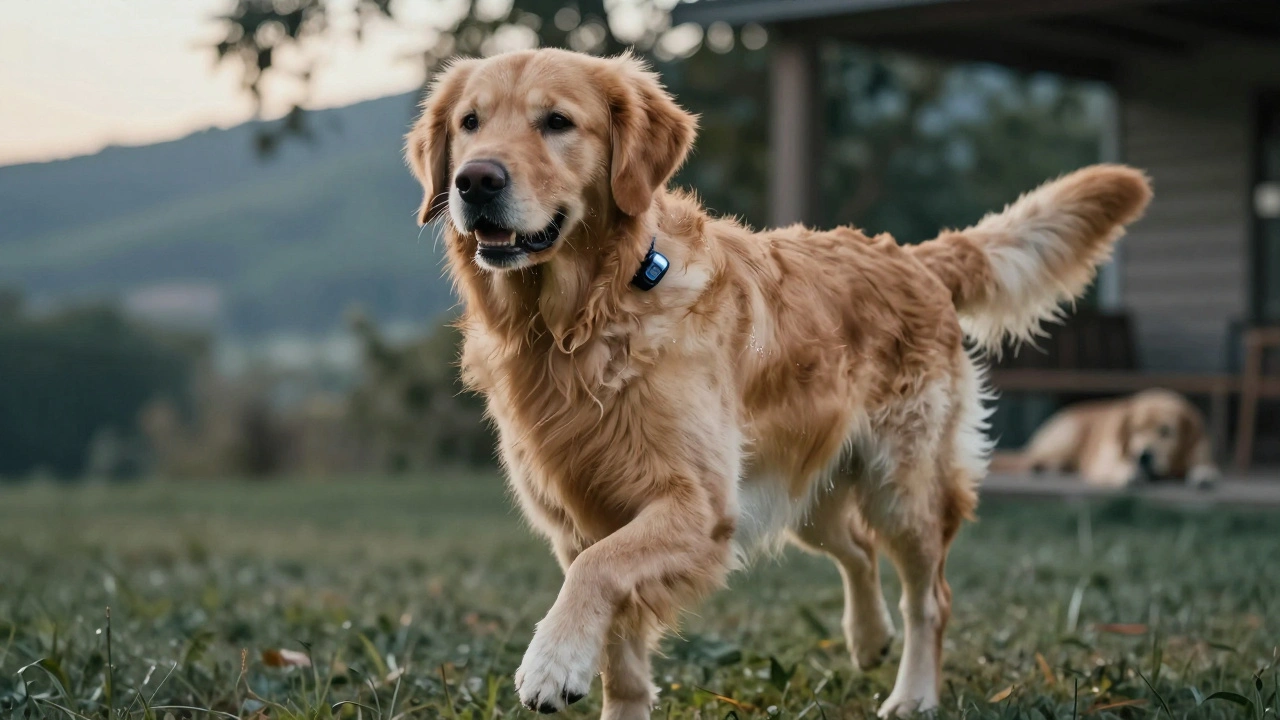
One owner in Portland had a 55-pound Golden Retriever named Max. He was lethargic, panting constantly, and couldn’t walk past the mailbox. After three months of daily 20-minute walks at 5 mph, three hills per week, and cutting out table scraps, Max lost 11 pounds. He started chasing squirrels again. His coat gleamed. His energy? Back.
It wasn’t magic. It was consistency, the right pace, and paying attention to how he breathed.
How do I know if my dog is exercising at the right intensity for weight loss?
Look for steady panting that doesn’t turn into gasping. Your dog should be able to keep pace without stopping, but not so effortlessly that they could nap while walking. A good rule: if you can talk to them without pausing for breath, they’re likely in the fat-burning zone. If they’re dragging or lying down after 5 minutes, they’re not working hard enough. If they’re collapsing or tongue is bright red, they’re overdoing it.
Is running better than walking for dog weight loss?
It depends. For healthy, young dogs, running in short bursts (10-15 seconds) followed by walking is more effective than long walks. But for older dogs, overweight dogs, or breeds with breathing issues, running can be dangerous. A brisk, consistent walk at 4.5+ mph is safer and just as effective for fat loss. Intensity matters more than speed type.
Can I use a treadmill for my dog’s weight loss?
Some dogs adapt well, but most don’t. Treadmills require training and can be stressful. If you try one, start at 2 mph with a handler guiding them. Never leave your dog unattended. Outdoor walks offer mental stimulation, terrain changes, and natural cooling-all things treadmills can’t replace. Stick to outdoor exercise unless your vet recommends otherwise.
How often should I walk my overweight dog?
Start with 3 days a week, 10-15 minutes per session. After 2-3 weeks, increase to 4-5 days, with one longer session (20-25 minutes). Include one rest day between intense walks. Daily walks are fine, but make sure one of them is slow and relaxed. Too much daily intensity can cause joint stress and burnout.
What if my dog won’t walk faster?
Try using a toy or treat to create forward momentum. Walk ahead of them and stop every 10 feet-wait for them to catch up before moving again. Reward quick steps with praise, not food. Play fetch at the end of the walk to build enthusiasm. If they’re stubborn, check for pain. Arthritis, sore paws, or even a collar that’s too tight can make them reluctant to move.